
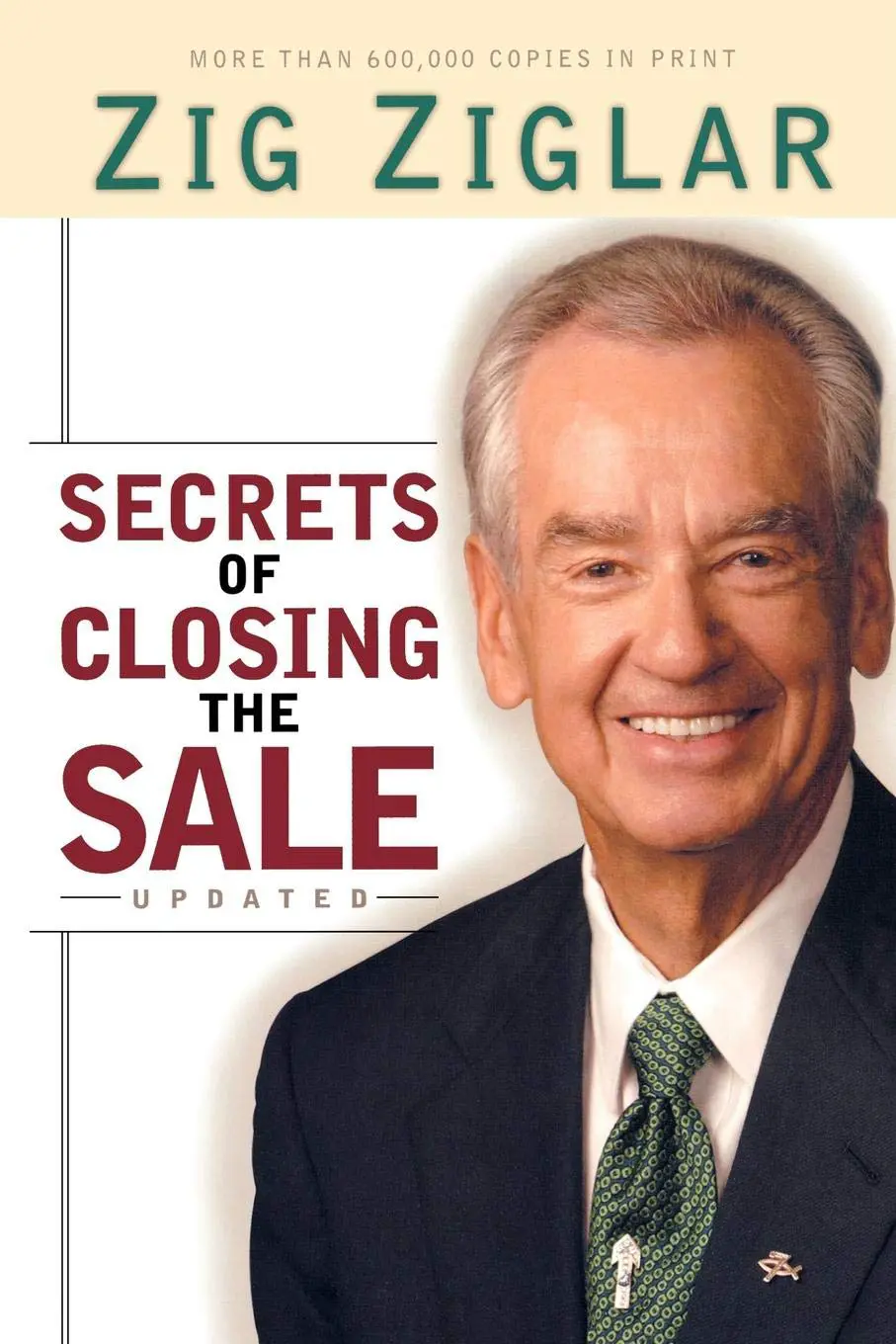
Secrets of Closing the Sale is Zig Ziglar’s most comprehensive sales book, first published in 1984 and still in print. Ziglar, who was one of the most influential sales trainers of the 20th century, built his approach on a philosophy that puts the customer’s interest first: if your product genuinely helps people, then selling it is an act of service, and closing is simply helping people make a decision that’s good for them.
The book covers a wide range of closing techniques, over 100 by Ziglar’s count, organized into categories: the assumption close, the summary close, the alternative choice close, the impending event close, and many others. Each technique is illustrated with stories from Ziglar’s own career selling cookware, insurance, and training programs. The stories are entertaining and memorable, which is partly why the techniques stick: you remember the close because you remember the story.
Beyond the closes themselves, Ziglar covers the foundational skills that make closing possible. He spends chapters on how to build trust, how to ask good questions, how to handle objections without becoming defensive, and how to manage your own mindset when you’re facing rejection. His sections on self-image and attitude were ahead of their time in connecting sales performance to internal psychology rather than just external technique.
For founders, the book’s greatest value is in its attitude toward selling. Many founders, especially those from technical backgrounds, feel uncomfortable with the idea of selling and associate it with manipulation. Ziglar makes a genuine, persuasive case that selling, done honestly and with the customer’s interest in mind, is one of the most valuable things you can do. That reframe alone makes the book worth reading.
The writing reflects Ziglar’s background as a public speaker: conversational, enthusiastic, and heavy on anecdotes. The Southern warmth in his voice comes through even on the page. Some readers will find the style dated or too folksy for their taste. The techniques themselves, however, are timeless. People still make decisions the same way they did in 1984, and Ziglar understood how those decisions work as well as anyone who has written about sales.
