
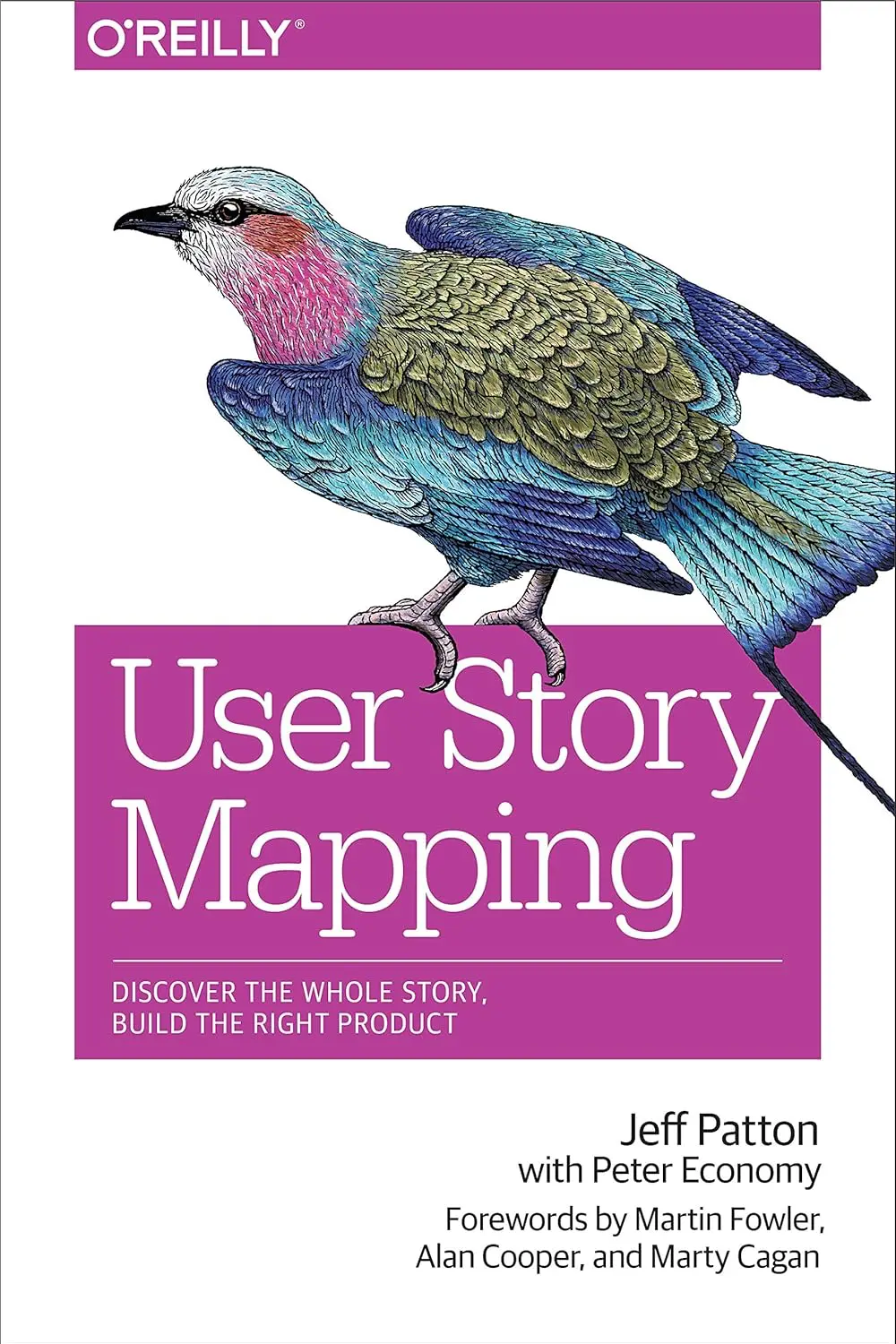
User Story Mapping is Jeff Patton’s solution to a common problem in agile development: the flat backlog. Most teams maintain a prioritized list of user stories, but that list loses the narrative structure of the user’s experience. You can see individual features but not how they fit together into a coherent flow. Story mapping puts the stories back into context by organizing them along two axes: the user’s activity flow (left to right) and priority (top to bottom).
The technique is visual and collaborative. A story map is typically built by the whole team on a wall with sticky notes. The top row shows the user’s main activities in sequence. Below each activity, you place the specific tasks and details, ordered by priority. The result is a picture of the entire user experience that makes it easy to see where the gaps are, which features form a minimum viable release, and which can wait.
Patton spends as much time on the conversation as the artifact. He argues that the story map itself is less important than the shared understanding the team builds while creating it. The process of walking through the user’s experience together, debating what matters most, and agreeing on what to build first is where the real value lies. The map is just the record of that conversation.
For founders, the technique is useful at the stage where you’ve validated a product concept and need to figure out what to build in what order. Instead of a flat list of features competing for priority, the story map gives you a visual tool for deciding which slice of the experience to ship first as your MVP. The concept of “release slices,” horizontal cuts across the map that represent coherent versions of the product, is especially practical.
The writing is informal and well-illustrated. Patton includes hand-drawn diagrams and photos of real story mapping sessions, which makes the technique feel approachable rather than academic. The book is longer than the technique strictly requires, with several chapters on agile philosophy and team dynamics that some readers will find useful and others will skip. The core story mapping chapters (1-8) are the ones to focus on if time is limited.
