
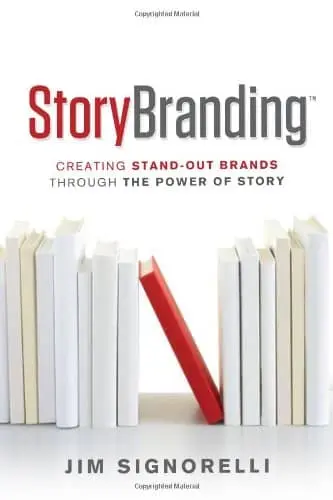
StoryBranding is Jim Signorelli’s framework for building brands using the principles of storytelling. His argument is that traditional branding focuses too heavily on features and benefits, which customers quickly forget, while story-based branding creates emotional connections that stick. The brands people love, Signorelli argues, are the ones that tell stories their customers can identify with.
The framework has two parts: the “inner story” and the “outer story.” The inner story is about what your brand believes, the values and beliefs that drive your company. The outer story is about what your brand does, the products, experiences, and communications that customers actually encounter. When the inner and outer stories align, customers feel that the brand is authentic. When they don’t, the brand feels hollow regardless of how polished the marketing is.
Signorelli breaks down the storytelling structure further, identifying six components of an effective brand story: the backstory (where the brand came from), the characterization (who the brand is), the motivation (what the brand cares about), the conflict (what challenge the brand and its customers face), the resolution (how the brand helps), and the moral (what the brand stands for). Each component gets its own chapter with examples and exercises.
For founders building a brand from scratch, the framework helps you think about what your company actually stands for, beyond the product itself. Many startups struggle with branding because they start with tactics (logo, colors, tagline) rather than with the underlying story. Signorelli’s process starts with the inner story and works outward, which produces a more coherent result.
The writing is clear and well-structured, though some readers will find the examples more relevant to established consumer brands than to early-stage startups. The book is strongest when it explains the framework and weakest when it tries to prove that storytelling is superior to traditional branding with somewhat cherry-picked comparisons. Still, the core idea that brands are built on narrative rather than features is well worth the read for anyone trying to make their company mean something to customers.
