
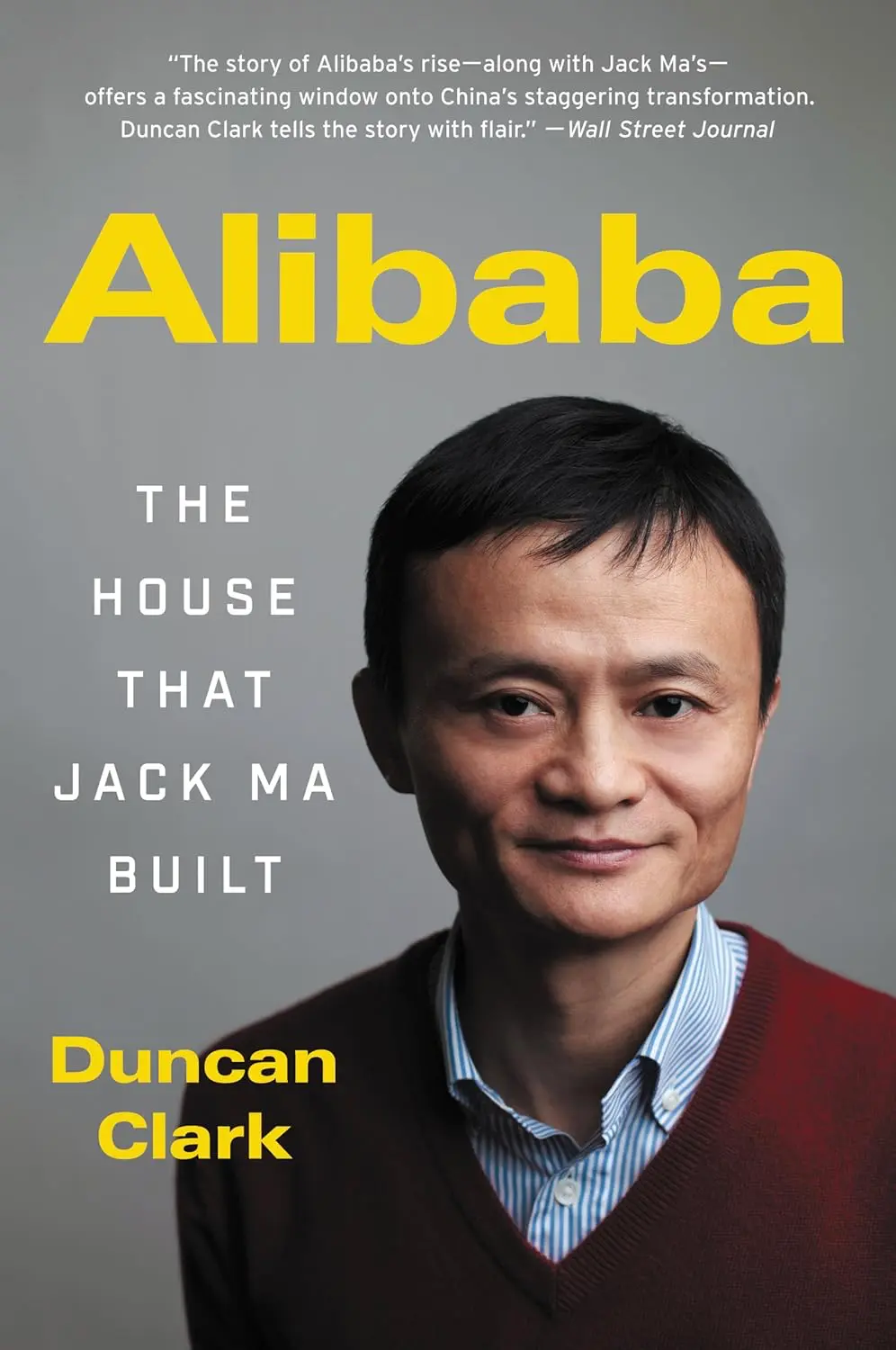
Alibaba: The House That Jack Ma Built is Duncan Clark’s account of how a former English teacher from Hangzhou built the company that became the backbone of Chinese e-commerce. Clark had a front-row seat: he was an early advisor to Alibaba and knew Jack Ma before the company became successful, which gives the book a perspective that pure outsider accounts lack.
The story begins with Ma’s repeated failures. He was rejected from dozens of jobs, including a position at KFC. He failed his university entrance exam twice. His first internet ventures lost money. Clark traces how these failures shaped Ma’s persistence and his understanding of the Chinese market, particularly his insight that Chinese small businesses needed a platform to find customers, which became Alibaba.com.
The competitive battles are the most gripping sections. Clark covers how Alibaba fought off eBay in China (by making the platform free while eBay charged fees, and by building Alipay to solve the trust problem in online transactions), how Taobao became the dominant consumer marketplace, and how Alibaba’s Singles’ Day shopping event became the world’s largest online shopping day. He also covers the complicated relationship with Yahoo, which invested $1 billion in Alibaba in 2005 and later found its investment worth far more than the rest of Yahoo combined.
The book situates Alibaba within the broader story of China’s internet economy, covering the regulatory environment, the relationship between tech companies and the Chinese government, and the cultural differences that made Western internet companies struggle in China while local companies thrived.
For founders, the book offers lessons in market strategy, particularly about how to compete against a better-funded incumbent by understanding your specific market better. Ma’s focus on serving small businesses rather than large enterprises, and his willingness to give away the product to build market share before monetizing, are strategies that have been applied in other markets and other industries.
The writing is clear and well-paced. Clark balances the business narrative with enough personal detail about Ma to make him feel like a real person rather than a corporate icon. Some sections on Chinese regulatory issues may be less engaging for readers outside Asia, but the overall story is one of the more compelling founder narratives of the internet era.
