
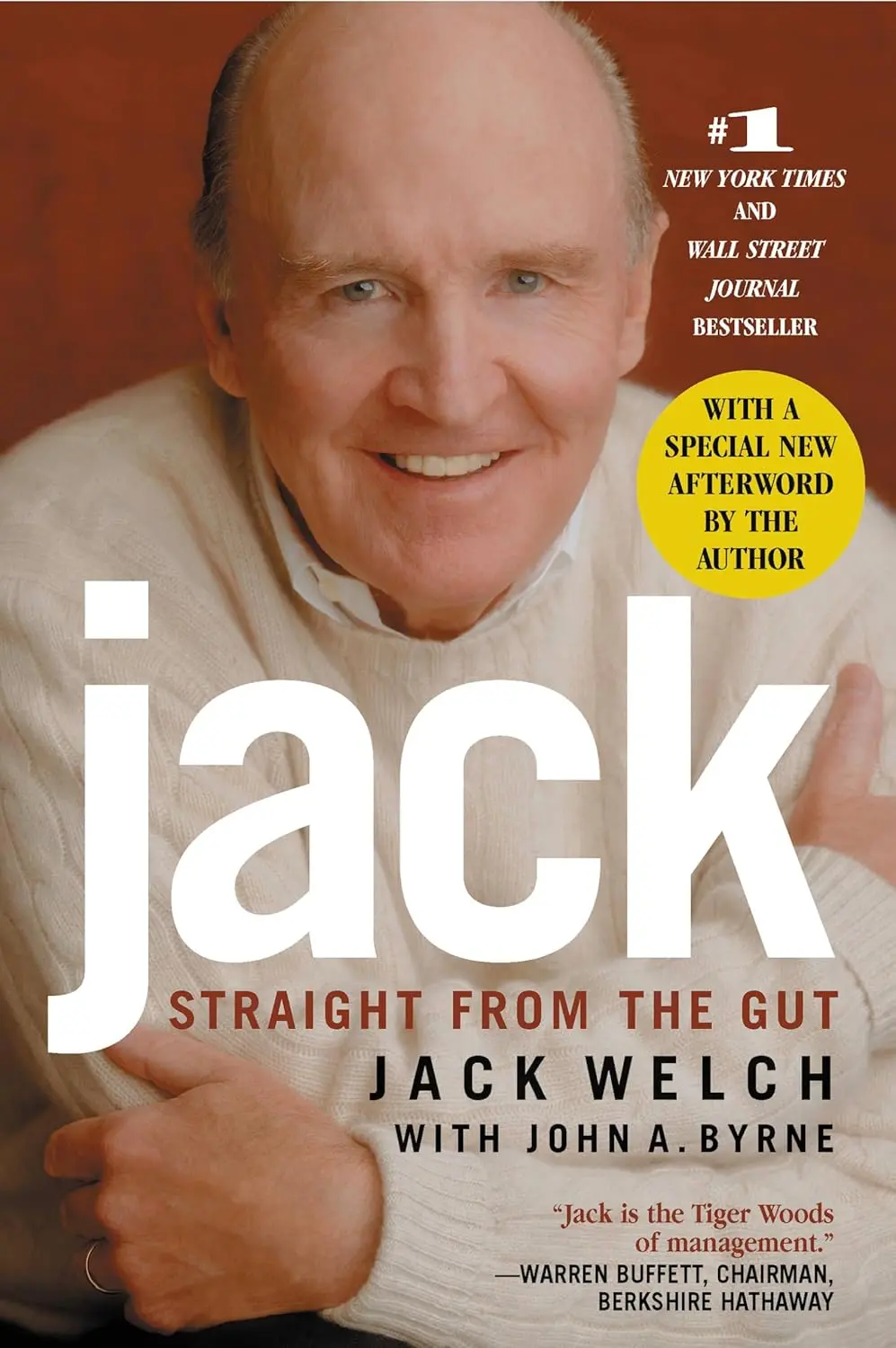
Jack: Straight from the Gut is Jack Welch’s account of his tenure as CEO of General Electric from 1981 to 2001, a period during which GE became the most valuable company in the world. Welch’s management philosophy, which he describes in detail throughout the book, was built on a few core ideas: differentiate between your best and worst performers and act on the difference, push decision-making down to the lowest competent level, eliminate bureaucracy wherever you find it, and be brutally honest about performance even when honesty is uncomfortable.
The most controversial element is what became known as “rank and yank,” Welch’s practice of annually identifying the bottom 10% of managers and either improving or removing them. Welch argues this is more humane than the alternative, which is letting underperformers linger in roles where they’ll eventually be fired anyway, with years of wasted time on both sides. The practice generated enormous debate and has been both widely adopted and widely criticized.
The book covers specific deals and decisions: the acquisition of RCA and NBC, the entry into financial services through GE Capital, the push into globalization, and the Six Sigma quality initiative. Welch is specific about what worked, what didn’t, and how he made decisions under uncertainty. He’s also candid about the succession process that eventually chose Jeff Immelt to replace him.
For founders, the management sections are the most transferable. Welch’s emphasis on candor (saying what you really think rather than what people want to hear), on simplifying rather than complicating, and on spending disproportionate time on hiring and developing the best people resonates with the challenges of building a company at any scale.
The book reflects Welch’s personality: confident, opinionated, and unapologetic. His legacy has been reappraised since publication, particularly regarding GE Capital’s role in the 2008 financial crisis and the subsequent decline of GE under his successors. Some of his management practices look different in hindsight. But as a firsthand account of how one of the 20th century’s most consequential CEOs thought about running a company, the book remains worth reading, especially if you engage with it critically rather than as gospel.
