
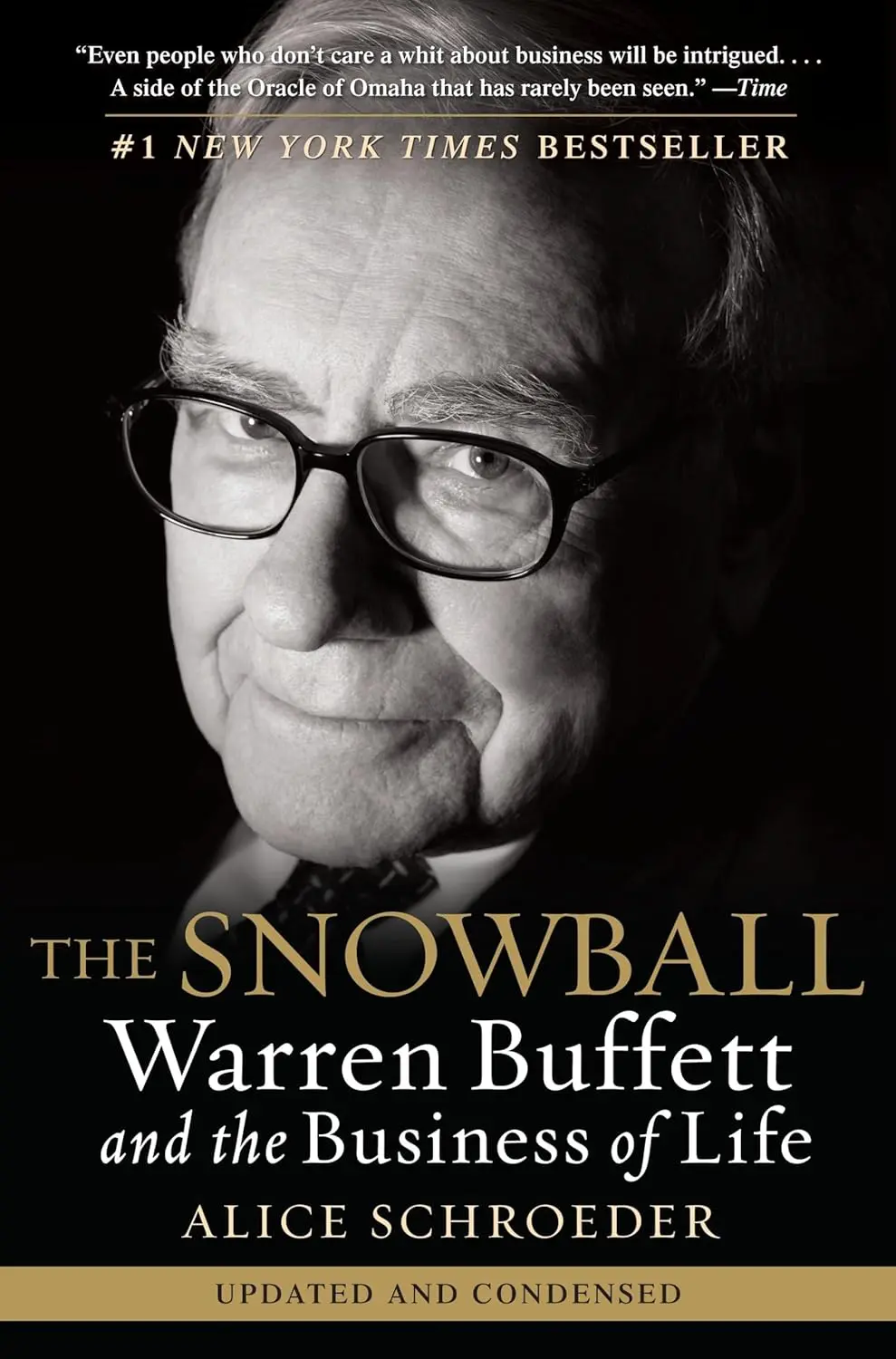
The Snowball is Alice Schroeder’s authorized biography of Warren Buffett, built from over five years of research and hundreds of hours of direct conversation with Buffett himself. The title comes from Buffett’s metaphor for compounding: life is like a snowball, and all you need is wet snow and a really long hill. The book traces how Buffett found his snow and his hill.
The biography is comprehensive, covering Buffett’s childhood in Omaha (where he was running small businesses by age six), his education under Benjamin Graham at Columbia, his early investment partnerships, his purchase and transformation of Berkshire Hathaway, and his rise to become the world’s richest person. Schroeder also covers his personal life in more detail than Buffett was probably comfortable with: his difficult first marriage, his unconventional living arrangement with two women, and his complicated relationships with his children.
The investing sections are detailed enough to be educational. Schroeder walks through specific deals, from See’s Candies to GEICO to the Washington Post, explaining what Buffett saw that others missed and what his reasoning was at each step. The recurring themes, buy wonderful companies at fair prices, think in decades rather than quarters, never invest in something you don’t understand, are illustrated with specific numbers and contexts rather than just stated as principles.
For founders, the book is relevant beyond investing advice. Buffett’s approach to capital allocation, deciding where to put money for the highest return, is essentially the same decision founders make every day when deciding where to spend their limited resources. His emphasis on compounding, both financial and reputational, applies to building a business as much as to building a portfolio.
The book is long, over 800 pages, and some readers find the middle sections slow as Schroeder covers every major deal in Buffett’s career. But the early chapters about Buffett’s childhood and the later chapters about his philanthropy and legacy are compelling, and the level of access Schroeder had makes this the definitive account of one of the most successful investors who ever lived.
