
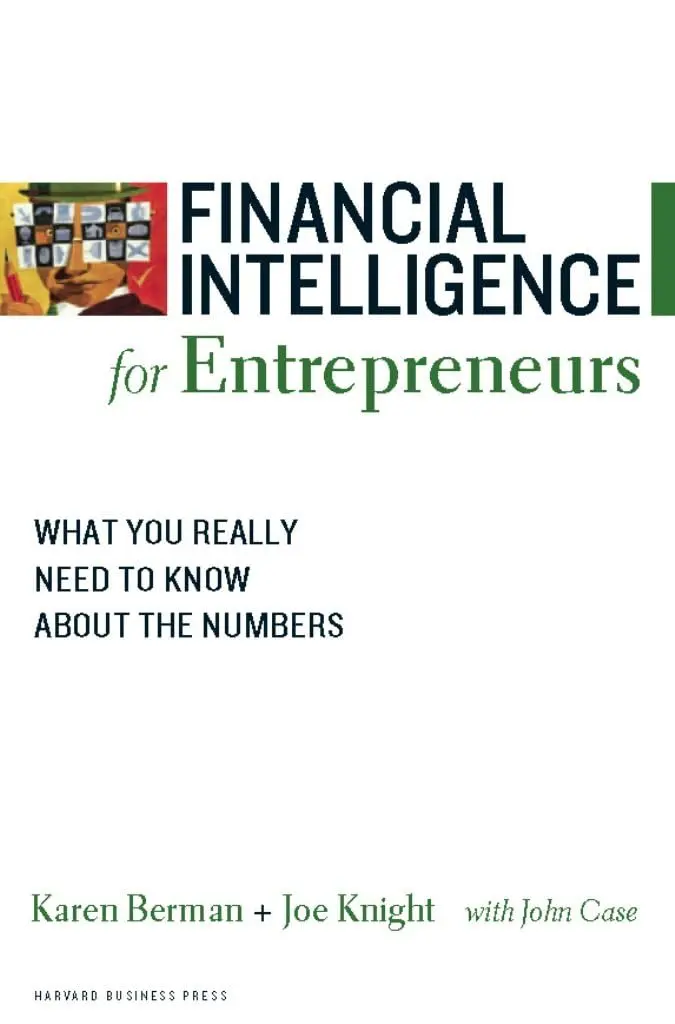
Financial Intelligence for Entrepreneurs is Karen Berman and Joe Knight’s attempt to teach non-financial founders how to read and use financial statements. The book is adapted from their original Financial Intelligence (aimed at general managers) and tailored specifically for entrepreneurs who need to understand their numbers but never took an accounting class.
The book covers the three main financial statements. The income statement (how much money you made or lost), the balance sheet (what you own versus what you owe), and the cash flow statement (where your cash actually went). For each, Berman and Knight explain what the numbers mean, how they relate to each other, and what red flags to look for. They also cover common financial metrics like gross margin, operating margin, return on assets, and the current ratio.
What makes the book different from an accounting textbook is the emphasis on judgment. The authors repeatedly point out that financial statements involve estimates, assumptions, and choices about how to categorize things. Revenue recognition, depreciation schedules, and inventory valuation all require judgment calls that can make the same company look very different depending on the choices made. Understanding these choices, and knowing when to question them, is what separates financial literacy from just being able to read a spreadsheet.
For founders, the book fills a real gap. Most startup founders can talk about revenue and burn rate but struggle with more nuanced questions: Why is our gross margin declining? What’s the difference between profit and cash flow? Why do we show a profit on the income statement but have no money in the bank? Berman and Knight answer these questions clearly and without jargon.
The writing is plain and well-organized. Each chapter builds on the previous one, and the authors include exercises and real-world examples throughout. The book is relatively short and focused, making it practical as a reference to keep near your desk rather than something you read once and shelve. If you’re a founder who avoids looking at your financials because the numbers feel confusing, this is the book to start with.
