
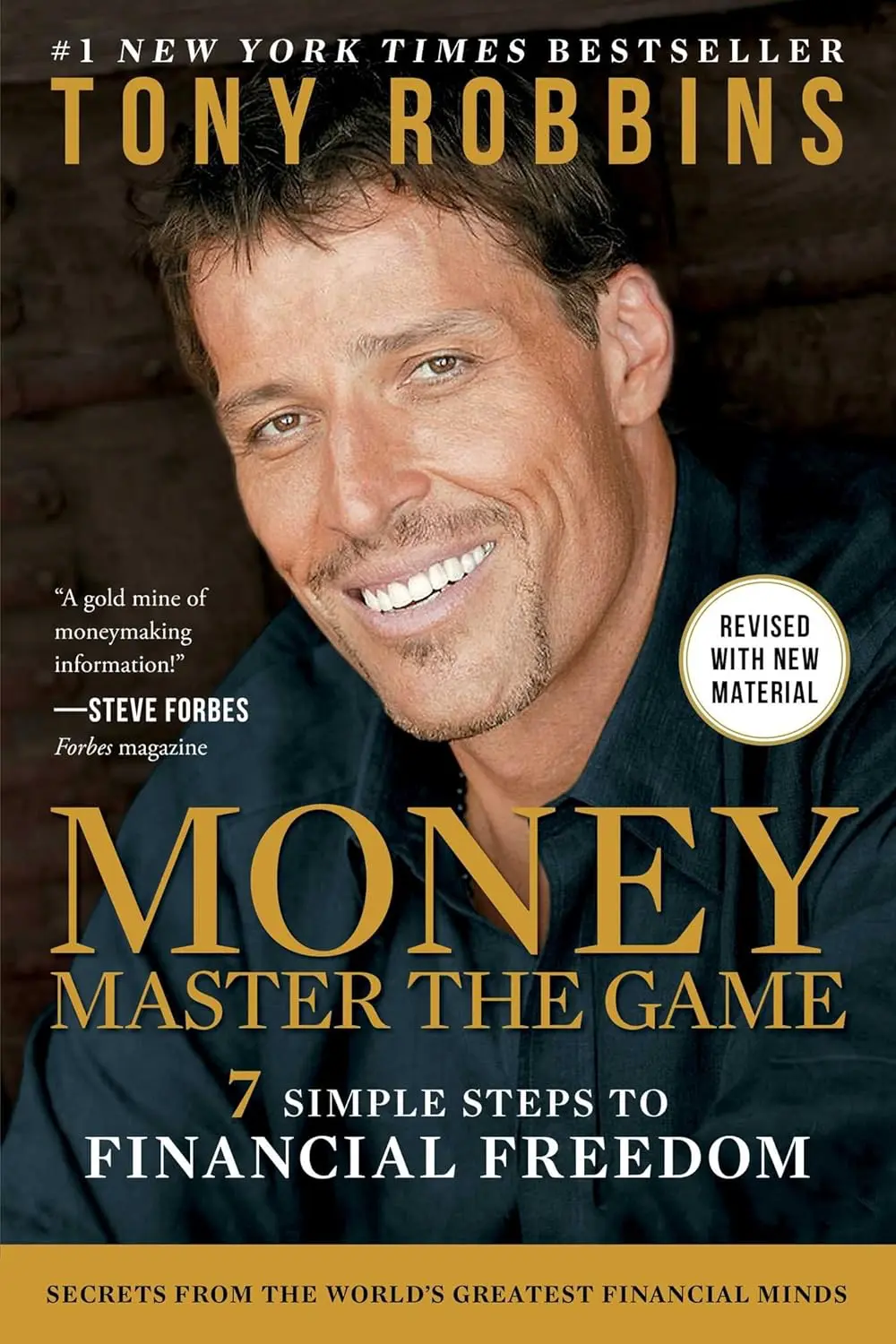
Money: Master the Game is Tony Robbins’s entry into personal finance, built around interviews with over 50 of the world’s most successful investors. The book is structured as seven steps toward financial freedom, covering everything from understanding how the financial industry works (and how it takes advantage of you) to building an asset allocation that can weather different market conditions.
The strongest sections are the interviews. Robbins spoke with Ray Dalio (who shares his “All Weather Portfolio” strategy), Warren Buffett, John Bogle (founder of Vanguard), Carl Icahn, and others. Each interview is distilled into specific, actionable advice about how to invest. Dalio’s All Weather Portfolio section alone, which lays out a specific asset allocation designed to perform reasonably well in any economic environment, has been widely discussed and replicated since the book’s publication.
Robbins also covers the hidden costs of investing: management fees, expense ratios, and tax inefficiency that silently erode returns over decades. He makes a strong case for low-cost index funds and against actively managed funds, backing it with data showing that the vast majority of active managers underperform the market after fees.
The book is long, over 600 pages, and Robbins’s motivational speaking style runs through the writing. Some sections feel like a seminar transcript, with rhetorical questions, emotional stories, and repeated exhortations to take action. Readers who enjoy Robbins’s energy will find this engaging. Readers who prefer a drier, more analytical style may find it exhausting.
For founders, the investing frameworks are the most useful part. Many entrepreneurs focus on building businesses without paying attention to what they do with the money those businesses generate. The book provides a basic education in asset allocation, diversification, and fee awareness that can help founders make smarter decisions with their personal wealth.
The financial advice is generally sound, though some specific product recommendations may be outdated. The overall message, save aggressively, keep fees low, diversify across asset classes, and think long-term, is well-supported and matches what most independent financial advisors would recommend.
