
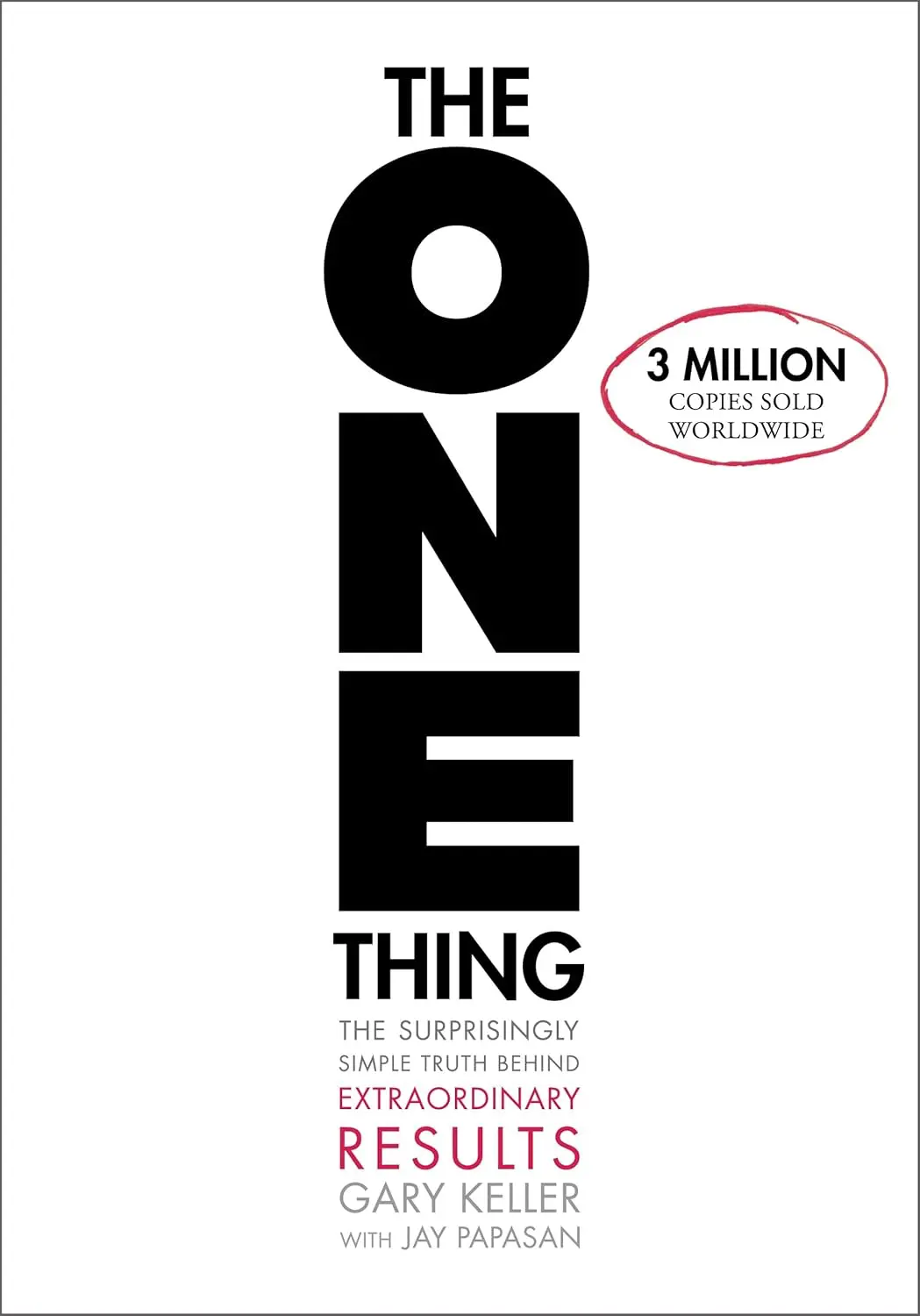
The One Thing is built around a single question: “What’s the one thing I can do such that by doing it everything else will be easier or unnecessary?” Gary Keller, who co-founded Keller Williams Realty into one of the largest real estate companies in the world, argues that this question, applied consistently, is the difference between people who achieve extraordinary results and people who stay busy without making real progress.
The first half of the book dismantles what Keller calls “the six lies between you and success.” These include the idea that everything matters equally (it doesn’t; a small number of actions produce most results), that multitasking is effective (the research says it isn’t), that you need more discipline (you need less discipline but applied to the right thing), and that a balanced life is achievable (balance is a myth; counterbalance is more realistic).
The second half introduces the Focusing Question and shows how to apply it across different areas: work, personal life, health, relationships. Keller recommends time-blocking: reserving your most productive hours for your one thing and protecting that block from interruptions. He argues for four-hour blocks of focused work on the most important task, scheduled at the same time every day.
For founders, the book’s message is a direct challenge to the startup culture of juggling a dozen priorities simultaneously. Keller’s argument is that the founders who achieve the most are the ones who identify the single highest-leverage activity and protect their time to work on it, even when everything else feels urgent. The Focusing Question is a useful daily exercise for cutting through the noise.
The writing is accessible and the book moves quickly. Some readers find the concept too simple for an entire book and feel that Keller pads the page count with repetition. That’s a fair criticism. The core idea can be summarized in a page. But the supporting arguments about multitasking, willpower, and time-blocking add enough value to justify the full read, especially if you’re someone who chronically overcommits.
