
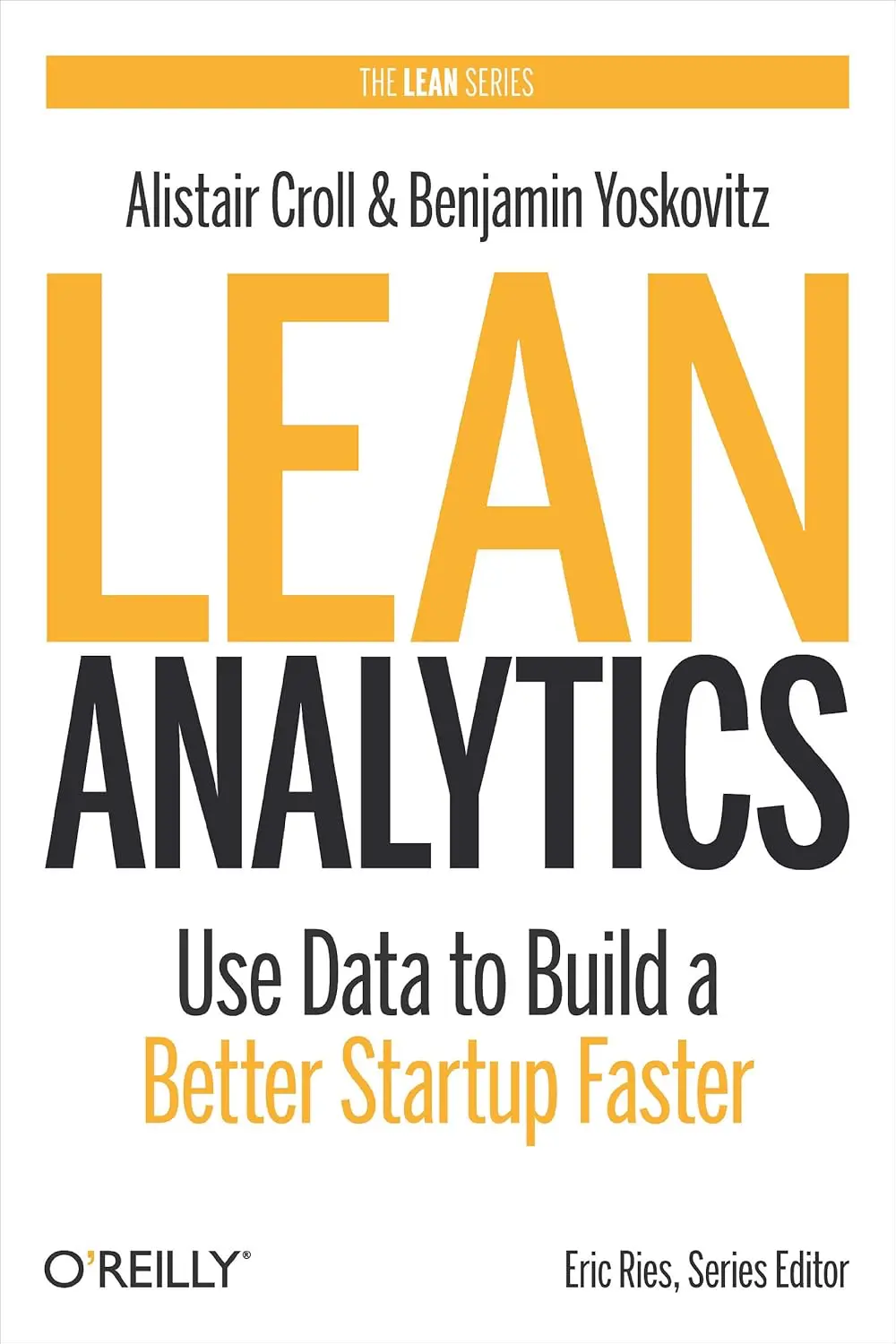
Lean Analytics is Alistair Croll and Benjamin Yoskovitz’s extension of the Lean Startup framework, focused specifically on how to measure what matters in a startup. The book’s central argument is that most startups either track too many metrics (and lose focus) or track the wrong ones (vanity metrics that feel good but don’t indicate real progress). The solution is to identify the “One Metric That Matters” at each stage and focus on moving it.
The book introduces five stages of startup growth: Empathy (understanding the problem), Stickiness (building something users come back to), Virality (getting users to bring other users), Revenue (making money), and Scale (growing the business). For each stage, Croll and Yoskovitz define which metrics are most important and what “good” looks like based on benchmarks they gathered from interviews with over 100 founders and investors.
The business model chapters are particularly useful. The book covers six types of startup business models (SaaS, mobile app, user-generated content, two-sided marketplace, e-commerce, and media/ad-supported) and maps the right metrics to each one. This section saves founders the trouble of figuring out what to measure from scratch, since someone has already done the work of identifying which numbers actually predict success for each model type.
For founders, the practical value is immediate. If you’re running a startup and you aren’t sure whether your numbers are good or bad, this book provides specific benchmarks. If you’re tracking twenty different metrics in a dashboard and not sure which ones to prioritize, the “One Metric That Matters” framework forces a useful simplification.
The writing is clear and well-organized. The book includes numerous real examples and case studies, though some are dated. The Lean Startup vocabulary (pivot, MVP, validated learning) is used throughout, so familiarity with Eric Ries’s work is helpful but not strictly necessary. The book is more reference manual than narrative, which means it’s the kind of thing you come back to at different stages rather than reading once and shelving.
