
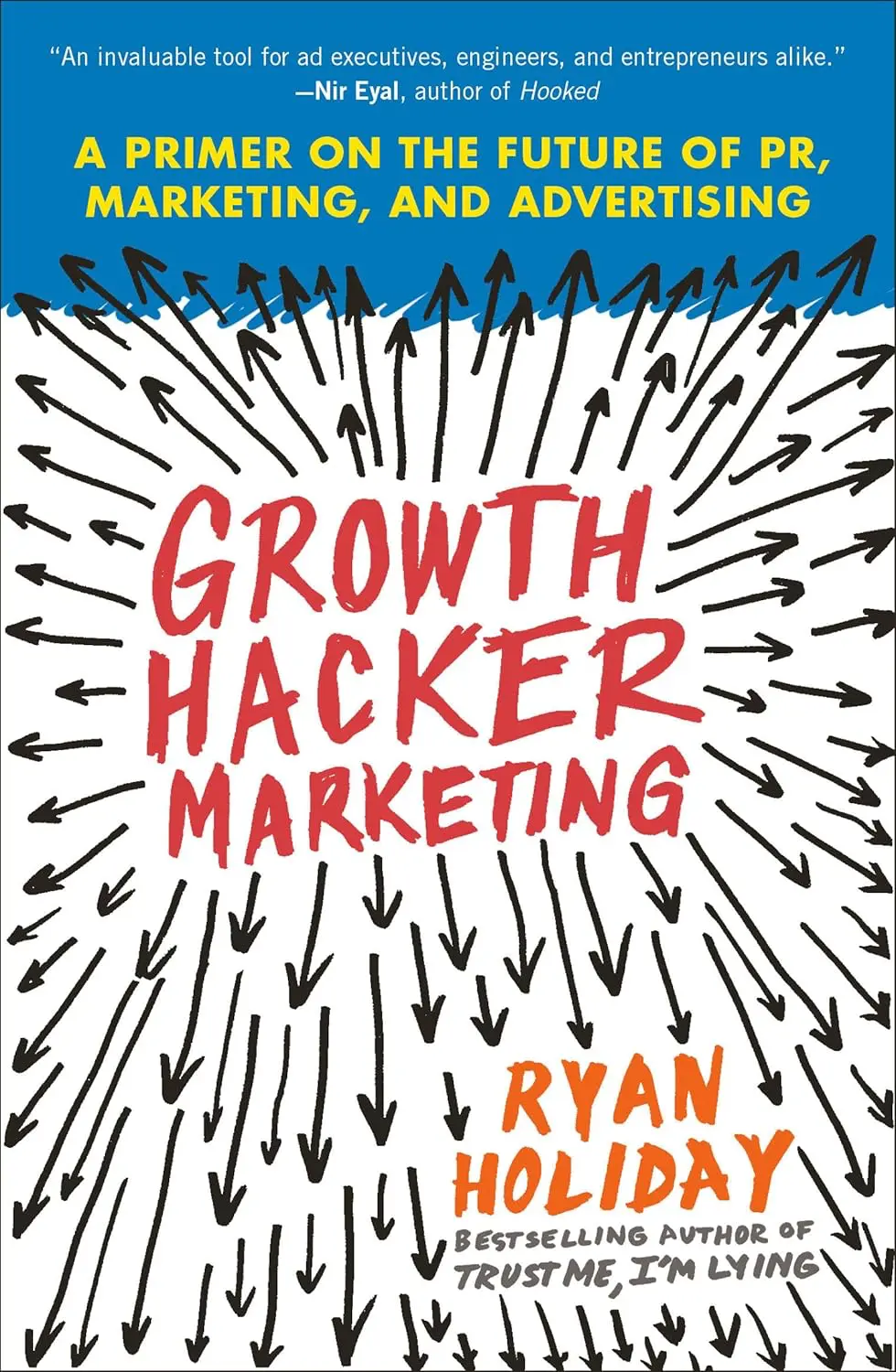
Growth Hacker Marketing is Ryan Holiday’s introduction to how startups have replaced traditional marketing with product-led growth strategies. The book is short, under 150 pages, and reads like an extended essay rather than a comprehensive guide. It is aimed at people who are encountering the concept of growth hacking for the first time.
Holiday structures the book around four ideas. First, product-market fit matters more than any marketing tactic. If people don’t want what you’re selling, no amount of clever promotion will save it. Second, the best growth strategies are built into the product itself. Hotmail put “Get your free email at Hotmail” at the bottom of every outgoing email. Dropbox gave free storage for referrals. These are product decisions, not marketing campaigns. Third, growth hacking requires going viral or creating feedback loops that compound over time. Fourth, traditional approaches like buying ads and running PR campaigns are becoming less effective relative to these product-driven strategies.
The examples are drawn from well-known tech companies, and readers already familiar with the growth hacking space will recognize most of them. The book doesn’t go deep on any single case study, which is both a feature (it moves fast) and a limitation (it stays surface-level on execution).
For founders with no background in growth marketing, the book is a good starting point. It makes the conceptual case quickly and clearly, and the short length means you can read it in a single sitting. For those who want more tactical depth, Hacking Growth by Sean Ellis is the natural follow-up.
Holiday’s writing is concise and engaging. He draws from his experience as a marketing director for several startups and as the author of Trust Me, I’m Lying, which covered the media manipulation side of marketing. Growth Hacker Marketing is lighter and more optimistic in tone, focused on what’s working rather than what’s broken. It is a fast primer that does what it sets out to do: explain the shift from traditional marketing to growth-oriented thinking.
