
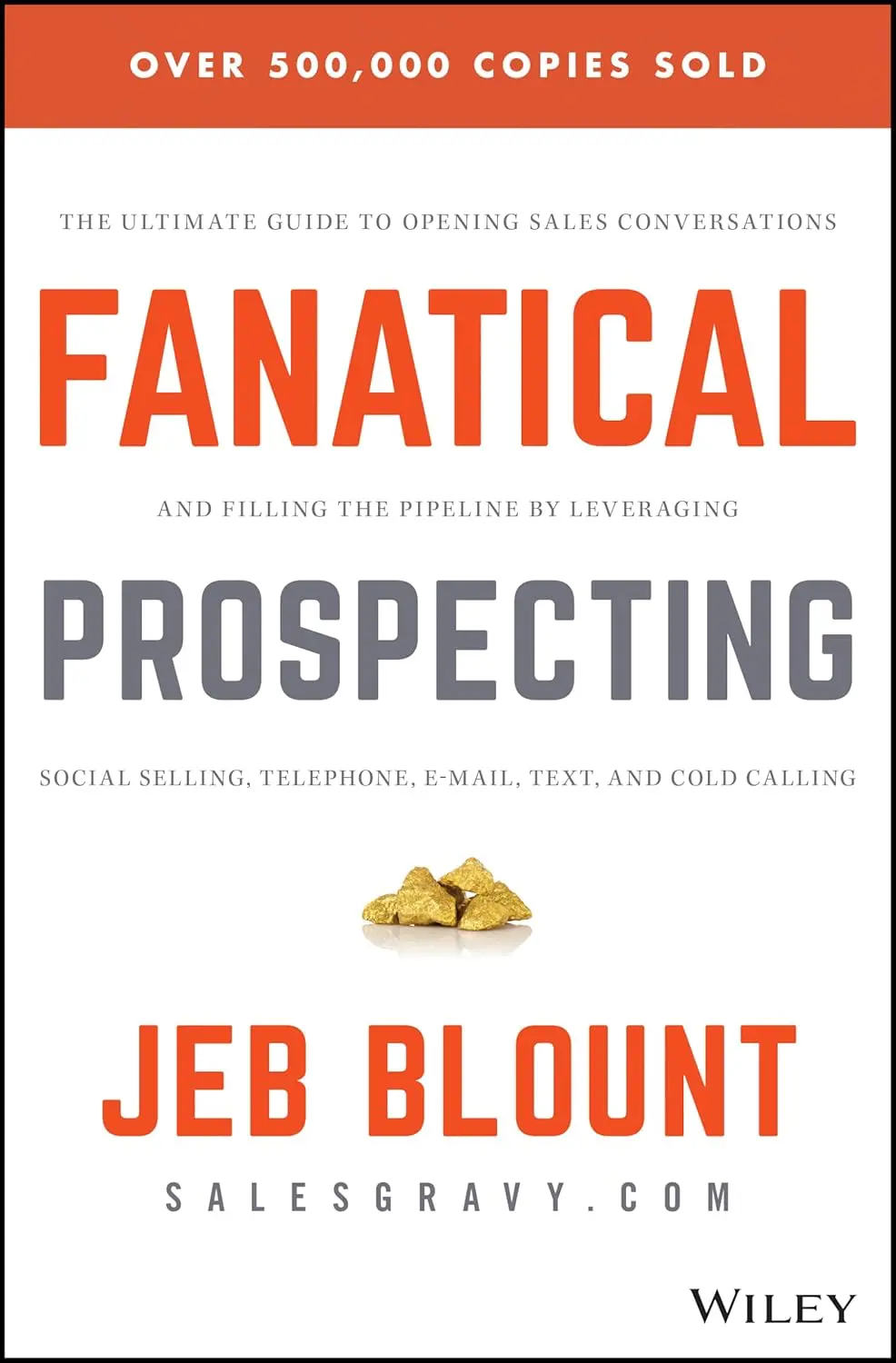
Fanatical Prospecting is Jeb Blount’s argument that everything in sales comes down to pipeline, and that keeping the pipeline full requires disciplined daily prospecting activity. Blount’s position is that most sales failures can be traced not to poor closing skills or bad presentations, but to the simple fact that the salesperson didn’t have enough qualified opportunities to work with.
The book is organized around what Blount calls the “three Ps”: prospecting, prospecting, and prospecting. He covers the mechanics of phone prospecting (including specific call frameworks and how to handle common objections), email prospecting (subject lines, body copy, and follow-up cadence), social selling (how to use LinkedIn and other platforms to warm up cold outreach), and text-based prospecting. Each channel gets its own section with scripts and examples.
Blount is blunt about the psychology of prospecting. He argues that the main obstacle is not lack of knowledge but emotional resistance: the fear of rejection that makes people avoid picking up the phone or sending the email. He frames prospecting as a mental game as much as a tactical one and spends several chapters on how to manage the emotional toll of hearing “no” hundreds of times.
For founders doing their own sales, especially in B2B, the book’s message is simple and actionable. You probably know enough about your product and market. What you might lack is the discipline to prospect consistently when there are a hundred other things competing for your time. Blount’s daily activity frameworks give a structure for making prospecting a non-negotiable part of the schedule.
The writing is energetic and repetitive by design. Blount repeats his core points from multiple angles, which can feel redundant but also drills the message in. The book is more useful as a practical reference than as a one-time read: keep it nearby and review the relevant sections before a prospecting sprint.
