
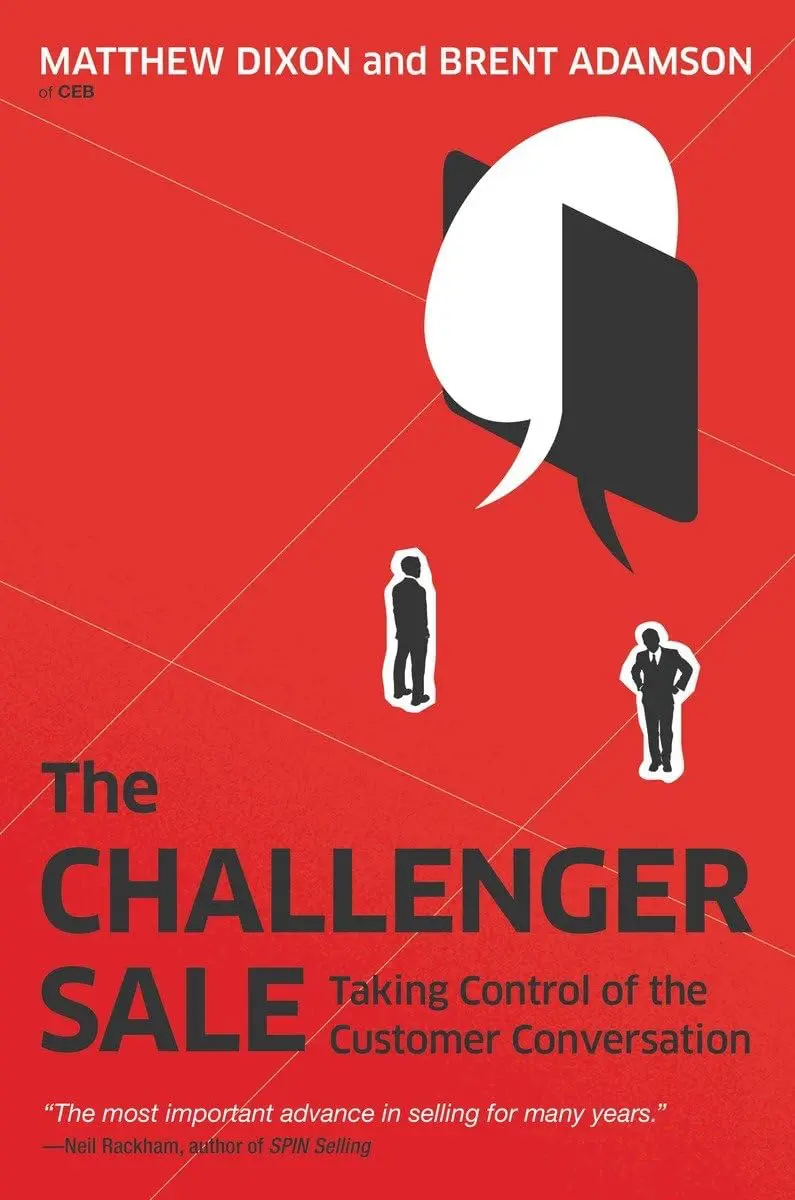
The Challenger Sale is based on research by the Corporate Executive Board (now Gartner) that studied the behaviors of nearly 6,000 sales representatives across multiple industries. The central finding was that sales reps fall into five behavioral profiles: the Hard Worker, the Lone Wolf, the Relationship Builder, the Problem Solver, and the Challenger. Of these, the Challenger consistently outperformed the others, especially in complex B2B sales.
Challengers succeed by doing three things. First, they teach the customer something new about their own business, bringing an insight the customer hadn’t considered rather than just asking about their needs. Second, they tailor their message to the specific person they’re talking to, understanding what matters to a CFO versus a VP of Operations. Third, they take control of the sale, pushing back when the customer tries to commoditize the product or stall the process.
The relationship-builder finding was the most controversial. Conventional sales wisdom says that strong relationships drive B2B sales. The research found that relationship builders were actually among the worst performers in complex selling environments. The authors argue this is because relationship builders are too agreeable to challenge the customer’s thinking or push for a decision.
For founders who sell (which is most founders in the early stages), the framework is directly applicable. The “teach, tailor, take control” approach maps well onto how founders already tend to sell, since they typically know their market better than any hired sales rep and can offer genuine insight rather than just running a scripted pitch.
The book is more academic in tone than most sales books, and the writing can feel corporate at times. The data is well-presented but some of the examples are generic. Still, the core insight, that the best salespeople bring value through insight rather than through relationship maintenance, has had a measurable effect on how B2B sales teams are trained and managed.
