
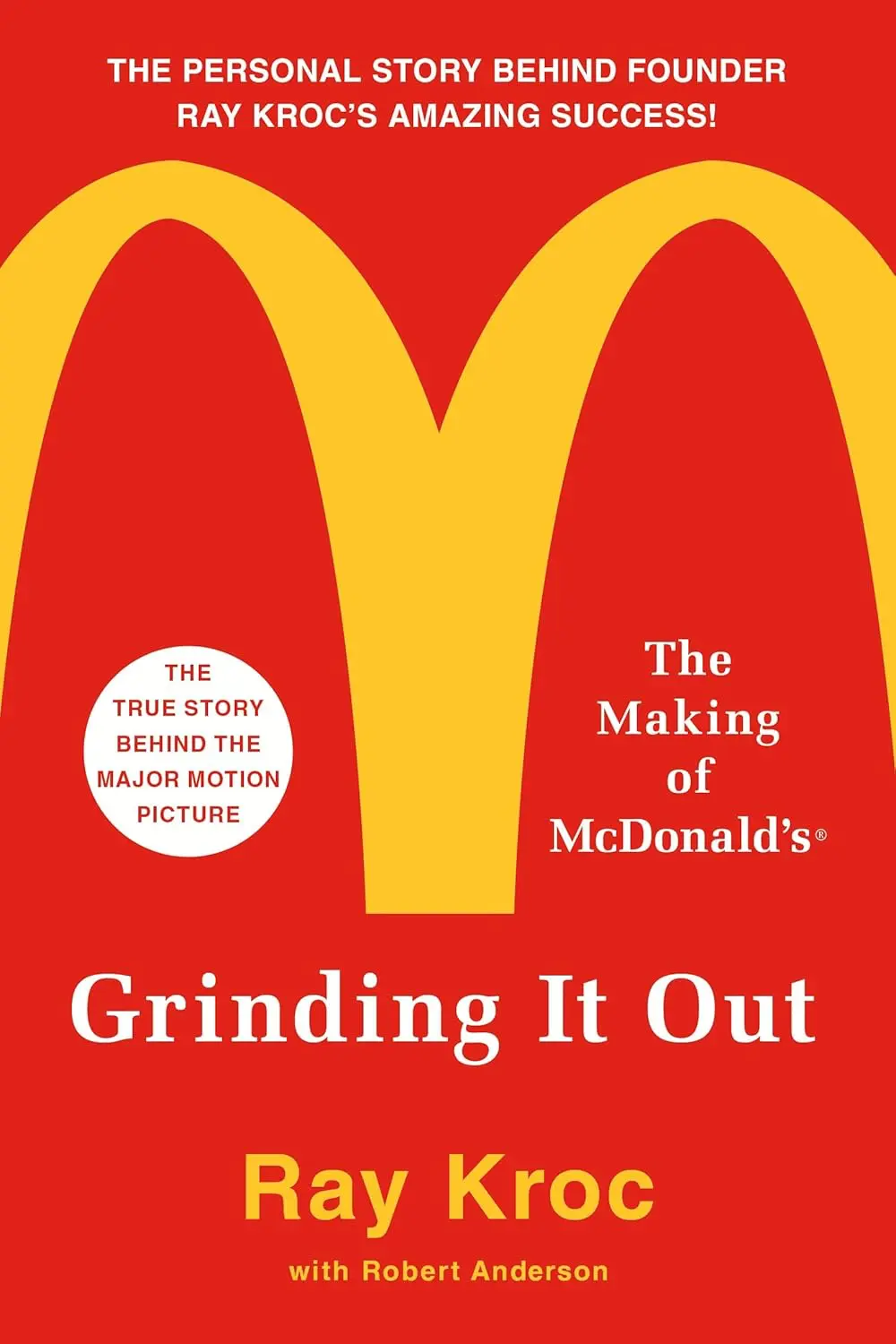
Grinding It Out is Ray Kroc’s autobiography, focused primarily on how he built McDonald’s from a single franchised location into a global corporation. Kroc didn’t found the original McDonald’s restaurant, the McDonald brothers did, but he was the one who saw the potential for a franchise system and spent the next two decades turning it into reality.
The most striking thing about Kroc’s story is the timeline. He spent 17 years selling paper cups for Lily-Tulip Company, then switched to selling milkshake mixers. He was 52 years old, dealing with diabetes and arthritis, when he first visited the McDonald brothers’ hamburger stand in San Bernardino and recognized something different about how they operated: the speed, the consistency, the simplicity of the menu. He convinced them to let him franchise the concept and spent the next several years opening locations while barely making enough to cover his own salary.
Kroc writes plainly about the grind of building the business: the fights with franchisees who wanted to cut corners, the financial pressure of expansion, the eventual falling out with the McDonald brothers, and the decades it took before the company’s financial model actually worked. He doesn’t romanticize the process. The book’s title is literal.
What makes the book interesting for founders is Kroc’s obsession with operational consistency. His insight was that the value of McDonald’s was not the food itself but the system that produced the same food the same way in every location. His approach to franchising, including real estate strategy (Kroc eventually realized the real money was in owning the land under the restaurants), became a model that countless franchise businesses still follow.
The writing is direct and unpolished. Kroc comes across as tough, opinionated, and not particularly reflective. He admits his mistakes only briefly and moves on. Some readers will find this refreshing; others will want more depth. But as a case study in persistence and operational discipline, it’s hard to find a better example than a man who started his biggest venture at 52 and didn’t stop grinding until he had 7,500 locations.
