
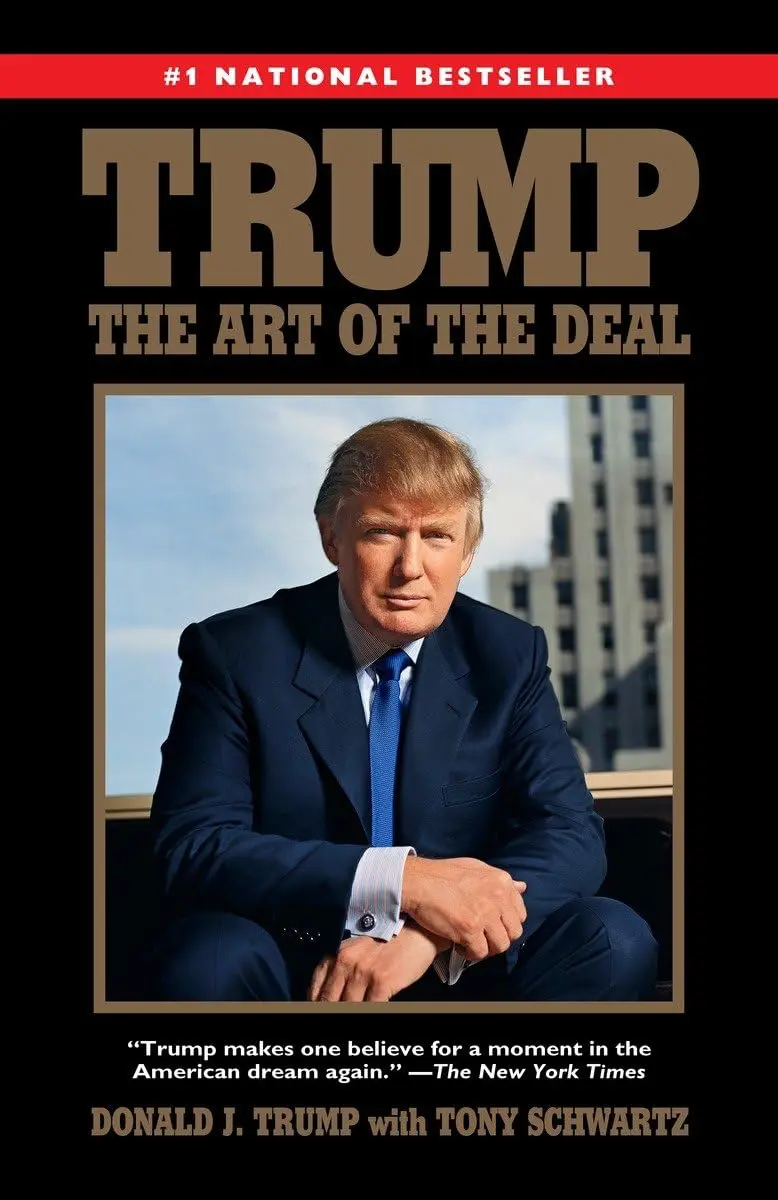
The Art of the Deal is Donald Trump’s 1987 account of how he built his real estate business, co-written with journalist Tony Schwartz. The book became one of the bestselling business books of the 1980s and remained in print for decades, partly because Trump’s subsequent political career kept it in public discussion.
The book opens with a chapter describing a typical week in Trump’s life, then moves through the story of his career: growing up in his father’s outer-borough real estate business, moving into Manhattan development, building Trump Tower, buying the New Jersey Generals football team, and negotiating deals with Atlantic City casinos. Along the way, Trump lays out his principles of dealmaking, including “think big,” “use leverage,” “get the word out,” and “contain the costs.”
The negotiation advice is the most practically useful section. Trump describes specific deals in enough detail that you can follow his reasoning: how he positioned himself, what leverage he used, how he handled setbacks, and when he walked away. The real estate industry context is specific, but the dealmaking patterns, particularly around creating urgency, controlling the narrative, and knowing when you have leverage and when you don’t, apply broadly.
The book is written in a confident, self-promotional style that will either feel energizing or exhausting depending on your tolerance for it. Schwartz, who did the actual writing, later publicly said he regretted the book and felt it presented a more flattering portrait of Trump than the reality warranted. That context is worth keeping in mind while reading.
For founders, the book is useful as one perspective on aggressive negotiation and self-promotion, topics that many business books handle only in sanitized form. Trump’s willingness to promote himself relentlessly and to frame every situation in terms of winning and losing reflects a real approach to business that some people find effective and others find repellent. Reading it critically is probably more useful than either accepting or dismissing it entirely.
The book is a quick read at around 250 pages and moves fast through the deal stories.
