
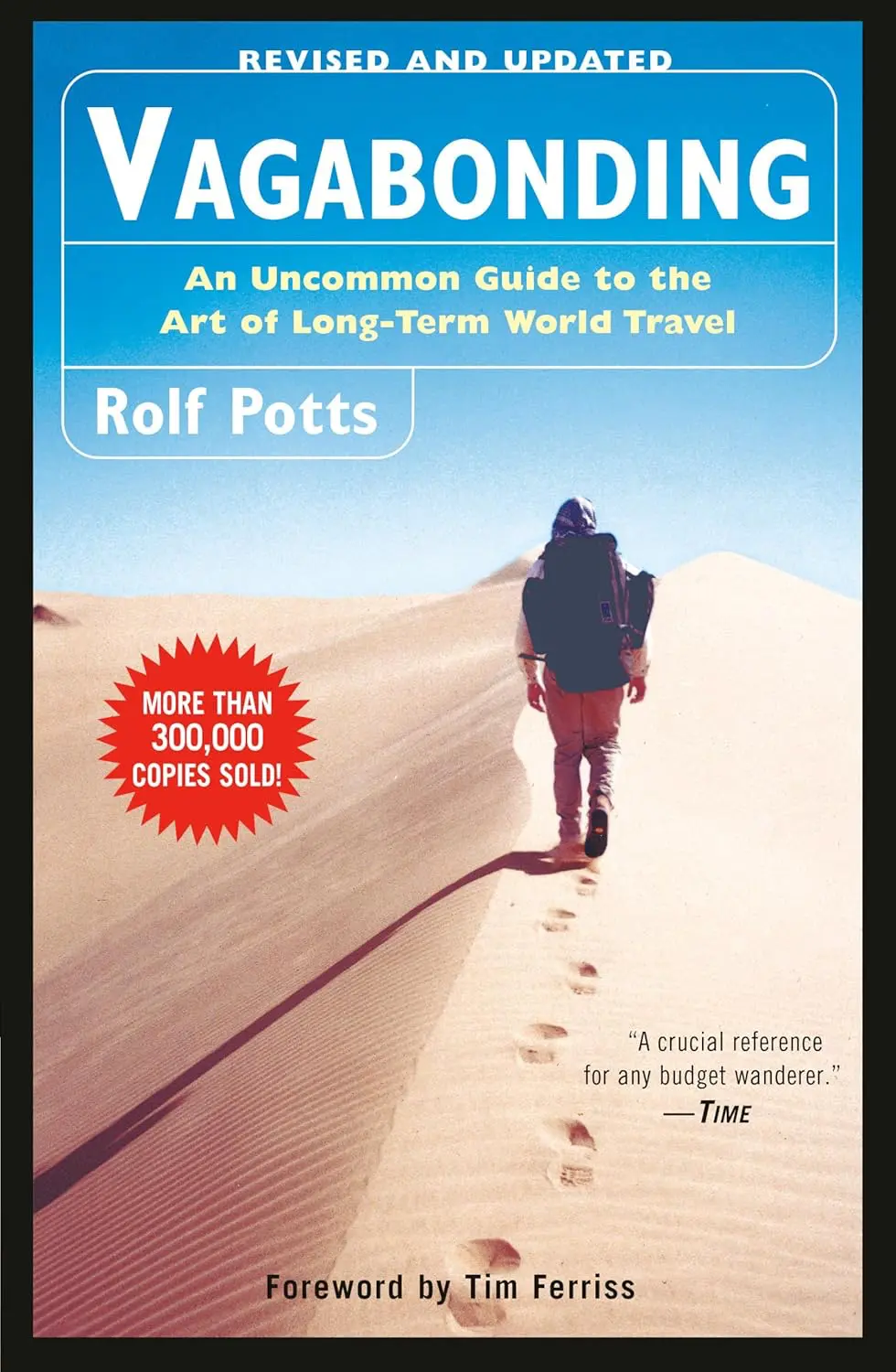
Vagabonding is Rolf Potts’s argument that long-term travel, meaning weeks or months rather than a rushed two-week vacation, is both more accessible and more rewarding than most people realize. The book was originally published in 2002 and has since become a cult favorite, partly because Tim Ferriss cited it as one of the books that most influenced The 4-Hour Workweek.
Potts defines vagabonding as an attitude more than an itinerary. It is the decision to take an extended period of time away from your normal life to travel the world on your own terms, slowly, cheaply, and with an openness to whatever happens. He draws from his own experience traveling across Asia, Europe, and the Americas on modest budgets, as well as from writers like Walt Whitman, John Steinbeck, and Ed Buryn.
The practical sections cover how much money you actually need (less than you think), how to save for a trip (simplify your life and cut expenses), how to deal with work (sabbaticals, quitting, or building remote income), and how to handle the logistics of budget travel. Potts is realistic about the challenges: loneliness, discomfort, the awkwardness of returning to normal life after months on the road.
What separates this book from typical travel guides is its philosophical underpinning. Potts argues that the impulse to keep accumulating money and possessions before “allowing” yourself to travel is a trap. The conditions will never be perfect. Vagabonding is about going anyway and trusting that the experience will be worth more than whatever you gave up.
For founders, the book is relevant in a few ways. Many entrepreneurs take gap periods between companies or before starting their first venture, and Potts makes a strong case that extended travel during those windows is one of the better investments you can make in perspective and mental clarity. The book also challenges the assumption that productivity requires constant output, sometimes the most productive thing you can do is step away entirely.
It reads fast and the tone is warm without being preachy. Some of the travel logistics are dated, but the core philosophy hasn’t aged.
