
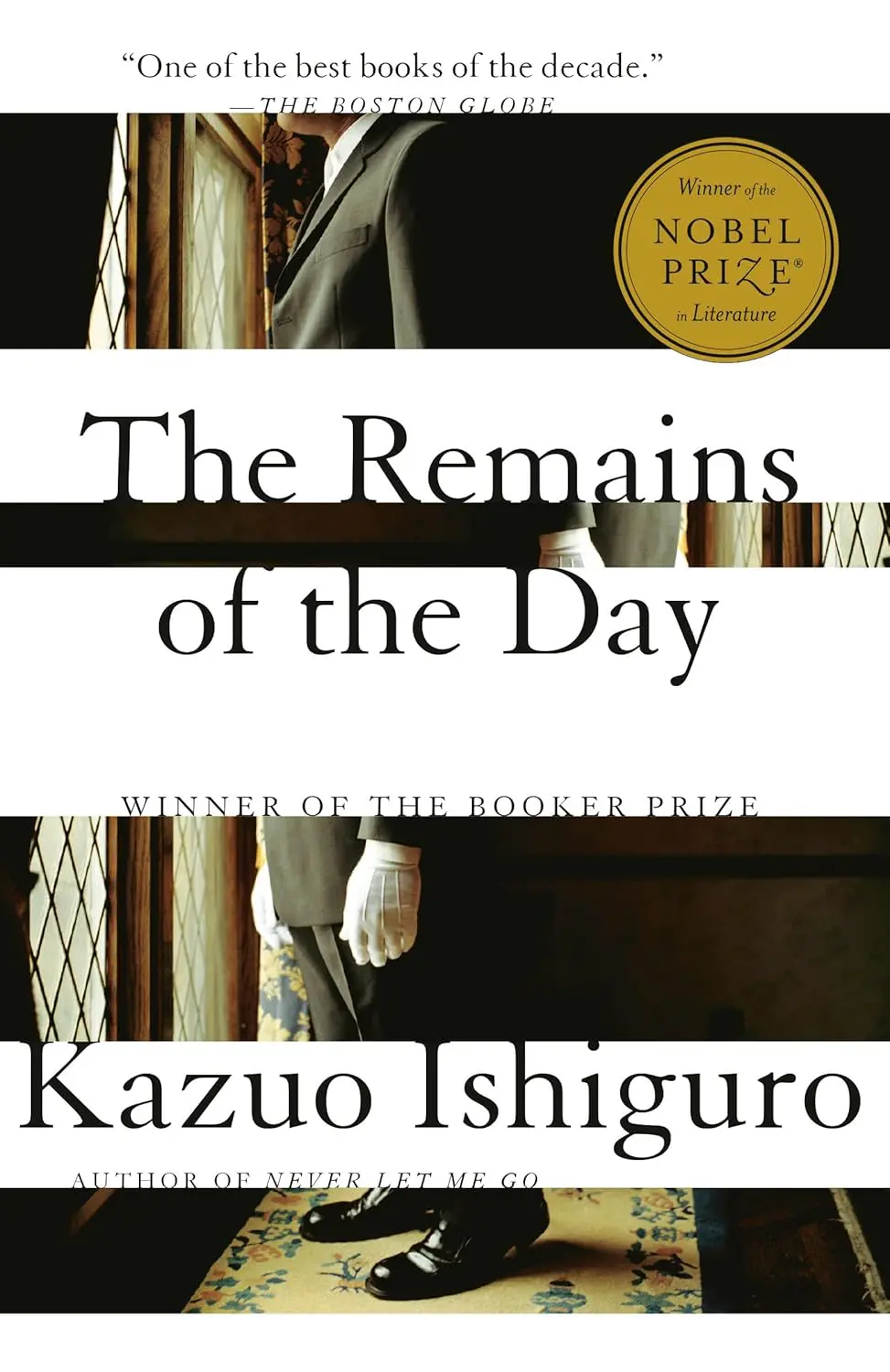
The Remains of the Day is narrated by Stevens, the head butler of Darlington Hall, a great English country house. Stevens is taking a rare motoring trip through the English countryside, and as he drives, he reflects on his decades of service, his relationship with the former housekeeper Miss Kenton, and his late employer Lord Darlington, who was involved in efforts to appease Nazi Germany in the 1930s.
Stevens is one of the most perfectly constructed narrators in modern fiction. He is formal, precise, and utterly devoted to the idea of “dignity” in service. He speaks about himself in the third person when uncomfortable, deflects every emotion with understatement, and only gradually, through slips and contradictions, reveals the depth of feeling he has spent his entire life suppressing.
The central tragedy of the novel is that Stevens chose loyalty and professionalism over everything else, including a genuine connection with Miss Kenton, who clearly cared for him. The scenes between Stevens and Kenton are painfully subtle: she keeps offering him openings to express himself, and he keeps finding ways to retreat into his professional role. By the time Stevens realizes what he missed, the moment has long passed.
Ishiguro layers a political dimension underneath the personal story. Lord Darlington’s attempts to negotiate with the Nazis were well-intentioned but catastrophically wrong, and Stevens’s unquestioning loyalty to Darlington raises questions about the moral cost of simply following orders, whether in a great house or in any organization.
For founders and business readers, the book is about the danger of defining yourself entirely through your work. Stevens is extraordinary at his job, possibly the best butler in England. And that excellence cost him everything else. The novel doesn’t argue against professional dedication; it just shows, with unbearable precision, what can happen when you let it crowd out the rest of your life.
The writing is controlled and beautiful. Ishiguro never raises his voice, and the restraint of the prose mirrors Stevens’s own emotional restraint. The result is a novel that is quietly devastating. The Anthony Hopkins film adaptation is excellent but cannot replicate the interior life of Stevens that the novel provides.
