
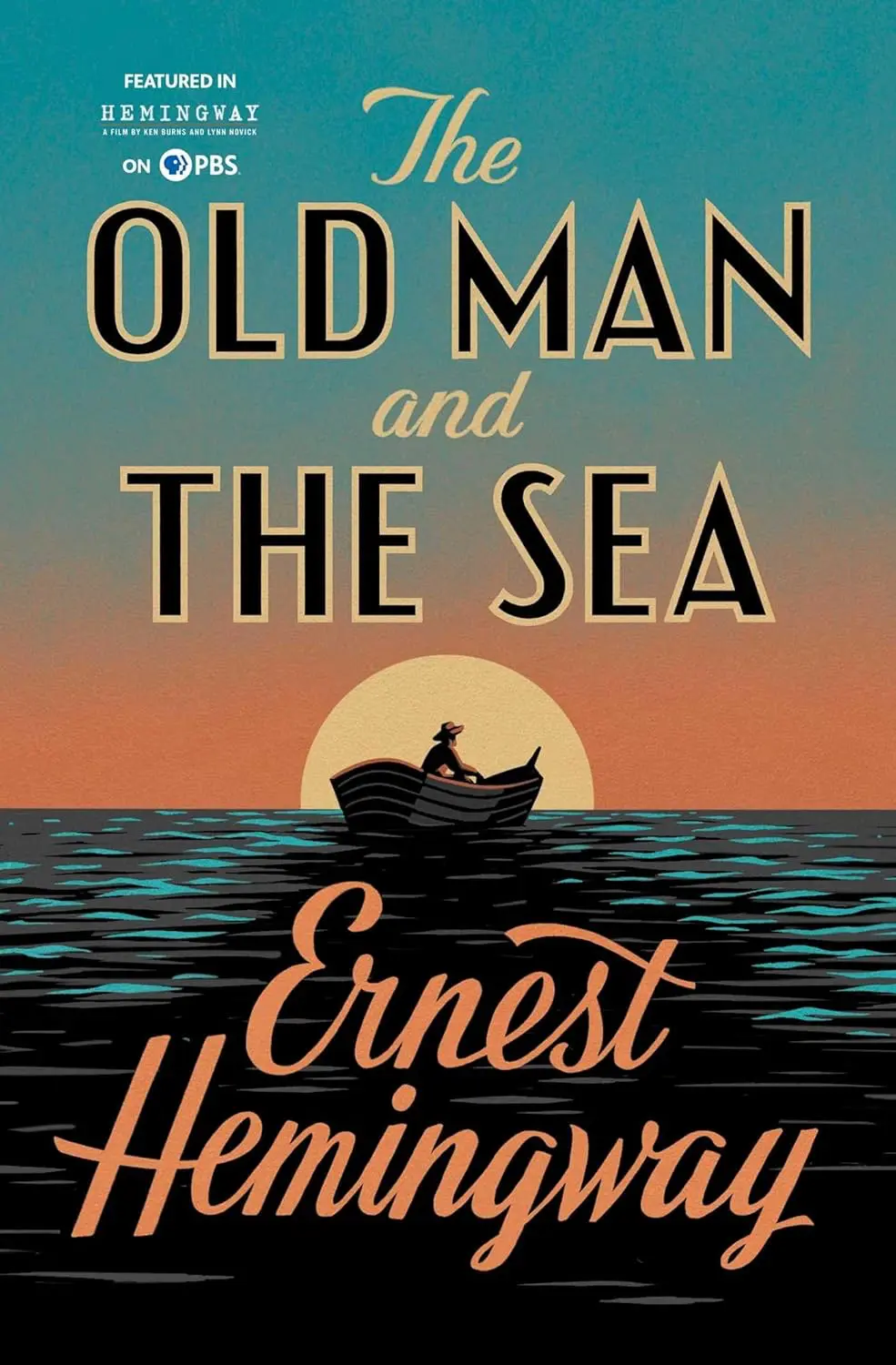
The Old Man and the Sea follows Santiago, an old fisherman in a Cuban village who has gone 84 days without catching a fish. On the 85th day, he sails far out into the Gulf Stream and hooks an enormous marlin. What follows is a three-day struggle between man and fish, during which Santiago’s physical endurance and mental resolve are tested to their limits.
Hemingway wrote the novella in his characteristic spare style. Sentences are short. Descriptions are concrete and physical. There is almost no abstraction or commentary. Santiago talks to himself, to the fish, and to the birds, and his words are simple and direct. The effect is a story that reads fast but carries more weight than its page count suggests.
The story works on multiple levels. On the surface, it is an adventure about a man fighting to land an enormous fish. Beneath that, it is about aging and the refusal to accept diminished capacity. Santiago’s mantra, “A man can be destroyed but not defeated,” is the book’s philosophical core. And beneath that, there is a conversation about craft itself, about what it means to do something well for its own sake, regardless of whether anyone is watching or whether the outcome is guaranteed.
For founders and anyone engaged in a long, uncertain effort, the book’s theme of persistence in the face of probable failure is directly resonant. Santiago knows the odds are against him. He goes out anyway, not because he expects to win but because that is what he does. The distinction between external success and internal integrity is the book’s real subject.
The novella is very short, around 27,000 words, and can be read in a single sitting. Hemingway wrote it after a decade of declining critical reception, and many readers consider it his last major work. Its simplicity can mislead people into thinking it is simple. It is not. Every sentence is doing more than it appears to on first reading.
