
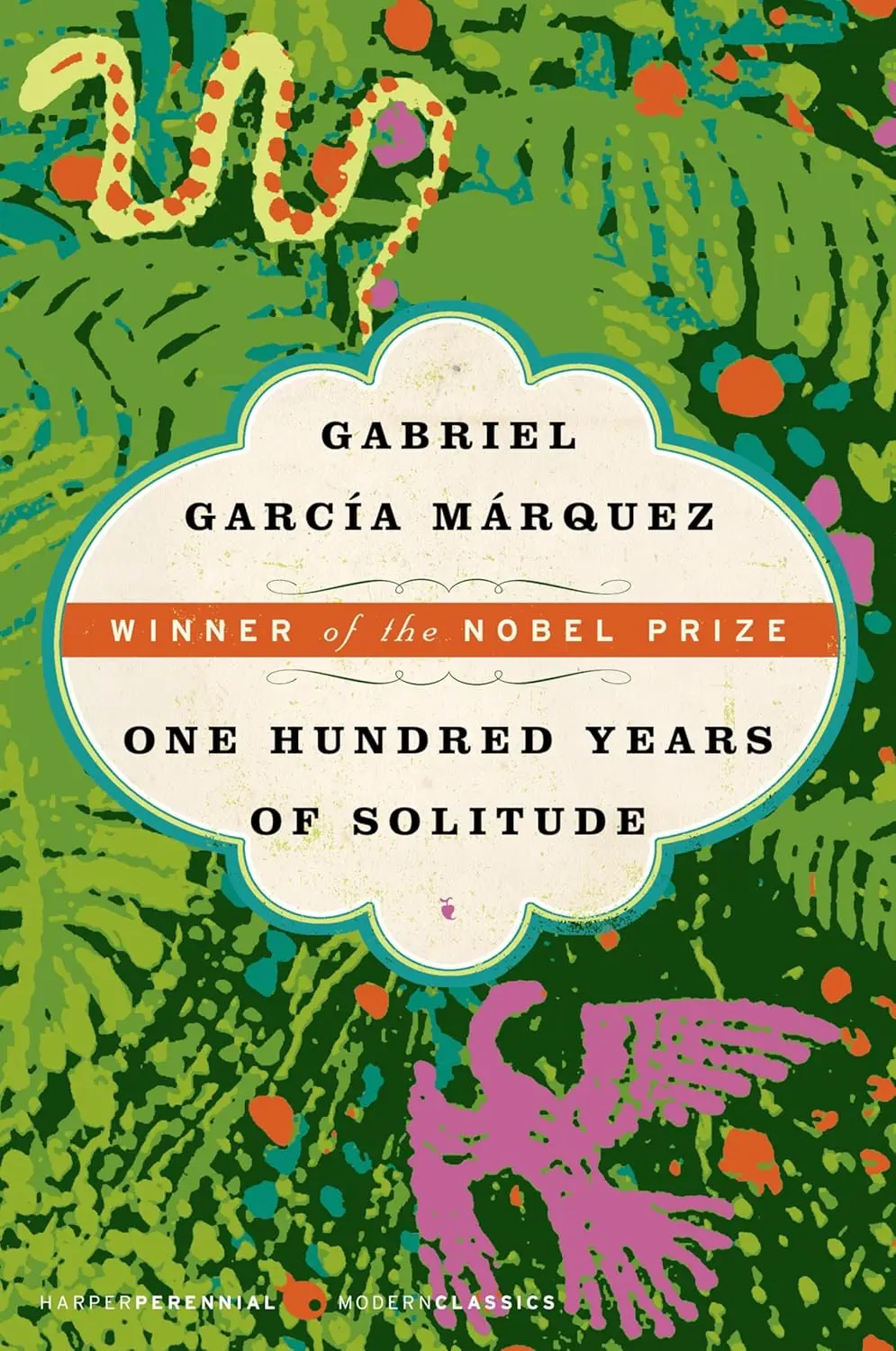
One Hundred Years of Solitude follows the Buendia family from the founding of the town of Macondo through its eventual decline and destruction, spanning roughly a century of Colombian history filtered through the lens of one family’s repeated patterns of ambition, obsession, love, and isolation.
Garcia Marquez writes in a style where the miraculous and the mundane coexist without comment. A character ascends to heaven while hanging laundry. A priest levitates after drinking hot chocolate. A rain lasts for four years. These events are presented with the same matter-of-fact tone as a trip to the market or an argument between spouses. The effect is not whimsy but a way of representing how life actually feels in communities where myth, history, and daily routine are not separate categories.
The novel’s structure is cyclical rather than linear. Names repeat across generations (there are multiple Jose Arcadio Buendias and Aurelianos), and characters tend to repeat the mistakes of their ancestors. This circularity is the point: Garcia Marquez is writing about how families, communities, and nations get stuck in patterns they can’t see from the inside.
The political history of Colombia runs through the book in disguised form. The banana plantation massacre, the civil wars between liberals and conservatives, and the arrival of foreign companies that exploit local resources are all drawn from real events. Garcia Marquez fictionalizes them not to escape reality but to get at emotional and psychological truths that straight reporting might miss.
For founders, the book offers no business lessons. What it offers instead is a way of seeing patterns: how family dynamics repeat, how success and failure cycle, how isolation leads to decline. These are patterns that show up in companies and industries as much as in families and nations.
The Gregory Rabassa translation has been the standard English version since 1970 and is the one Garcia Marquez himself reportedly preferred. The book requires some patience with the large cast of similarly named characters, but the prose is so confident and the storytelling so absorbing that most readers find their rhythm within the first fifty pages.
