
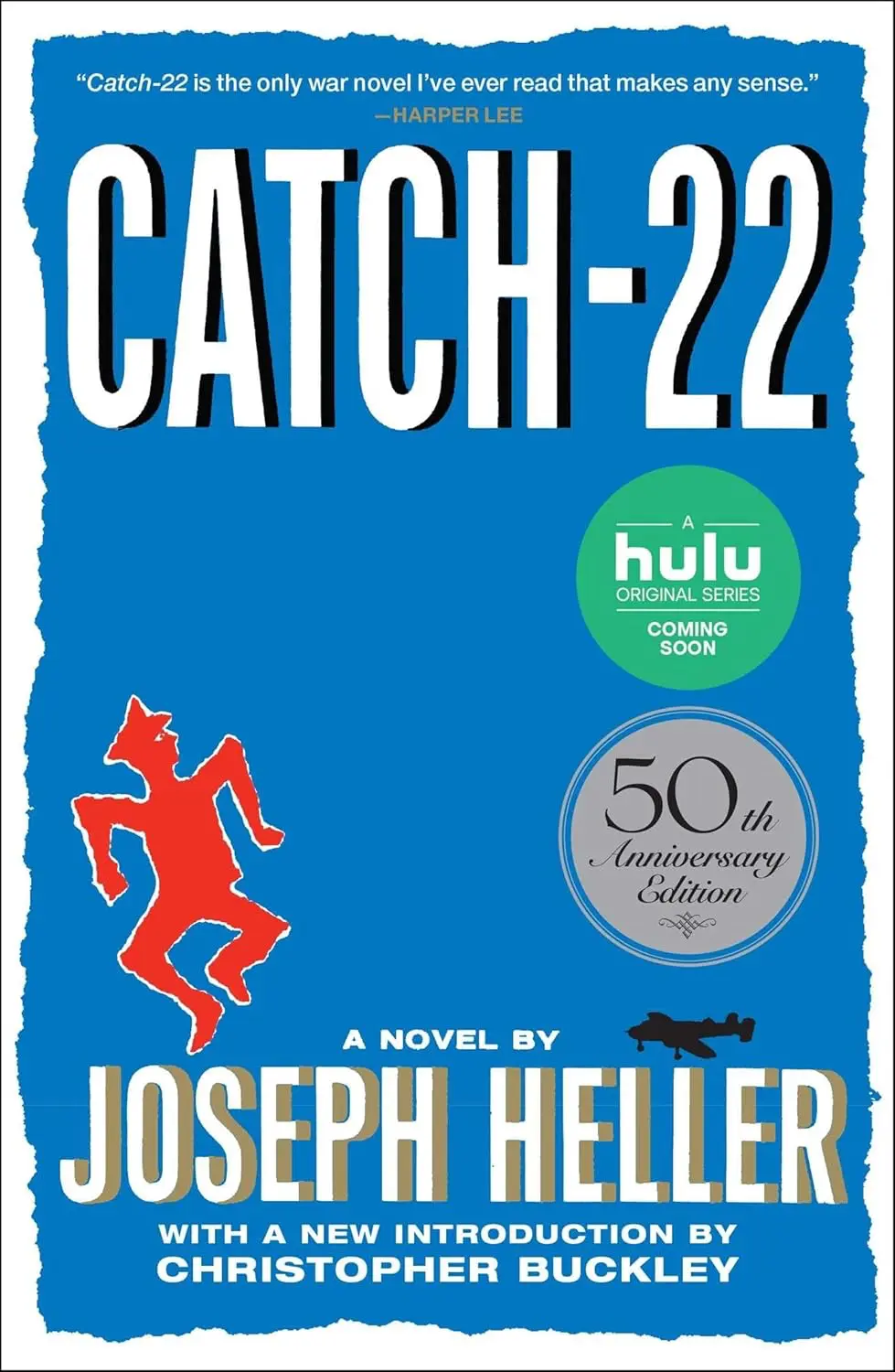
Catch-22 is set on the fictional island of Pianosa during World War II and follows Captain John Yossarian, a U.S. Army Air Forces bombardier who has decided that the war is trying to kill him personally. He wants to be grounded from combat duty, but he faces the catch-22 of the title: anyone who asks to be grounded must be sane, because wanting to avoid danger is rational. But only insane people can be grounded. So asking to be grounded proves you are sane, and therefore you must keep flying.
The novel is structured non-chronologically, jumping between time periods and characters in a way that initially feels chaotic but gradually reveals a coherent, devastating story. Heller uses this fragmented structure to mirror the disorientation and irrationality of war, and to set up jokes and revelations that pay off chapters later.
The humor is the book’s most famous quality. Heller’s satirical style treats absurdity as the normal state of institutional life. Officers promote themselves and each other based on arbitrary criteria. Bureaucratic procedures take precedence over human welfare. Characters die for meaningless reasons while their superiors celebrate procedural victories. The comedy is funny in the moment and horrifying in accumulation.
Underneath the satire is a serious anti-war novel. The book grows darker as it progresses, and certain scenes that were played for laughs early on are revisited later with their full violence and tragedy intact. The shift in tone is gradual and effective, and the final chapters hit harder because of the comedy that preceded them.
For founders, Catch-22 is relevant as a portrait of institutional dysfunction taken to its logical extreme. The circular logic of the catch-22 itself, where the rules are designed so that they can never actually be satisfied, shows up in milder forms in every bureaucracy. Heller’s depiction of how organizations prioritize their own processes over the people they’re supposed to serve is uncomfortably recognizable.
The writing demands patience. The non-linear structure and large cast of characters can be confusing at first, and the book is deliberately repetitive in places. But it rewards persistence, and its influence on American literature and humor is enormous.
