
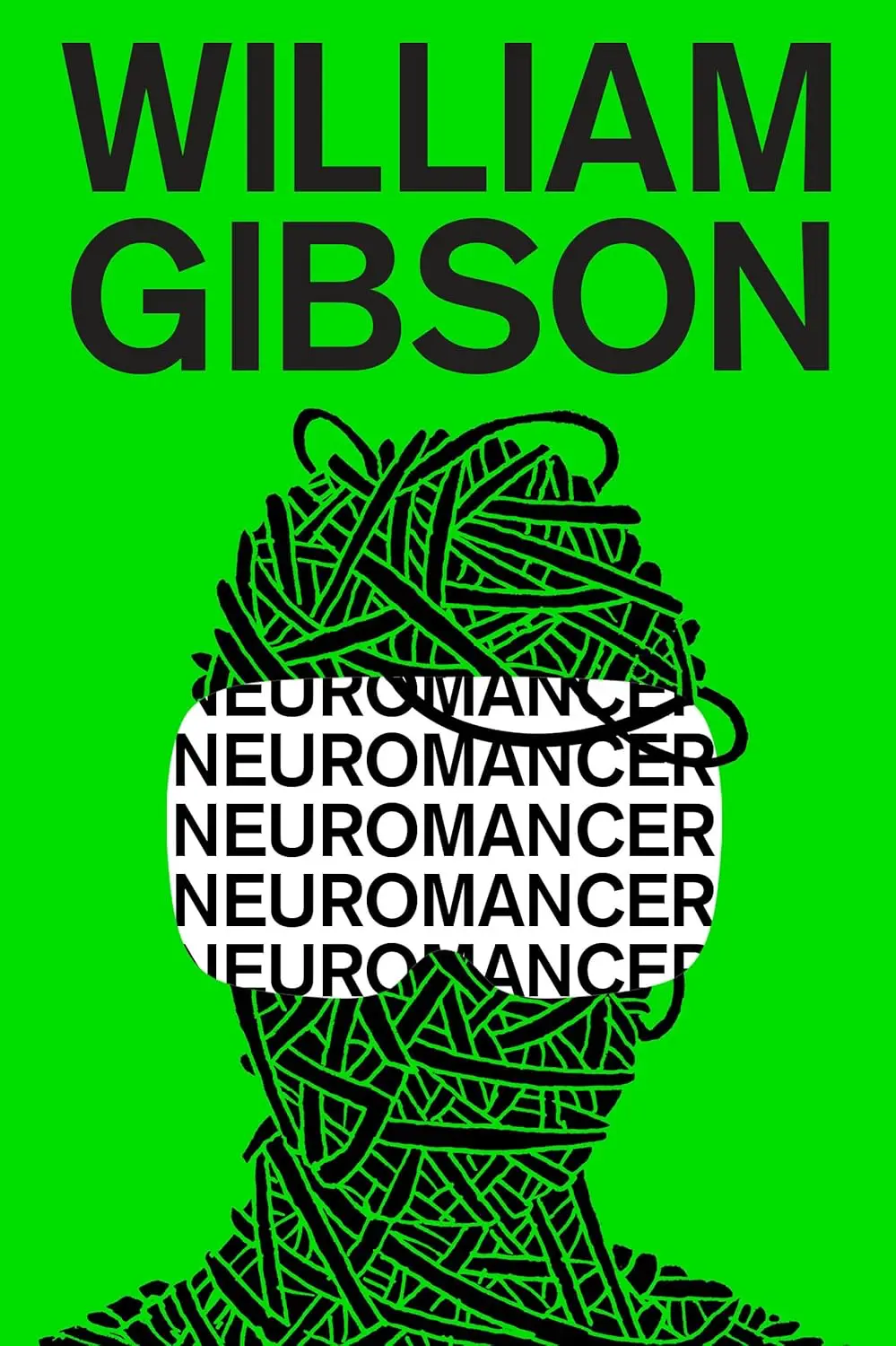
Neuromancer is the book that started cyberpunk. Published in 1984, it won the Hugo, Nebula, and Philip K. Dick awards, a trifecta no novel had achieved before. William Gibson imagined a world of global computer networks, corporate dominance, artificial intelligence, and digital subcultures years before the World Wide Web existed, and many of his ideas have since become uncomfortably close to reality.
The story follows Case, a once-talented hacker whose nervous system has been damaged as punishment for stealing from his employers, leaving him unable to jack into cyberspace. A mysterious employer offers to repair his neural damage in exchange for one last hacking job, and Case is pulled into a conspiracy involving AI, corporate warfare, and a space-station community of Rastafarians.
Gibson’s writing style is dense, atmospheric, and fast. He drops you into the world without explanation and expects you to figure out the jargon from context. The prose has a kind of compressed poetry to it, with sentences that pack more imagery and world-building into a few words than most writers manage in a paragraph. This style can be disorienting on first read, but it creates a mood that no other science fiction writer has quite replicated.
The ideas are what made the book legendary. Gibson imagined cyberspace as a three-dimensional visual representation of data, predicted the merger of criminal hacking and corporate espionage, anticipated the cultural dominance of Asian megacities, and explored the blurring of human and machine identity, all before most people had ever used a computer.
For founders in tech, Neuromancer is the origin point for much of the aesthetic and conceptual language that Silicon Valley still uses. The book also raises questions about corporate power, surveillance, and the human cost of technological acceleration that remain relevant.
The plot can be hard to follow on a first reading because Gibson prioritizes atmosphere and ideas over straightforward narrative. But it rewards rereading, and its influence on everything from The Matrix to the concept of the metaverse makes it worth the effort.
