
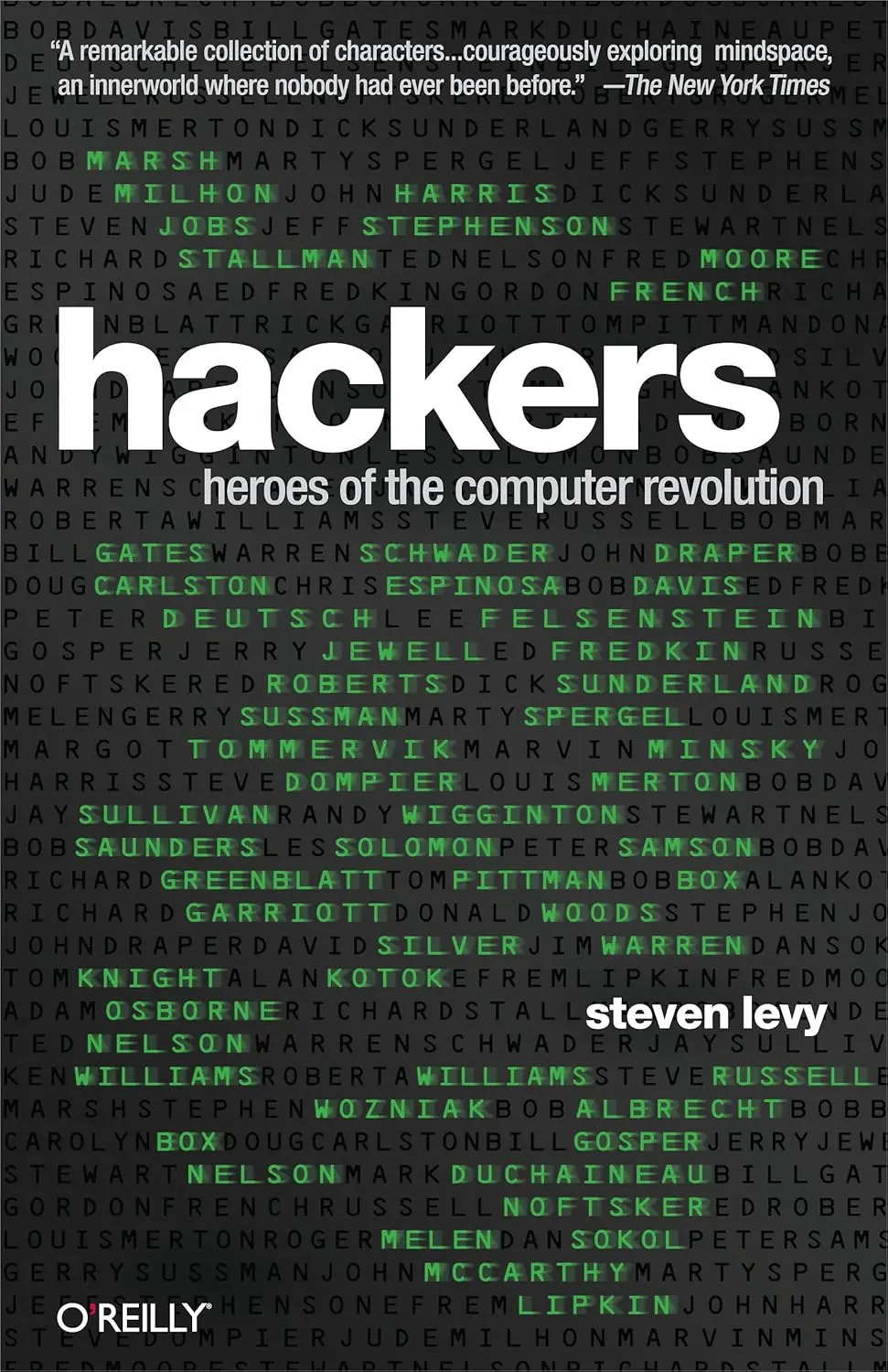
Hackers is Steven Levy’s history of the people who created the modern computer age, told through three distinct eras and communities. The first part covers the hackers at MIT in the late 1950s and 1960s, who gained access to early mainframe computers and developed what Levy calls “the hacker ethic”: the belief that information should be free, that access to computers should be unlimited, and that you should be judged by your code, not your credentials.
The second part follows the hardware hackers of the 1970s in California, centered around the Homebrew Computer Club. This is the community that produced Steve Wozniak and the Apple II, and Levy captures the energy of a group of hobbyists who believed that computers should belong to ordinary people, not just corporations and universities. The tension between the hacker ethic’s idealism and the commercial reality of selling computers runs through these chapters.
The third part covers the rise of the game industry in the early 1980s, profiling programmers at companies like Sierra On-Line who turned hacking skills into commercial products. This section has a more elegiac tone, as Levy documents how the original hacker culture changed under the pressure of money and scale.
For founders in technology, the book is both a history lesson and a cultural document. The hacker ethic, with its emphasis on meritocracy, open information, and building things because they’re interesting rather than because they’re profitable, runs through Silicon Valley’s DNA to this day. Understanding where those values came from, and how they’ve been both honored and distorted, gives useful context for anyone building in tech.
The 25th anniversary edition includes updated interviews with figures like Bill Gates, Steve Wozniak, Mark Zuckerberg, and Richard Stallman. The book shows its age in places, but the core stories about what drives people to build things remain fresh.
