
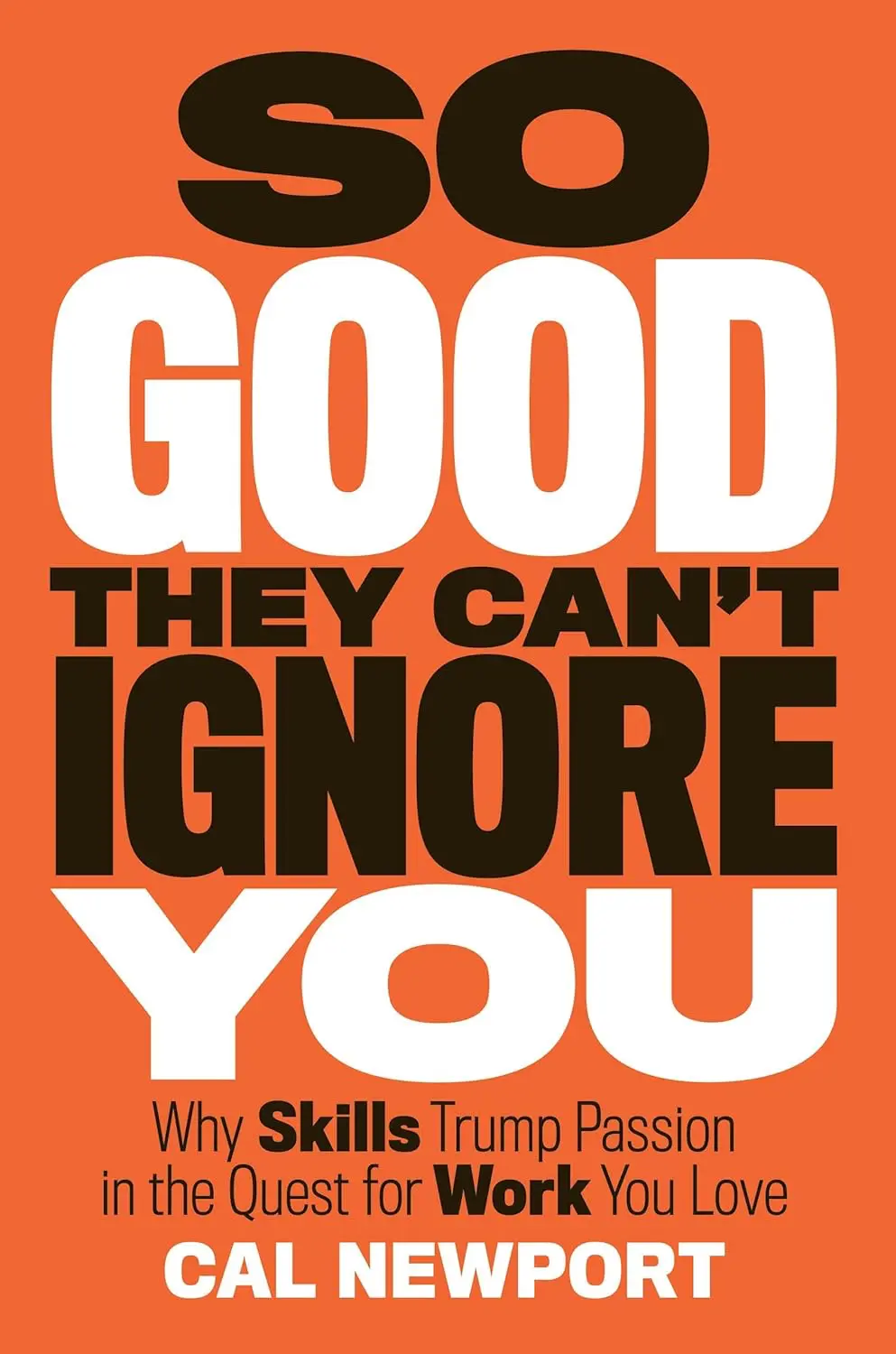
So Good They Can’t Ignore You is Cal Newport’s counterargument to the standard career advice that tells people to follow their passion. Newport, a computer science professor at Georgetown, argues that this advice is not just unhelpful but actively harmful. Most people don’t have a pre-existing passion waiting to be discovered. Instead, passion develops as a byproduct of becoming good at something.
Newport introduces the concept of “career capital,” meaning the rare and valuable skills you accumulate through deliberate practice. The more career capital you have, the more control and autonomy you can demand in your work life. People who have jobs they love didn’t start with passion; they started by getting really good at something, and the passion followed.
The book profiles people at various stages of this process. A venture capitalist who didn’t start with a love of finance but developed it over years of skill-building. A farmer who didn’t follow a childhood dream but stumbled into agriculture and found meaning through competence. Newport contrasts these with people who chased passion without building skills and ended up frustrated.
He also introduces what he calls the “craftsman mindset” versus the “passion mindset.” The passion mindset asks, “What can the world offer me?” The craftsman mindset asks, “What can I offer the world?” Newport argues that the craftsman mindset leads to better outcomes because it focuses on developing value rather than seeking fulfillment.
For founders, the book challenges the romanticized startup narrative where you quit your job to follow your dream. Newport’s argument is that the people who build successful businesses usually did so by developing specific, hard-won skills first and then leveraging those skills into something new. The chapter on how to apply deliberate practice to knowledge work is especially useful.
The writing is clear and well-organized. The book is relatively short and moves quickly through its argument. Some readers find Newport’s dismissal of passion too absolute, and there is room for a more nuanced middle ground. But as a corrective to the follow-your-passion industrial complex, it is effective and practical.
