
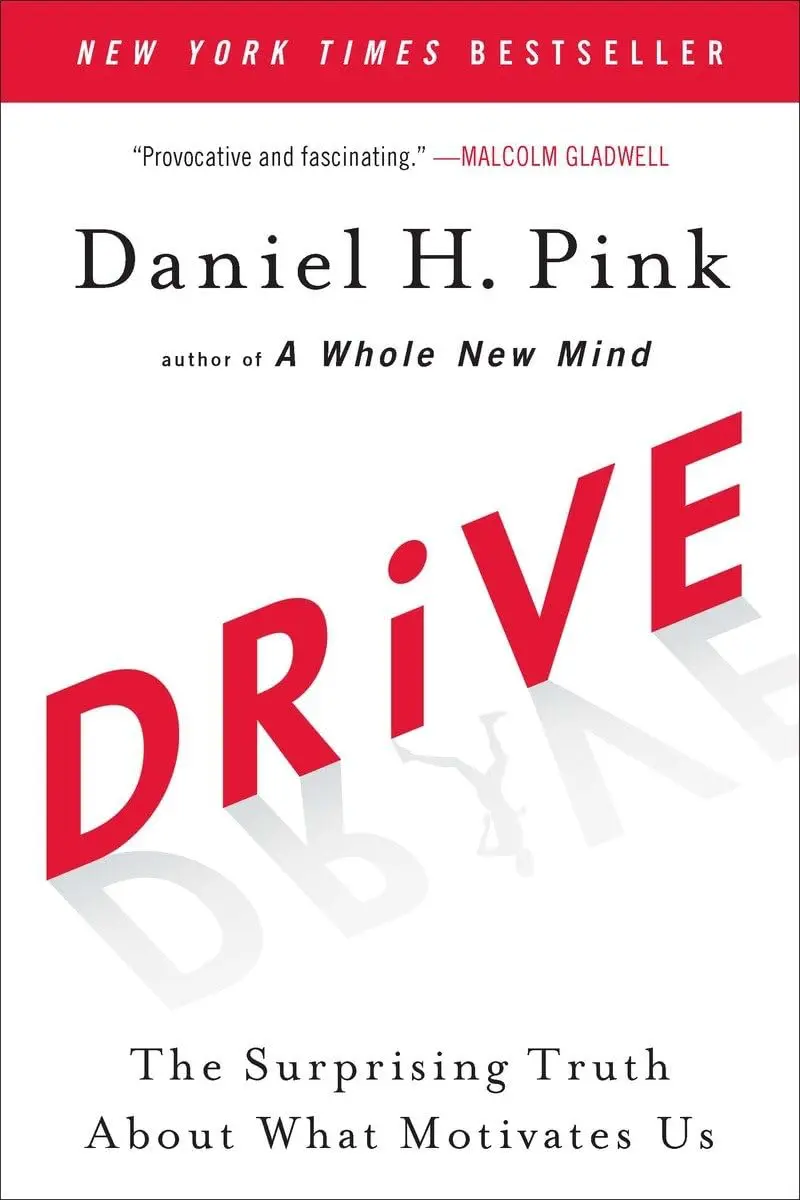
Drive is Daniel Pink’s synthesis of research on human motivation, built around a central argument: for any work that requires even basic cognitive effort, external rewards like bonuses and performance incentives work far less well than most managers assume, and in some cases they actively make performance worse.
Pink frames the book around three eras of motivation. Motivation 1.0 was about survival. Motivation 2.0 was the carrot-and-stick model that dominated the industrial age and still dominates most workplaces. Motivation 3.0, which Pink argues we need to adopt, is built on three elements: autonomy (the desire to direct our own lives), mastery (the urge to get better at something that matters), and purpose (the yearning to do what we do in service of something larger than ourselves).
The research Pink draws on is familiar to anyone who has read behavioral economics or psychology: the famous candle problem experiments showing that incentives narrow focus, studies on intrinsic vs. extrinsic motivation, and research on flow states. What Pink does well is translate this academic material into clear, practical language and connect it to real workplace decisions.
For founders, the book’s implications are direct. If you’re compensating people fairly (meeting baseline expectations), then piling on bonuses and performance targets may not produce the engagement you want. Instead, Pink argues, you should focus on giving people genuine control over their work, helping them develop their skills, and connecting their daily tasks to a purpose they care about.
The book also includes a toolkit section with practical exercises for applying the concepts, including a “flow test” for evaluating how much autonomy employees actually have. The writing is accessible and well-paced, though some readers find the material too familiar if they’ve already read widely in behavioral science. Even so, Drive is useful as a shared reference that teams can read together to align on how they think about motivation.
