
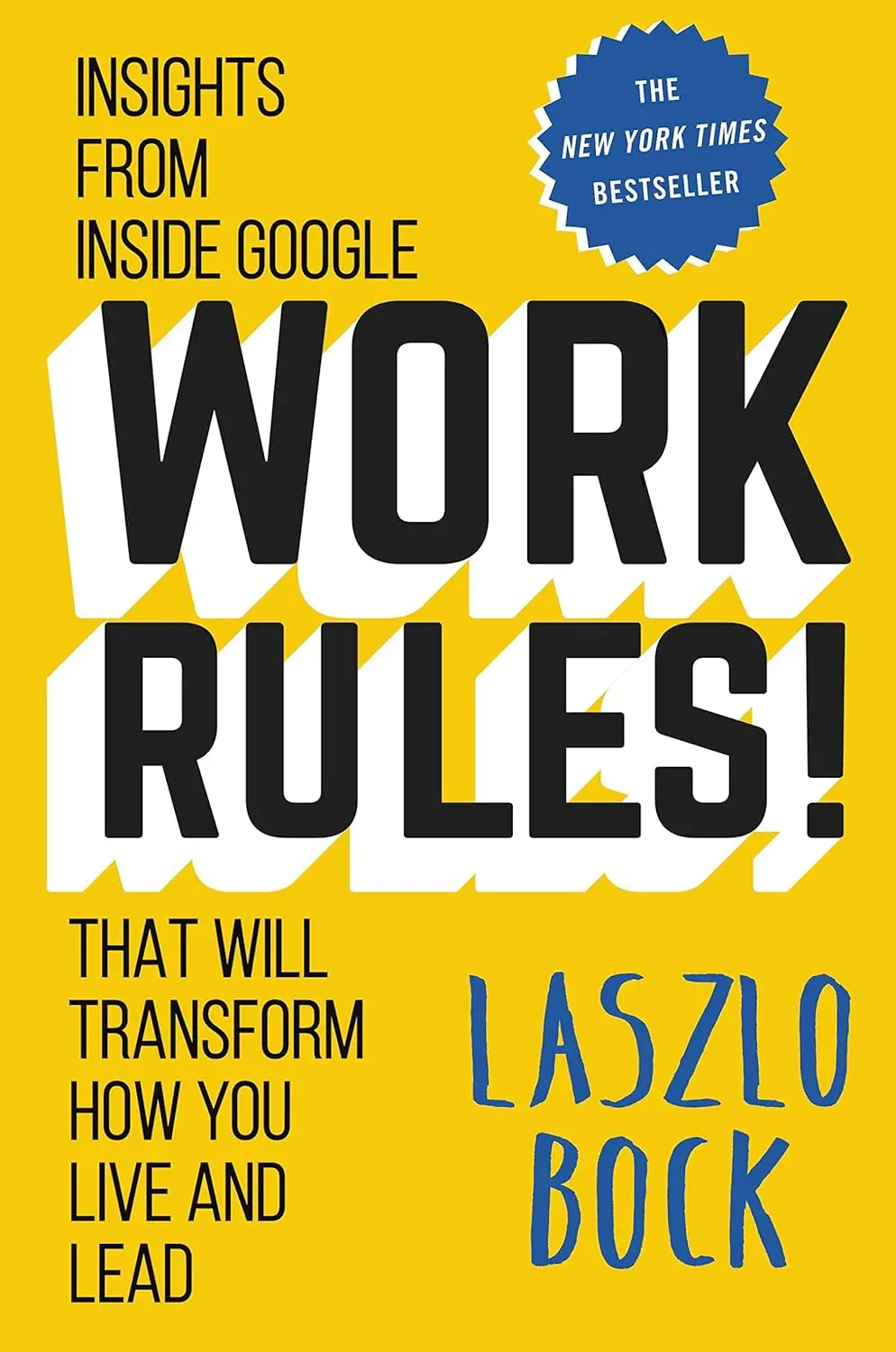
Work Rules! is Laszlo Bock’s inside account of how Google built its people operations function, written during his time leading a team responsible for hiring, developing, and retaining over 50,000 employees. The book sits somewhere between a memoir and a management manual, combining specific stories from Google with broader principles that Bock argues any company can adopt.
The hiring chapters are among the most useful. Bock explains why Google moved away from brainteasers in interviews (they don’t predict performance), why they require structured interviews with predetermined questions (to reduce bias), and why they use hiring committees rather than letting individual managers make decisions (to maintain quality). He also covers the data behind what actually predicts job performance, which often contradicts what most companies believe.
On management, Bock describes Google’s experiments with removing managers entirely (it didn’t work), their internal research on what makes a great manager (Project Oxygen), and their approach to performance reviews. He argues for radical transparency, including making compensation data more open, and for giving employees real autonomy rather than just talking about it.
The culture sections cover Google’s approach to perks, which Bock frames not as extravagance but as rational investments in productivity and retention. He also discusses the mistakes they made along the way, including how they handled early diversity challenges and how some well-intentioned policies had unintended consequences.
For founders building teams, the specific practices are useful even if you don’t have Google’s resources. The structured interview approach, the use of data to test assumptions about what works, and the philosophy of treating employees as co-owners rather than subordinates are all applicable at a much smaller scale.
The writing is engaging though occasionally feels like it’s selling the Google brand as much as sharing genuine insights. Some recommendations require scale that most companies simply don’t have. But the underlying principles, especially around hiring and management, hold up well regardless of company size.
