
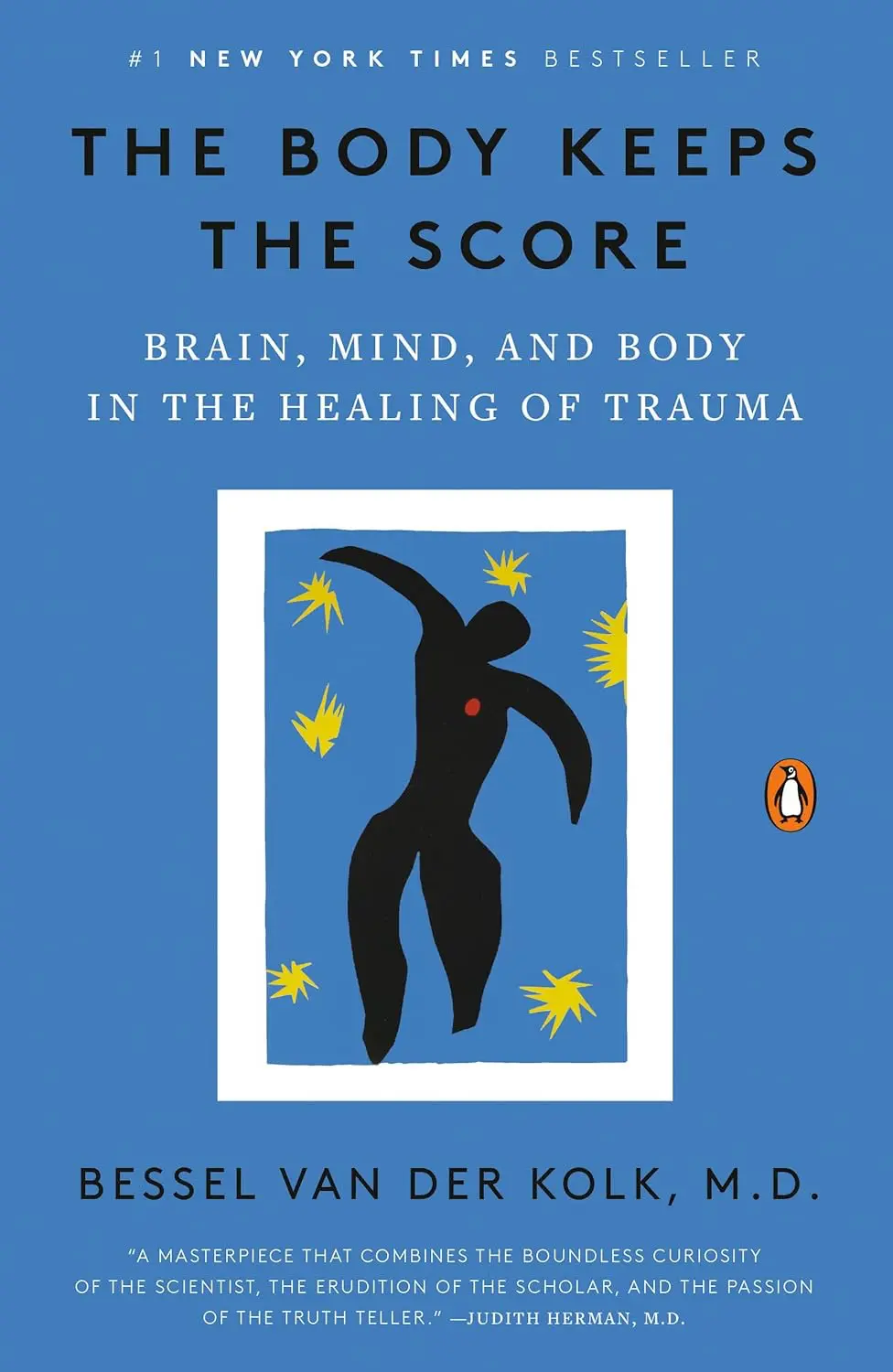
The Body Keeps the Score is Bessel van der Kolk’s synthesis of over three decades of clinical work and research on trauma. Van der Kolk is a psychiatrist who has studied trauma since the 1970s, initially with Vietnam veterans and later with a wide range of patients including abuse survivors, accident victims, and children exposed to violence.
The book’s central argument is that trauma is not just a psychological problem but a physiological one. Traumatic experiences change how the brain processes information, how the body responds to stress, and how a person relates to their own physical sensations. Van der Kolk uses brain imaging studies to show how trauma affects specific brain regions, particularly the amygdala, prefrontal cortex, and the areas responsible for body awareness.
He then reviews a range of treatment approaches. Traditional talk therapy and medication are covered, but van der Kolk argues that they often aren’t sufficient on their own because trauma is stored in the body, not just in conscious memory. He discusses EMDR (Eye Movement Desensitization and Reprocessing), neurofeedback, yoga, theater, and other body-based therapies, presenting evidence for each.
For business readers, this might seem like an unusual recommendation. But founders operate under sustained pressure, and many carry unprocessed stress, childhood patterns, or relationship dynamics that affect how they lead, make decisions, and handle conflict. Van der Kolk’s work offers a framework for understanding why certain reactions feel automatic and disproportionate, and what can be done about it.
The book is dense and covers difficult subject matter. Some of the case studies are hard to read. But van der Kolk writes with clarity and compassion, and the book has become one of the most widely read works on trauma for good reason. It changed how many people, both clinicians and general readers, think about the relationship between past experience and present behavior.
