
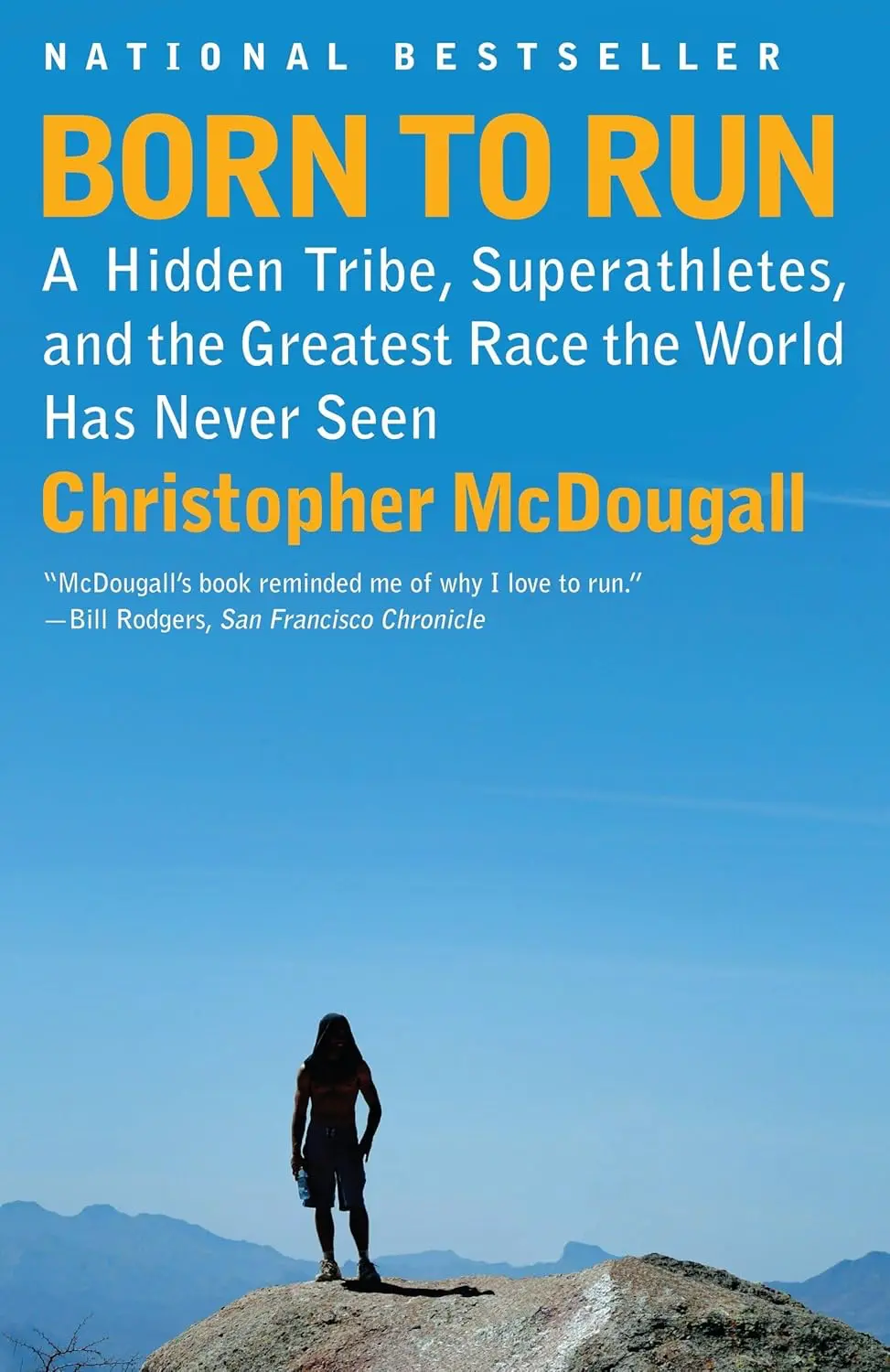
Born to Run starts with a simple question: why does running hurt? Christopher McDougall, a journalist who kept getting injured while running, went looking for answers and ended up in the Copper Canyons of Mexico, where the Tarahumara people run extraordinary distances over rough terrain, often in thin sandals, and rarely get the injuries that plague modern runners.
The book alternates between two narratives. One follows McDougall’s journey to meet the Tarahumara and organize an ultramarathon pitting their best runners against top American ultrarunners. The other traces the science and history of human running, building the case that humans evolved specifically for long-distance endurance running, and that modern cushioned shoes have weakened our feet and altered our gait in ways that cause the injuries we associate with the sport.
The running science sections drew from the work of Harvard evolutionary biologist Daniel Lieberman, whose research on barefoot running and the “endurance running hypothesis” provided much of the book’s scientific backbone. The argument that the modern running shoe industry has been selling a solution to a problem it helped create was controversial when the book was published and remains debated today.
For non-runners, the book works as an adventure story. The characters are memorable, the Copper Canyon setting is vivid, and the final race sequence reads like fiction. For runners, it changed how many people thought about footwear, running form, and the relationship between technology and injury.
The book’s influence on the barefoot and minimalist running movement was enormous, though the pendulum has since swung back somewhat as research has complicated the picture. Still, the core insight that humans are built for running, and that more technology isn’t always the answer, holds up. It is one of those rare books that can change how you think about something as basic as putting one foot in front of the other.
