
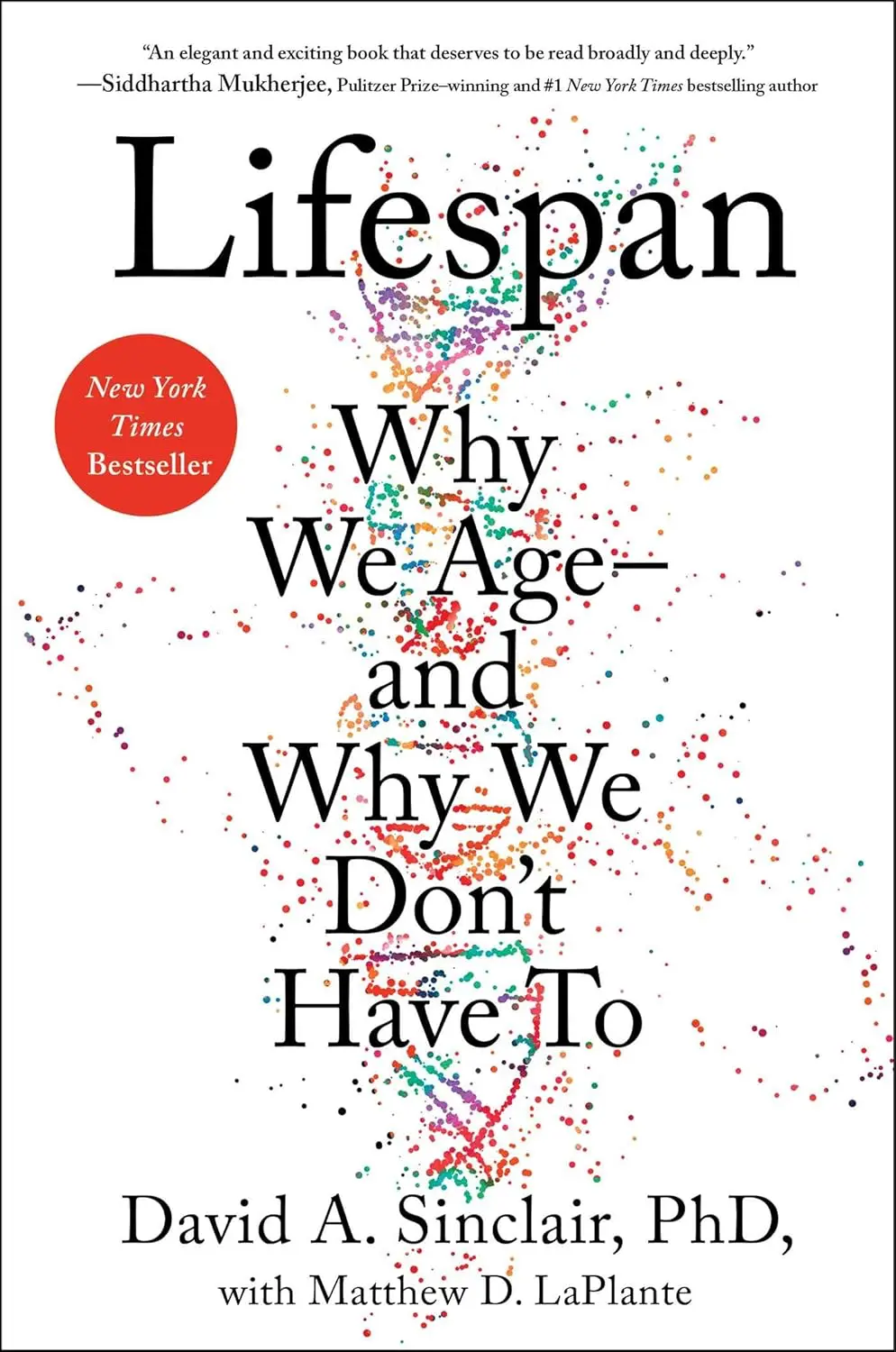
Lifespan lays out David Sinclair’s case that aging is not a natural process we should accept but a disease we can treat. Sinclair is a professor of genetics at Harvard Medical School, and the book draws heavily from his own research on the biology of aging, particularly the role of sirtuins and NAD+ in cellular health.
The scientific sections cover the Information Theory of Aging, which Sinclair uses as his central framework. His argument is that aging happens because cells lose information over time, similar to scratches on a DVD. The biological mechanisms he discusses include epigenetic changes, DNA repair, and the role of molecules like resveratrol and NMN. He also covers interventions like caloric restriction, intermittent fasting, cold exposure, and exercise, explaining the evidence behind each.
Sinclair is a controversial figure in the longevity research community. Some of his claims, particularly around resveratrol and specific supplements, have been debated by other scientists. The book presents his perspective with confidence, and readers should be aware that not all of the research he cites is settled science. That said, the broader argument that aging research deserves more funding and attention is widely shared among scientists.
For founders and ambitious readers, the book touches on something practical beyond the science. Sinclair argues that maintaining physical health is not separate from professional performance but foundational to it. The chapters on lifestyle interventions, including what he personally does around diet, exercise, and supplementation, have made this one of the more popular health-optimization books among the founder community.
The book also spends time on the societal implications of extended lifespan, covering economics, healthcare systems, and ethics. These sections are more speculative but raise questions worth thinking about. The writing is accessible for a science book, though Sinclair’s enthusiasm for his own research occasionally pushes the tone toward advocacy rather than balanced reporting.
