
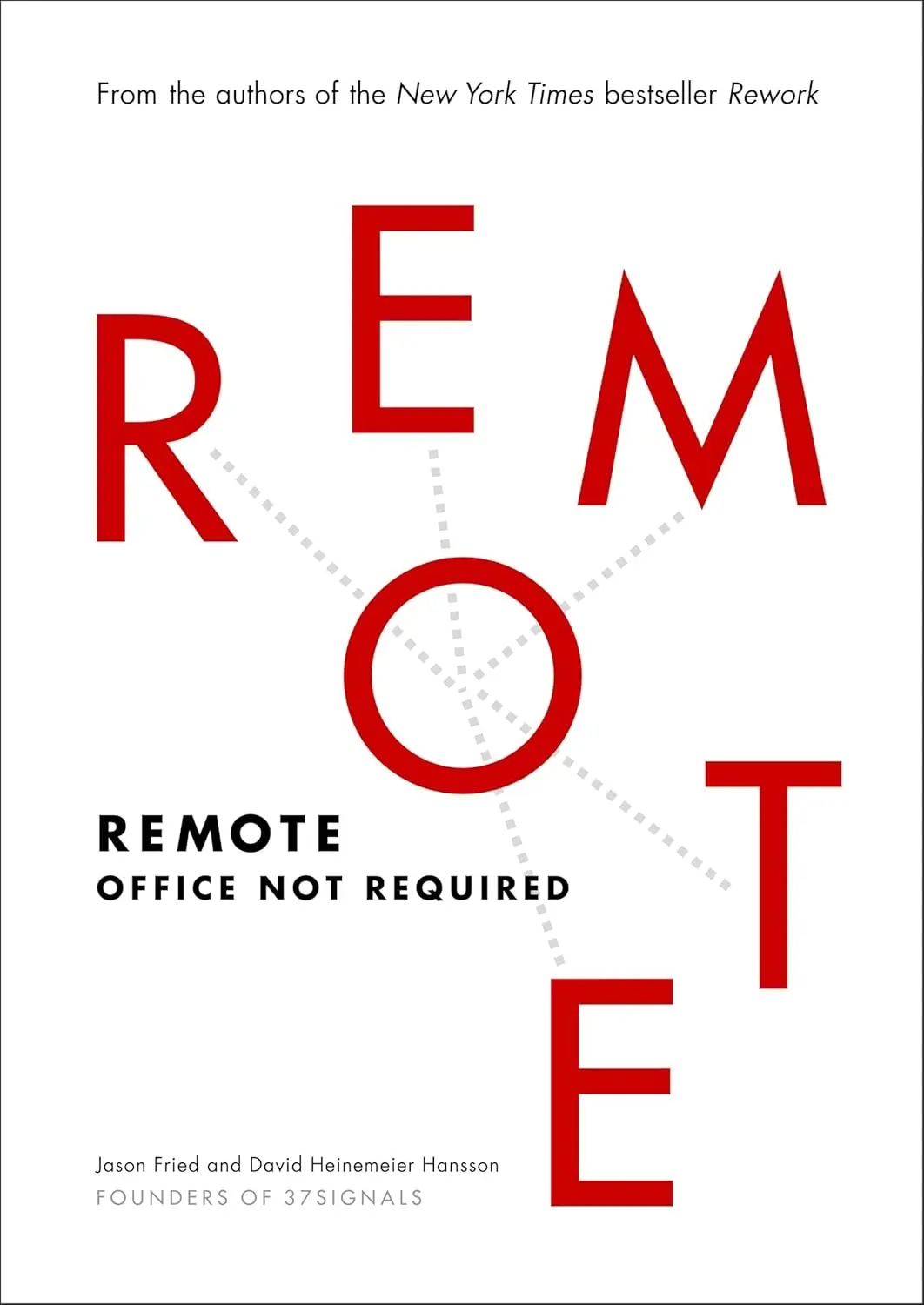
Remote was published in 2013, well before the pandemic made distributed work a global default. Jason Fried and David Heinemeier Hansson wrote it based on their experience running Basecamp as a fully remote company, and the book reads as both a practical guide and an argument for why the traditional office is overrated.
The book tackles common objections to remote work: people won’t be productive, collaboration will suffer, culture will erode, security will be compromised. For each objection, the authors offer specific practices from their own experience. They explain how asynchronous communication reduces meetings, how writing things down creates better documentation than hallway conversations, and how judging employees by output rather than hours logged leads to better results.
They also cover the downsides honestly. Remote work can be lonely. It requires more discipline than office work. It can blur the line between work and personal life in unhealthy ways if you don’t set boundaries. The book includes specific advice on how to avoid these traps, from creating a dedicated workspace to maintaining social connections outside of work.
For founders building companies today, the book remains relevant even though remote work has become much more common since 2013. The advice on hiring remote workers, running distributed teams, managing across time zones, and maintaining culture without physical proximity is grounded in years of actual practice rather than theory.
The writing style is the same as Fried and Hansson’s other books: short chapters, direct language, and strong opinions. It reads fast and gives you actionable ideas rather than abstract frameworks. Some sections feel dated now, since the arguments for remote work no longer need as much defending, but the operational advice on how to do it well has aged better than most business books. If you are building a distributed team or considering it, this is a useful starting point that covers the practical details most general management books skip.
