
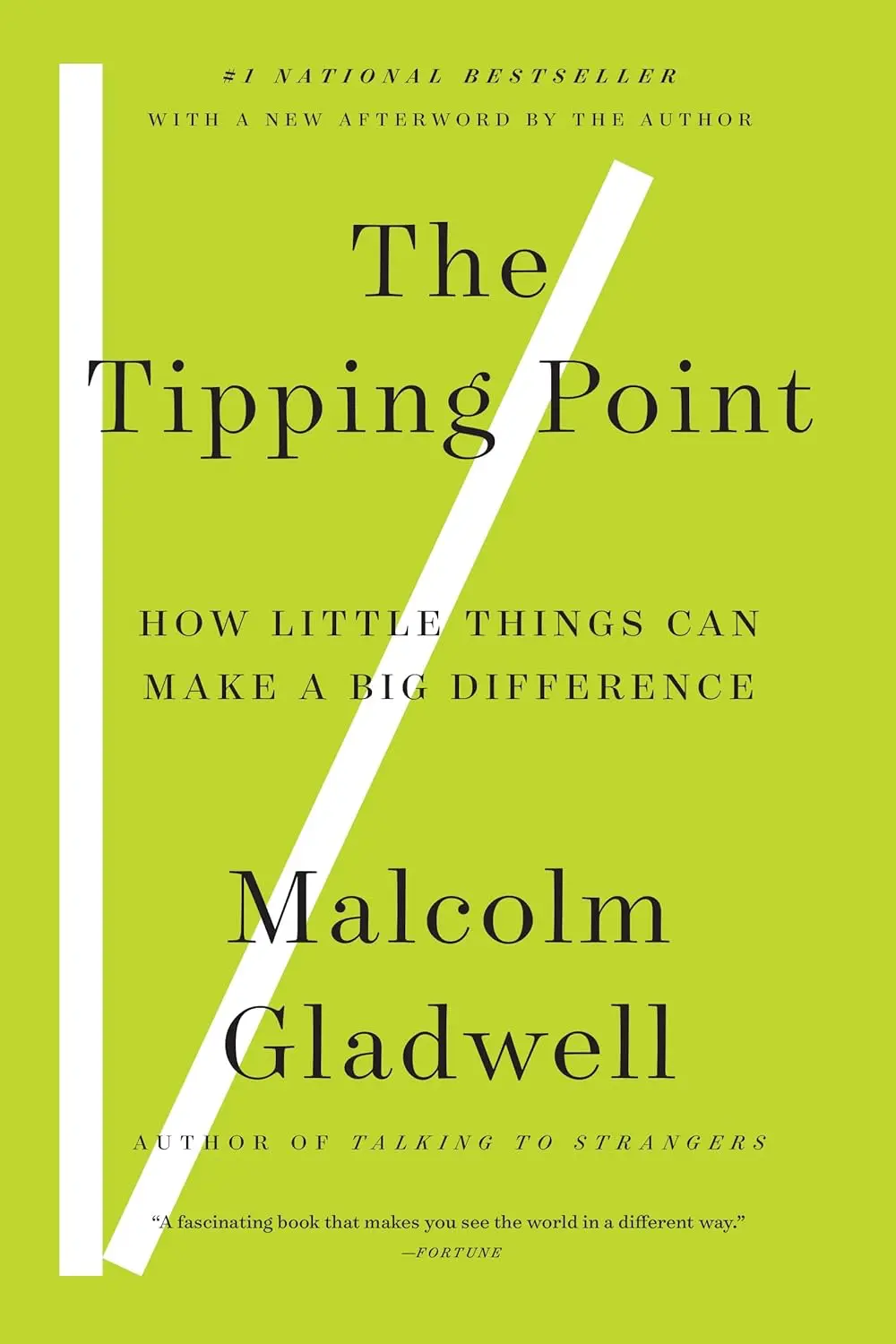
The Tipping Point is Malcolm Gladwell’s first book, and the one that made him a household name. The central idea is that social phenomena, whether it is the sudden popularity of a shoe brand, a drop in crime rates, or the spread of a disease, follow the same patterns as epidemics. They build slowly, then cross a threshold and spread rapidly. That threshold is the tipping point.
Gladwell identifies three factors that determine whether something tips. The first is the Law of the Few, which argues that a small number of people with specific social gifts drive most change. He breaks these into three types: Connectors (people who know everyone), Mavens (people who collect and share information), and Salesmen (people who are naturally persuasive). The second factor is the Stickiness Factor, which is about what makes a message memorable. Gladwell uses the development of Sesame Street and Blue’s Clues to show how small adjustments to content can dramatically increase how well it sticks with an audience. The third factor is the Power of Context, which argues that behavior is heavily influenced by environment and circumstance, often more than by personality or intention.
The book is built around stories. Gladwell traces the comeback of Hush Puppies shoes, the drop in New York City crime in the 1990s, the spread of syphilis in Baltimore, and Paul Revere’s midnight ride, connecting each to his tipping point framework.
For founders and marketers, this is one of the more useful books on how ideas spread. The framework for thinking about Connectors, Mavens, and Salesmen maps directly onto how startups think about early adopters and word-of-mouth growth. The stickiness concept is relevant to anyone designing a product, writing copy, or trying to get a message to land. And the Power of Context is a useful reminder that the environment you create, whether it is for your team or your customers, shapes behavior more than most people realize.
The book is a quick read and holds up well over two decades after publication.
