
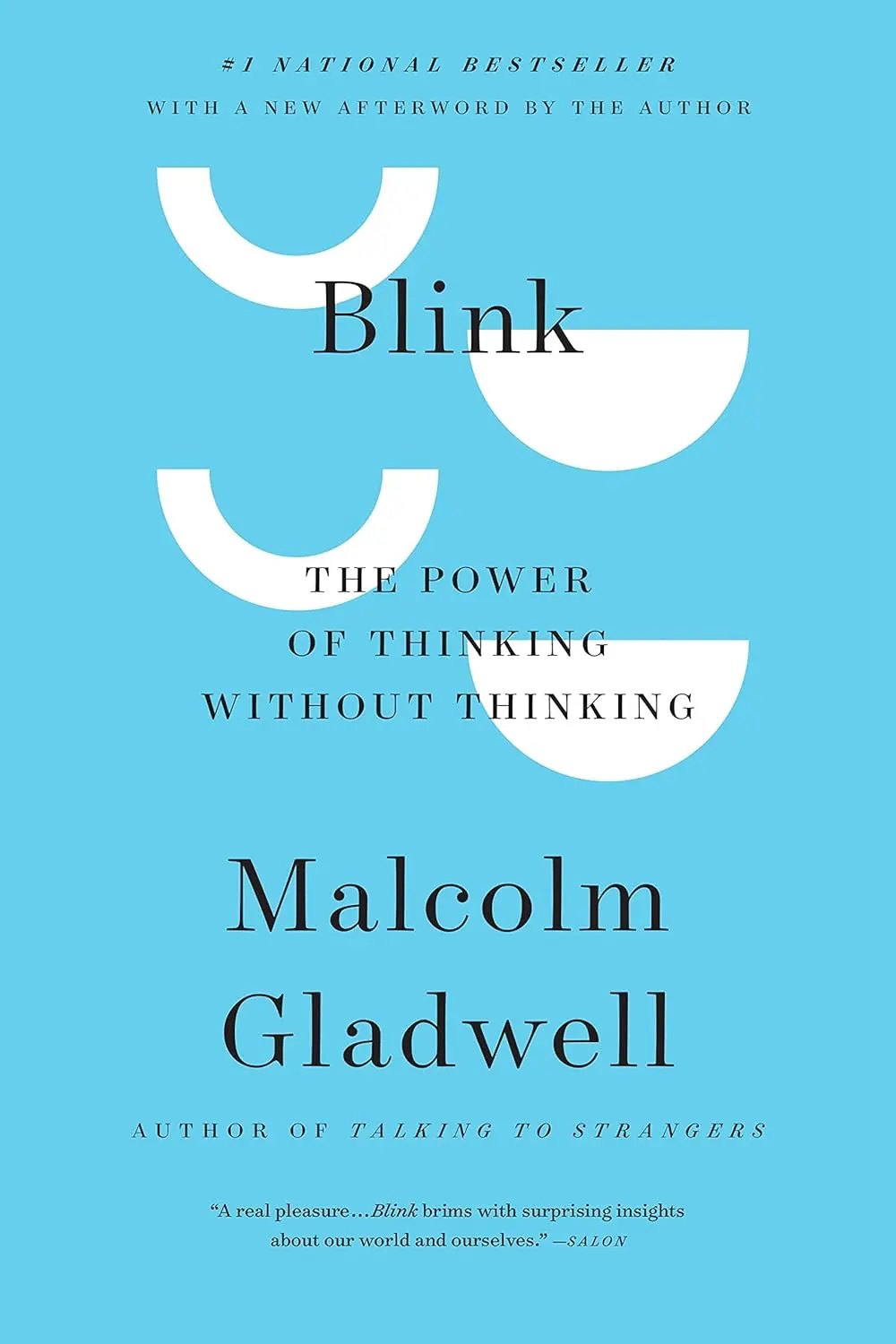
Blink is about rapid cognition, the kind of thinking that happens in the first two seconds of encountering something new. Malcolm Gladwell’s argument is that snap judgments, the ones made almost instantly and often without conscious reasoning, can be remarkably accurate. But they can also be dangerously wrong, and the challenge is knowing which is which.
Gladwell introduces the concept of “thin-slicing,” the ability to find patterns and make judgments based on very narrow slices of experience. He opens the book with the story of a Greek statue purchased by the Getty Museum. The museum spent months scientifically verifying its authenticity, but several art experts knew it was a fake the moment they saw it. They couldn’t explain why at first. They just knew.
From there, Gladwell moves through a range of examples. A psychologist named John Gottman can predict with over 90% accuracy whether a married couple will divorce, based on watching just a few minutes of conversation. A tennis coach can tell when a player is about to double-fault before the racket makes contact with the ball. An emergency room in Chicago improved heart attack diagnosis by using less information, not more.
But Gladwell also covers the failures of snap judgment. The shooting of Amadou Diallo by New York City police officers is used to show how rapid cognition can be corrupted by stress, prejudice, and information overload. The election of Warren Harding, widely considered one of America’s worst presidents, illustrates how people can be fooled by someone who simply looks the part.
For founders and decision-makers, the book raises a practical question: when should you trust your gut, and when should you slow down and analyze? Gladwell doesn’t offer a simple formula, but the examples he uses suggest that trained intuition in areas of genuine expertise tends to be reliable, while snap judgments about people’s character or abilities tend to be unreliable, especially under pressure.
It is a fast, engaging read that changes how you think about the split-second decisions you make every day.
