
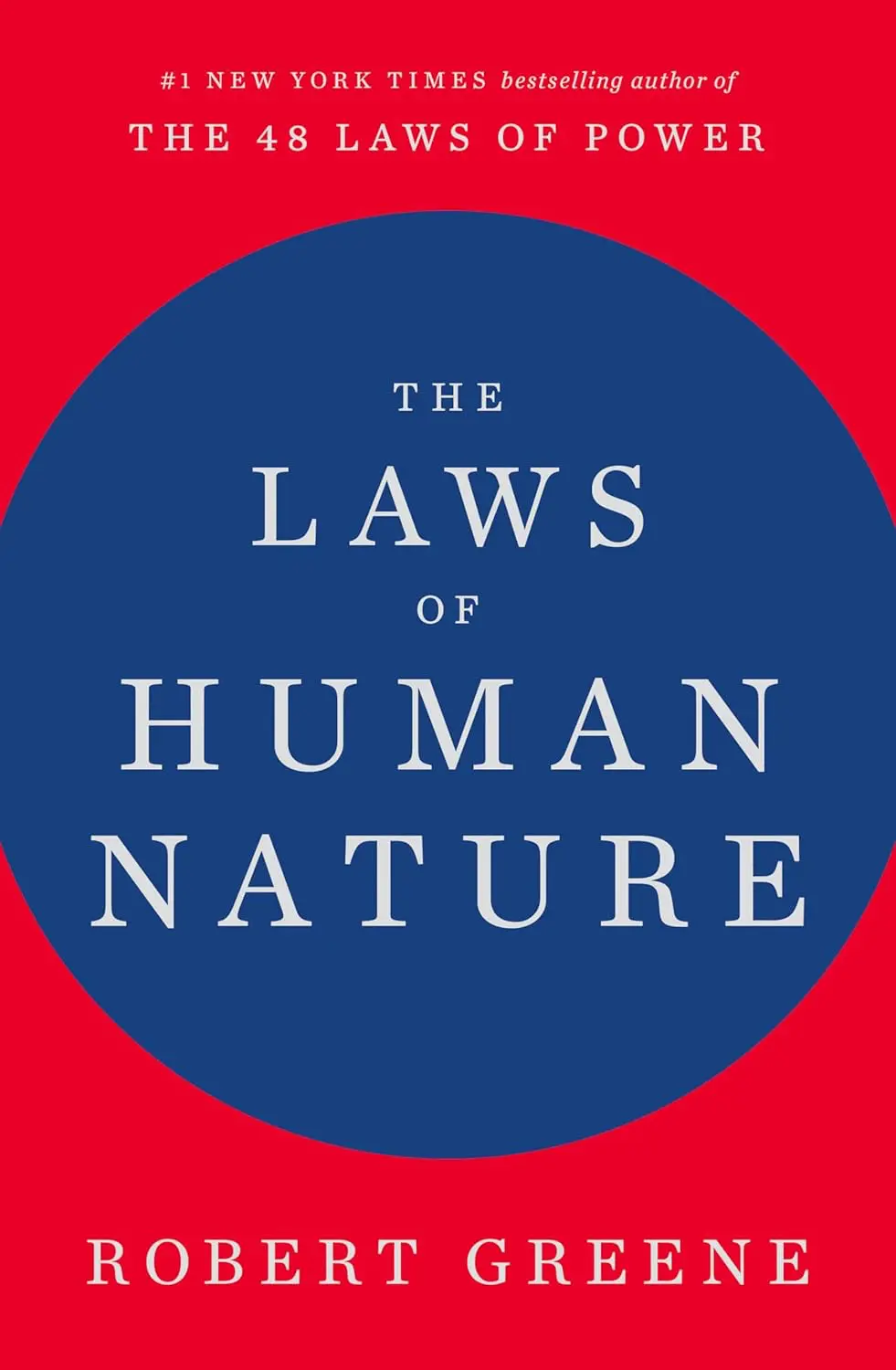
The Laws of Human Nature is Robert Greene’s most psychologically focused book. Where his earlier work dealt with power, strategy, and seduction, this one goes deeper into a more fundamental question: why do people, including ourselves, behave the way they do?
Greene presents 18 “laws” of human nature, each tied to a specific psychological pattern. There is the law of irrationality, which argues that emotions drive most of our decisions even when we believe we are being logical. There is the law of narcissism, which explores how self-absorption distorts our perception of others. There is the law of envy, the law of shortsightedness, the law of conformity, and so on. Each chapter follows a similar structure: a historical story that illustrates the pattern, an explanation of the psychology behind it, and guidance on how to recognize and manage it.
The historical examples are one of the book’s strongest features. Greene draws from figures like Queen Elizabeth I, Martin Luther King Jr., Howard Hughes, Anton Chekhov, and many others, using their stories to make abstract psychological concepts concrete and memorable.
For founders and entrepreneurs, the book is directly relevant. Running a business means working with people constantly: co-founders, employees, investors, customers. Understanding what drives people, how they make decisions, what triggers their resistance or cooperation, and how to read nonverbal cues gives you an advantage in almost every interaction. Greene’s chapters on persuasion, group dynamics, and emotional regulation are particularly useful for anyone in a leadership role.
The book is long at over 600 pages, and Greene’s writing can be dense at times. But it is also thorough. If you have the patience for it, The Laws of Human Nature offers one of the more comprehensive frameworks available for understanding human behavior outside of an academic psychology textbook. It is the kind of book that pays off most on a second reading, once you start noticing the patterns Greene describes playing out in your own interactions.
