
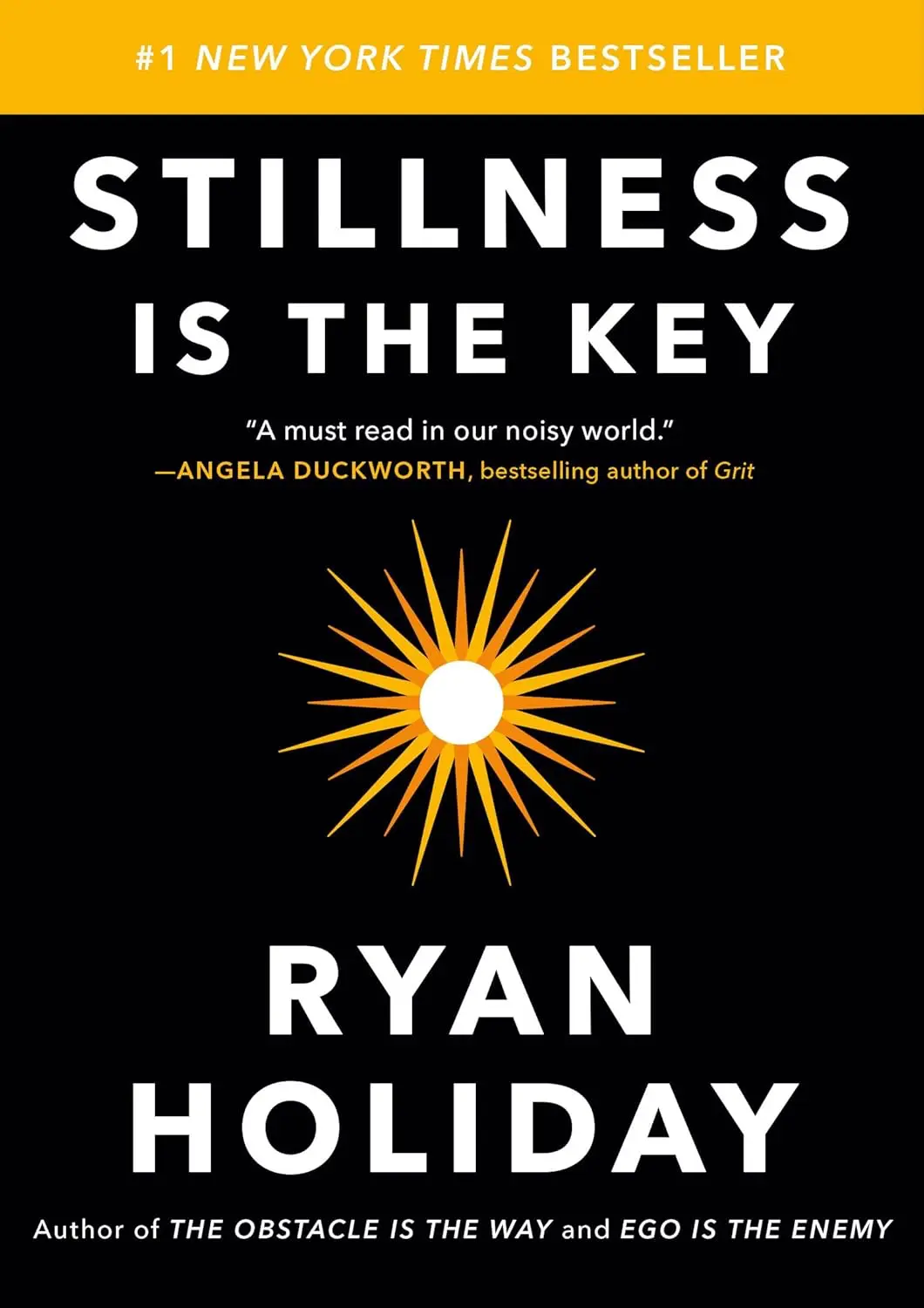
Stillness Is the Key is the final book in Ryan Holiday’s trilogy that began with The Obstacle Is the Way and Ego Is the Enemy. Where those books dealt with adversity and self-awareness, this one focuses on something quieter: the ability to be calm and present in a world that constantly pulls your attention elsewhere.
Holiday organizes the book around three domains: the mind, the soul, and the body. Each section pulls from a mix of Stoic philosophy, Buddhist thought, and real historical examples. You get Kennedy navigating the Cuban Missile Crisis by refusing to be rushed. You get Sadaharu Oh, Japan’s greatest home run hitter, who turned to Zen practice to sharpen his batting. You get Fred Rogers, Winston Churchill, and Anne Frank, each showing a different side of what it looks like to stay steady when everything around you is chaotic.
The central argument is simple but genuinely hard to live out. Most people operate in a state of constant noise, whether from social media, email, or their own racing thoughts. Holiday makes the case that the best thinkers, athletes, and leaders throughout history all found ways to quiet that noise. He connects Stoic apatheia, Epicurean ataraxia, and Buddhist mindfulness to show that these traditions, for all their differences, point toward the same thing: inner calm as both a personal and professional advantage.
For founders and entrepreneurs, the book lands in a particular way. Building a company comes with relentless pressure to react, to be always on, to decide fast. Holiday’s argument is that the best decisions come from the opposite state. The book won’t hand you a productivity system or a morning routine hack. Instead, it builds a case, grounded in philosophy and history, that learning to slow down is not a luxury but a practical necessity for anyone trying to do meaningful work over years, not just weeks.
It reads quickly and works well as an entry point into Stoic and Eastern philosophy without requiring any prior background.
