
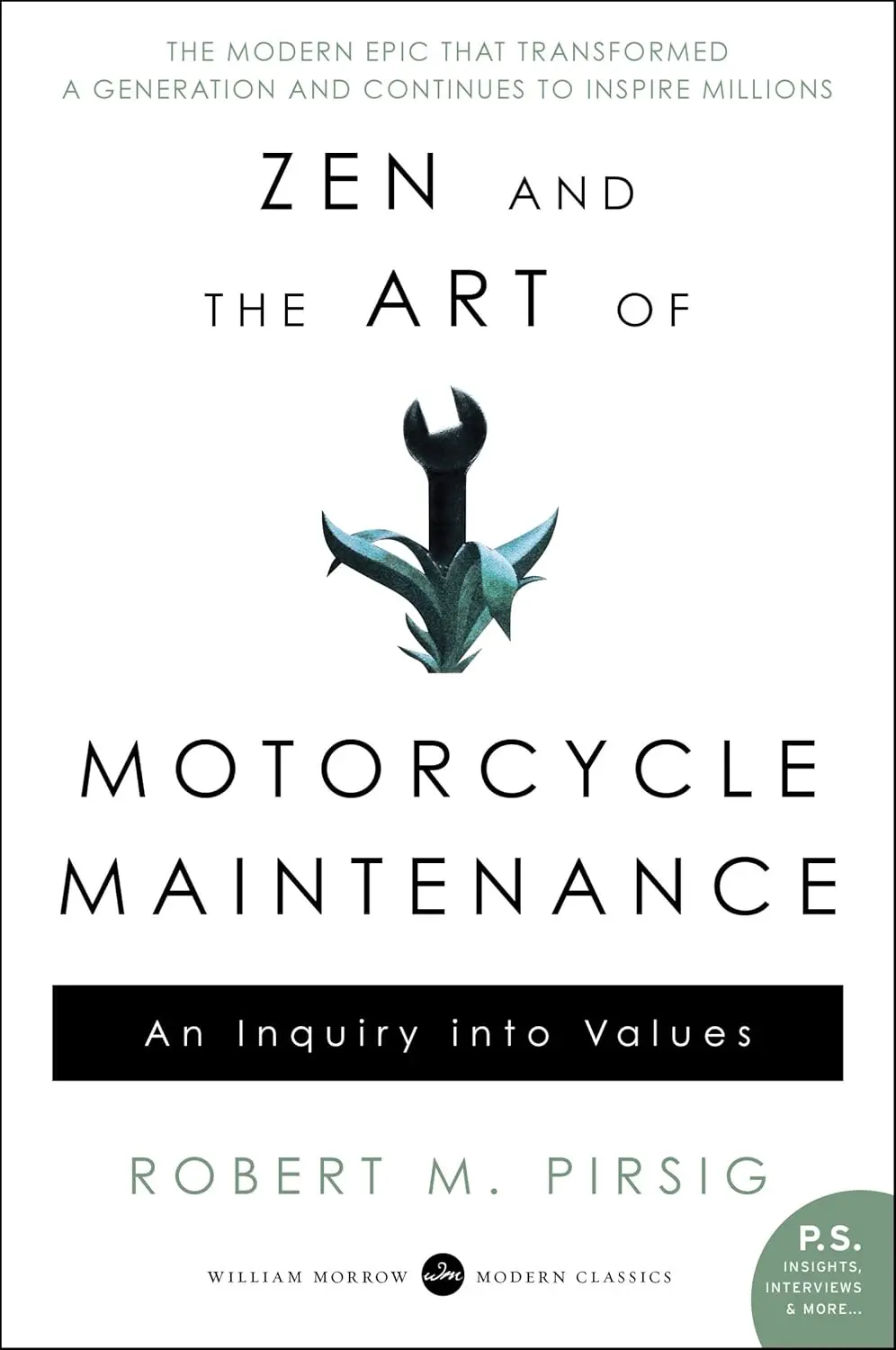
The book operates on two levels. On the surface, it is the story of a cross-country motorcycle trip from Minnesota to San Francisco. The narrator travels with his young son and two friends, and the daily events of the trip (mechanical problems, bad weather, small-town diners) provide the narrative structure.
Beneath the surface, the narrator is working through a philosophical question: what is quality? He traces this question through Western philosophy, from the Greeks to modern science, and finds that the rational, scientific worldview and the romantic, intuitive worldview have been separated in a way that impoverishes both. The motorcycle becomes the metaphor: the romantic sees the bike as a beautiful machine and wants nothing to do with its maintenance. The rationalist sees the bike as a system of parts and understands how it works but misses what makes riding it worthwhile. Pirsig wants to reunite these two ways of seeing.
The philosophical sections are interspersed with the travel narrative and with a third thread: the narrator’s troubled past, including a mental breakdown and hospitalization. The three layers (travel, philosophy, autobiography) weave together in a way that can feel disorienting or absorbing, depending on the reader.
The book was rejected by 121 publishers before being accepted. It has since sold over five million copies, making it one of the most commercially successful philosophy books in history. The writing is careful, sometimes slow, and rewards patience.
For founders, the book’s treatment of quality is directly relevant. What does it mean to do good work? Not good in the sense of efficient or profitable, but good in the sense of something you are proud of, something that has integrity? Pirsig does not give a simple answer, but the question itself is worth sitting with, especially when the pressures of running a company push you toward speed and shortcuts.
Stewart Butterfield (Slack founder) has cited it. At about 420 pages, the book reads slowly by design. It is not a book you finish in a weekend. It is a book you think about for months after you finish it.
