
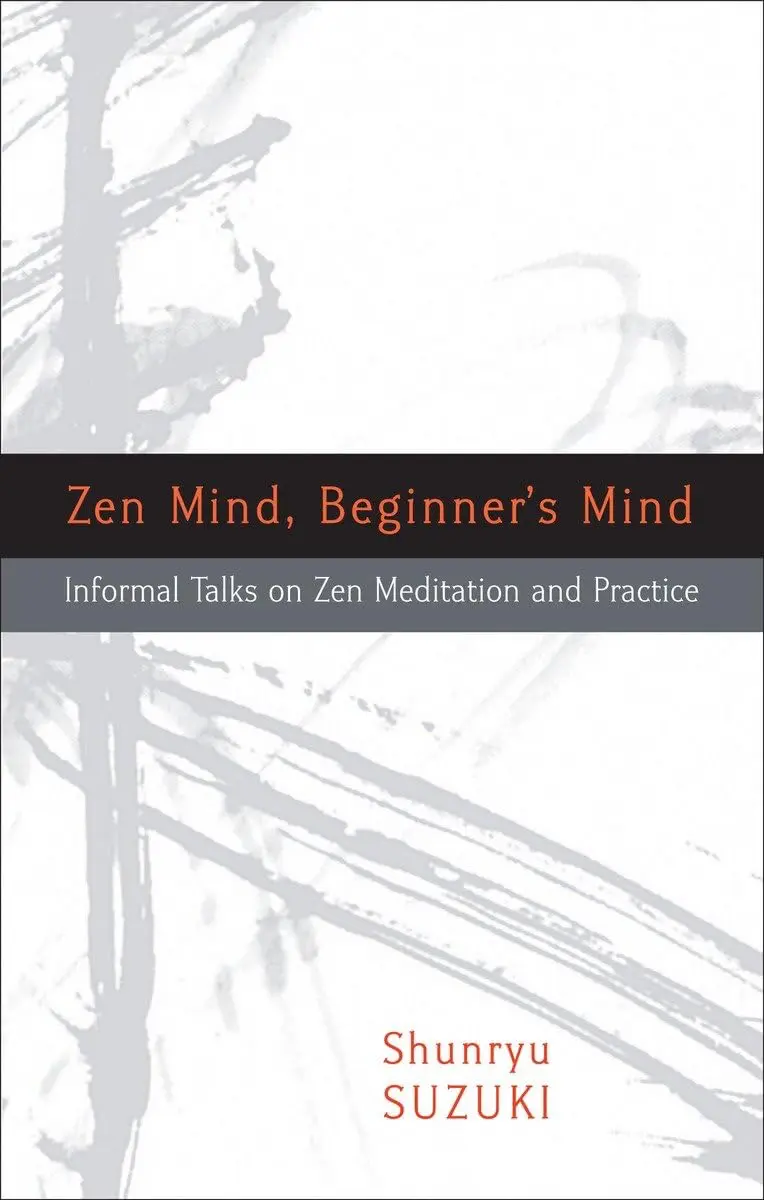
Zen Mind, Beginner’s Mind is a collection of informal talks Suzuki gave to his American students in the late 1960s. The talks are short, typically two to four pages, and address the practice of Zen meditation in plain language. Suzuki does not use jargon, does not appeal to authority, and does not try to make Zen sound exotic or difficult.
The title refers to the Zen concept of “beginner’s mind” (shoshin): an attitude of openness, eagerness, and lack of preconceptions when approaching a subject. Suzuki says that in the beginner’s mind there are many possibilities, but in the expert’s mind there are few. The practice of Zen, as he presents it, is about maintaining that openness regardless of how much experience you accumulate.
The talks cover practical matters: how to sit for meditation (posture matters more than you think), how to breathe (follow the breath without trying to control it), how to deal with the wandering mind (do not fight thoughts; acknowledge them and return to breathing). But they also cover broader topics: how to approach any activity with full attention, how to stop dividing experience into “good” and “bad,” and how to be comfortable with not-knowing.
Suzuki does not make grand claims. His teaching style is quiet, almost offhand. A sentence like “the most important thing is to find out what the most important thing is” sounds like a tautology until you sit with it and realize it is asking you to question your assumptions about priorities.
Steve Jobs read this book throughout his life and credited Zen practice with influencing how he approached design and decision-making. Jack Dorsey and other tech founders have also cited it.
For founders, the beginner’s mind concept is directly applicable. Industries develop conventions and assumptions that everyone follows without questioning. The ability to approach a problem with fresh eyes, to ask “what if we did it completely differently?” is a competitive advantage that degrades as expertise accumulates. Suzuki’s book is about keeping that freshness alive.
At about 140 pages, it can be read in a sitting. Most readers return to it periodically because the ideas land differently depending on what you are dealing with at the time.
