
Game theory studies how rational actors make decisions when the outcome depends on what other actors do. In a negotiation, your best move depends on what the other side will do. In a market, your pricing strategy depends on how competitors will respond. Game theory provides frameworks for thinking through these interactions systematically.
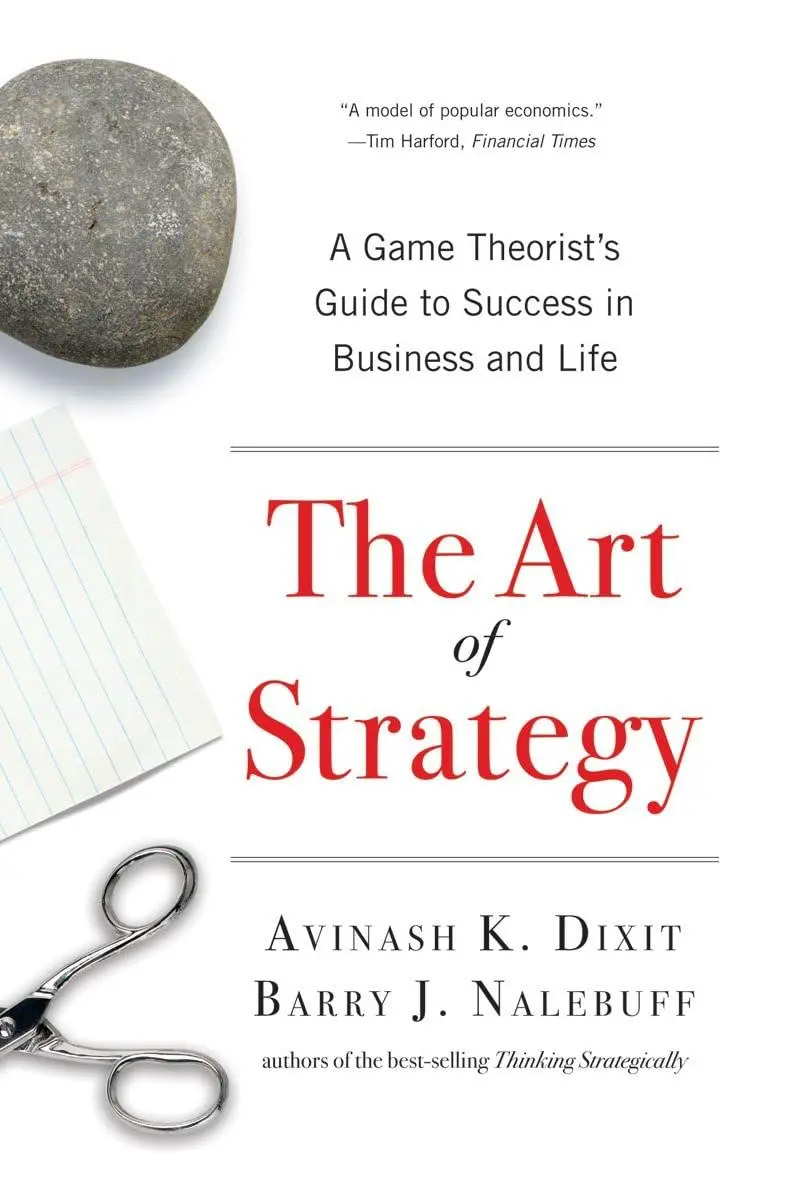
Dixit and Nalebuff, both economists, wrote this book for a general audience. They cover classic game theory concepts through examples from business, politics, sports, and everyday life. The prisoner’s dilemma (why two parties acting in their individual self-interest can produce a worse outcome for both). Credible commitments (why burning your ships, like Cortes did, can be a rational strategy because it removes the option of retreat). Signaling (how to communicate information through actions rather than words). Brinkmanship (how to take a situation to the edge of catastrophe as a negotiating tactic without actually falling off).
The book is organized as a series of strategic situations with analysis. Each chapter presents a problem, walks through the game-theoretic reasoning, and draws practical conclusions. The writing is clear and the examples are accessible, though some of the formal reasoning requires concentration.
The updated edition (2010) revises the earlier version (Thinking Strategically, 1991) with new examples and expanded coverage. The core concepts remain the same, but the presentation is more polished.
For founders, game theory is directly relevant to pricing decisions (how will competitors respond?), negotiations (what is the other side’s best alternative?), market entry (how will incumbents react?), and partnership dynamics (how do you create incentives for cooperation?). You do not need to build mathematical models. You need to think about how other players will respond to your moves.
At about 470 pages, the book is substantial. It reads more like a textbook than a business book, which is appropriate given the subject. Dixit teaches at Princeton and Nalebuff at Yale, and the academic rigor shows without overwhelming the general reader.
