
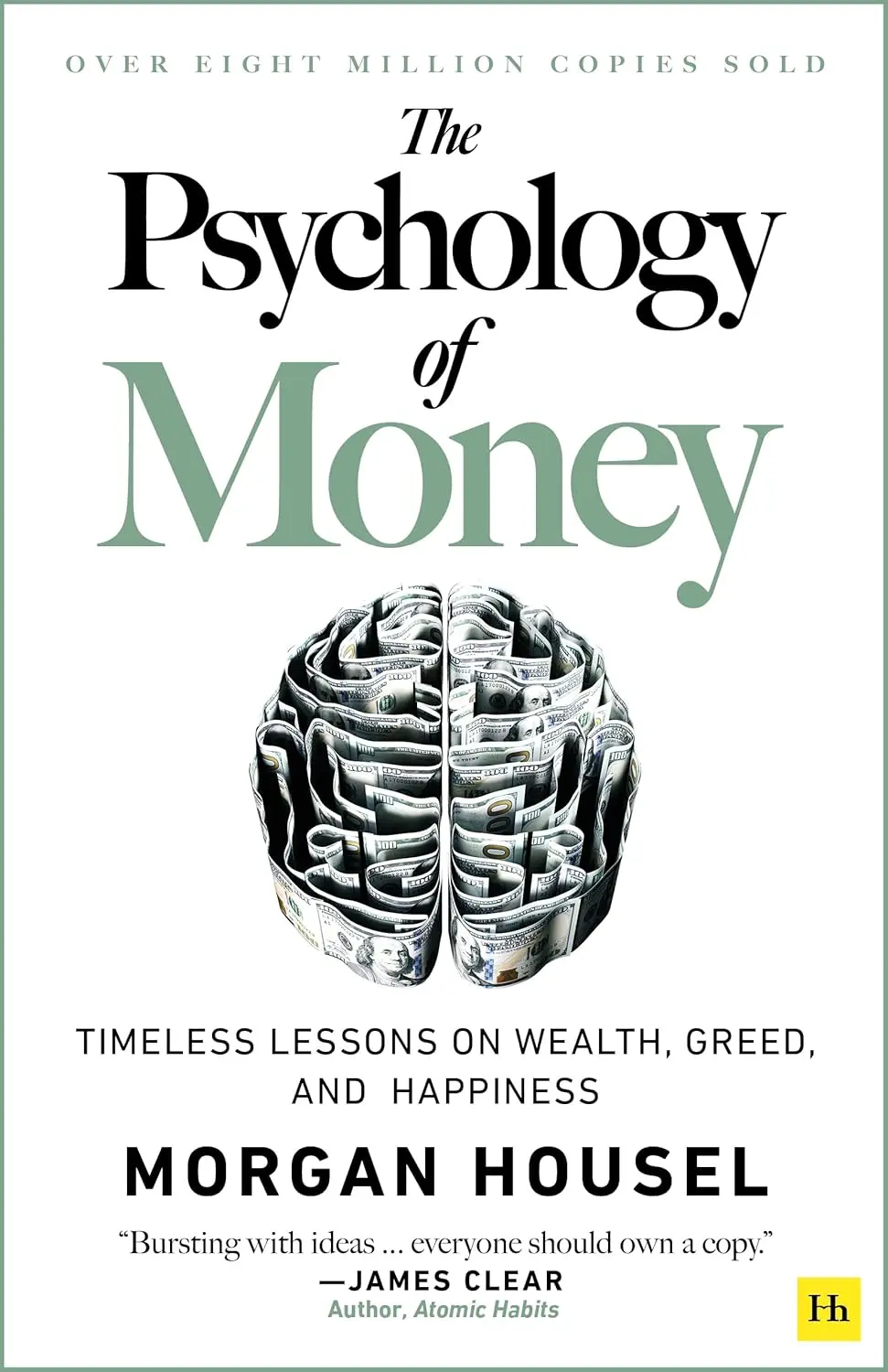
Housel starts from an observation: the way people handle money has little to do with intelligence and a lot to do with personal history. Someone who grew up during a recession thinks about risk differently than someone who grew up during a boom. Someone whose parents went bankrupt has a different relationship with debt than someone whose parents were comfortable. These differences are rational responses to different experiences, which is why two equally smart people can have completely opposite financial strategies and both feel confident they are right.
The 19 essays cover topics like: the role of luck in financial outcomes (Bill Gates attended one of the only high schools in the world that had a computer in 1968), why reasonable decisions are better than rational ones (because rational decisions ignore the emotional cost of following them), why getting wealthy and staying wealthy require different skills (getting wealthy requires optimism and risk-taking; staying wealthy requires pessimism and frugality), and why compound growth is the most powerful force in finance but the hardest for humans to intuit.
Housel writes in a style that is conversational, concise, and full of well-chosen stories. Each essay is about 10 pages and makes one point. The format means you can read one chapter at a time without losing the thread.
The book does not provide investment advice in the traditional sense. There are no stock picks, no portfolio allocation recommendations, and no predictions. The argument is that behavior, how patient you are, how you respond to market crashes, whether you live below your means, matters more than which specific investments you choose.
For founders, the book is relevant because building a company is a financial act. How you think about money affects every decision: how much runway to keep, how much to pay yourself, when to raise, and when to sell. Housel’s point that financial decisions are emotional as well as analytical resonates with anyone who has made a business decision under financial pressure.
James Clear has recommended it. At about 250 pages, the book reads in a few hours. It became a massive bestseller after its 2020 publication, selling over 5 million copies.
