
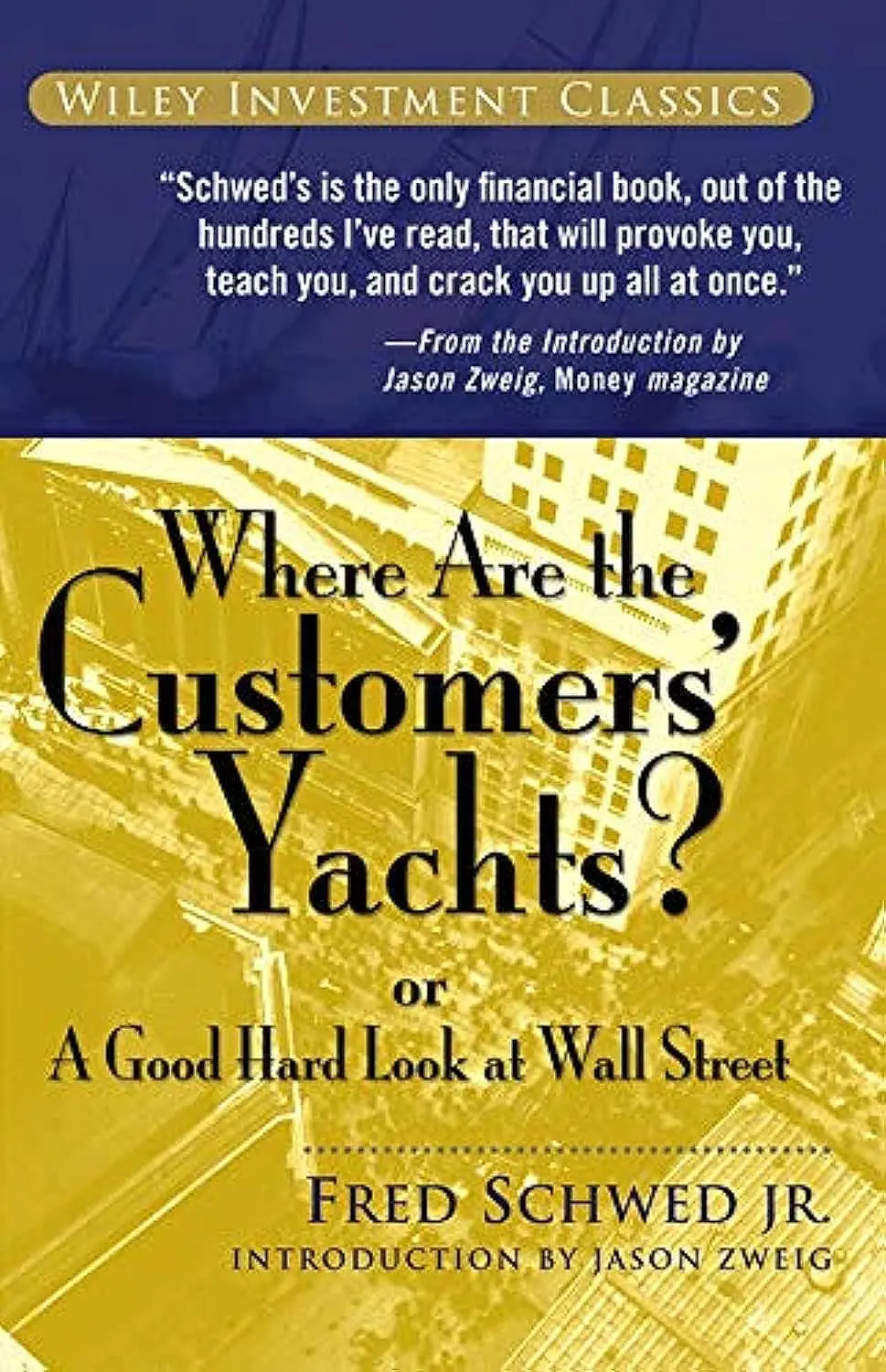
The book was written in 1940 by a former Wall Street trader who had lost his shirt in the 1929 crash and spent the next decade observing the industry with the clarity that comes from having been burned. The result is a short, witty book that skewers every participant in the financial system: brokers, analysts, mutual fund managers, customers, and speculators.
Schwed’s central observation is that Wall Street’s incentive structure is misaligned with its clients’ interests. Brokers earn commissions on transactions, so they are incentivized to encourage trading whether or not it benefits the client. Analysts provide forecasts that are no better than random, but they deliver them with enough confidence to keep clients paying for advice. Fund managers charge fees that compound over time and eat into whatever returns they generate.
The humor is what makes the book last. Schwed does not argue these points with data or moral outrage. He tells stories, makes jokes, and lets the absurdity of the system speak for itself. The writing has a 1940s voice that some readers find charming and others find dated, but the observations about financial industry incentives are as accurate now as they were 85 years ago.
Warren Buffett has recommended this book repeatedly, calling it the funniest book ever written about investing. The reason is not just the comedy. It is that Schwed identified the principal-agent problem in finance decades before it had a formal name. When the people managing your money earn their fees regardless of your returns, the incentives are working against you.
For founders, the book is a reminder to examine the incentive structure of anyone who advises you: investors, lawyers, consultants, accountants. When their compensation does not depend on your outcomes, their advice may not be aligned with your interests.
At about 200 pages, the book is short. It reads in an afternoon. The 2006 edition includes an introduction by Michael Lewis and updated commentary. It is one of those rare books that is both genuinely funny and genuinely educational about how financial systems actually work.
