
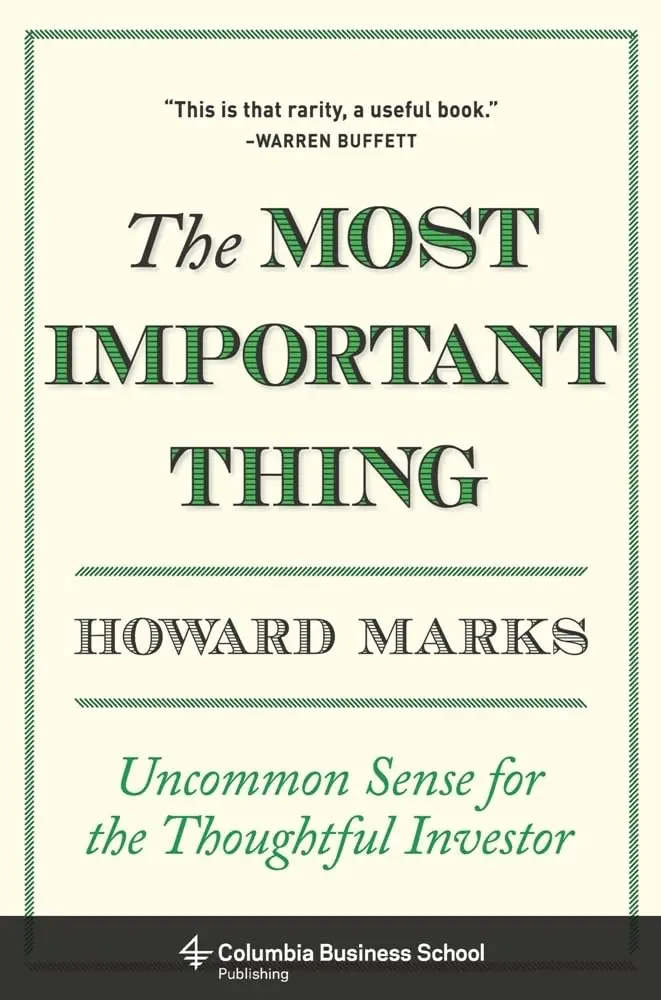
Marks has been writing investment memos to Oaktree clients since the early 1990s, and they have become required reading among professional investors. This book organizes the best ideas from those memos into a coherent philosophy.
The central concept is “second-level thinking.” First-level thinking says: “This is a good company, so I should buy the stock.” Second-level thinking says: “This is a good company, everyone knows it, the stock is priced accordingly, and therefore there is no advantage in buying it.” The difference between first-level and second-level thinking is the difference between average and superior investment returns.
Marks covers several themes. Risk is not volatility (the standard academic definition). Risk is the probability of permanent loss. And risk is highest when everyone thinks it is lowest, because that is when prices are most inflated and caution has been abandoned. Market cycles are real and predictable in their general pattern (people alternate between fear and greed), even though the specific timing is unpredictable. Knowing what you do not know (intellectual humility) is more valuable than confidence.
The writing is clear and reflective. Marks does not pretend to have a system that always works. He describes an approach to thinking that improves your odds over time. The book includes annotations by other investors (Joel Greenblatt, Seth Klarman, and others), which add alternative perspectives on each chapter.
For founders, the second-level thinking concept applies beyond investing. When everyone is rushing into a market, that is exactly when caution is warranted. When everyone is avoiding a space, that may be where the opportunity is. Understanding cycles and contrarian thinking helps with market timing, competitive strategy, and fundraising decisions.
Warren Buffett and Chamath Palihapitiya have praised Marks’s memos. At about 200 pages, the book is concise. It reads best when taken slowly, a chapter at a time, because each chapter introduces a concept that benefits from reflection before moving on.
