
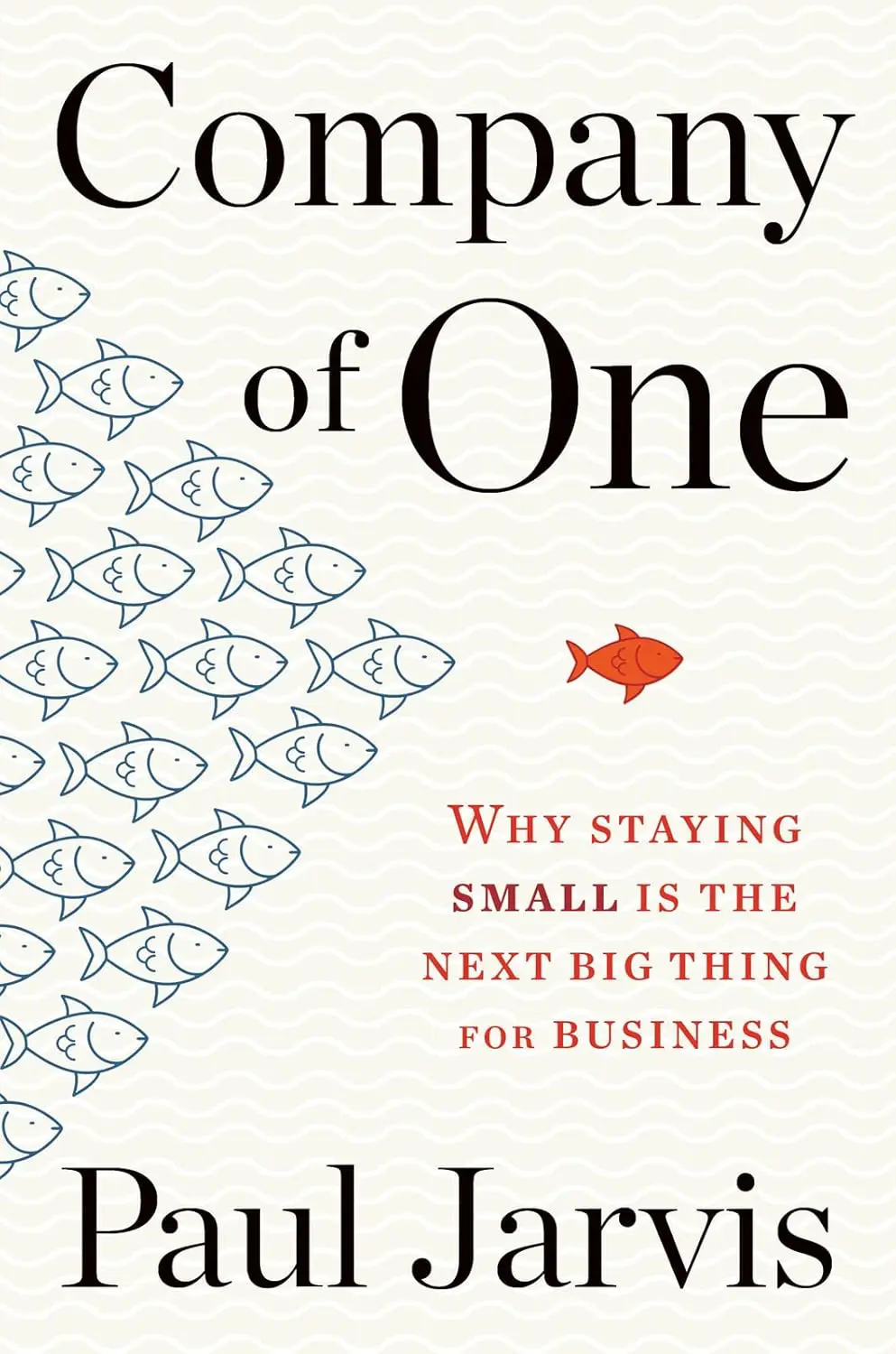
Company of One is built on a question most business books never ask: what if you do not want to grow? Jarvis, a web designer turned writer who has run a profitable one-person business for years, noticed that the most fulfilled entrepreneurs he knew were not the ones building the biggest companies. They were the ones who had designed businesses that gave them the life they wanted.
The book does not argue against growth. It argues against automatic growth, the assumption that more revenue, more employees, and more complexity are always better. Jarvis makes the case that growth should be a conscious choice, not a default setting. Every new hire creates management overhead. Every new product creates support obligations. Every expansion creates dependencies. Sometimes the right answer is to stay the size you are and get better at what you do.
Jarvis draws on research and interviews with business owners who have intentionally stayed small. A software developer who caps revenue at a comfortable level and spends afternoons surfing. A consultant who takes on fewer clients at higher rates rather than building a firm. A course creator who automates delivery and works four months a year. These are not failure stories. They are design choices.
The book also covers practical topics: how to build a resilient one-person business, how to set up systems so you are not the bottleneck, how to price for profitability rather than volume, and how to market without a team.
For founders, Company of One is a useful counterweight to the grow-at-all-costs narrative. Not every business needs to be venture-backed. Not every founder wants to manage 50 people. If your goal is autonomy, flexibility, and profit rather than scale, this book validates that choice and provides a framework for executing it.
Sahil Lavingia has recommended it. At about 260 pages, the book reads quickly. Jarvis writes clearly and without the motivational intensity that characterizes most business books. The tone is calm and practical, which fits the message.
