
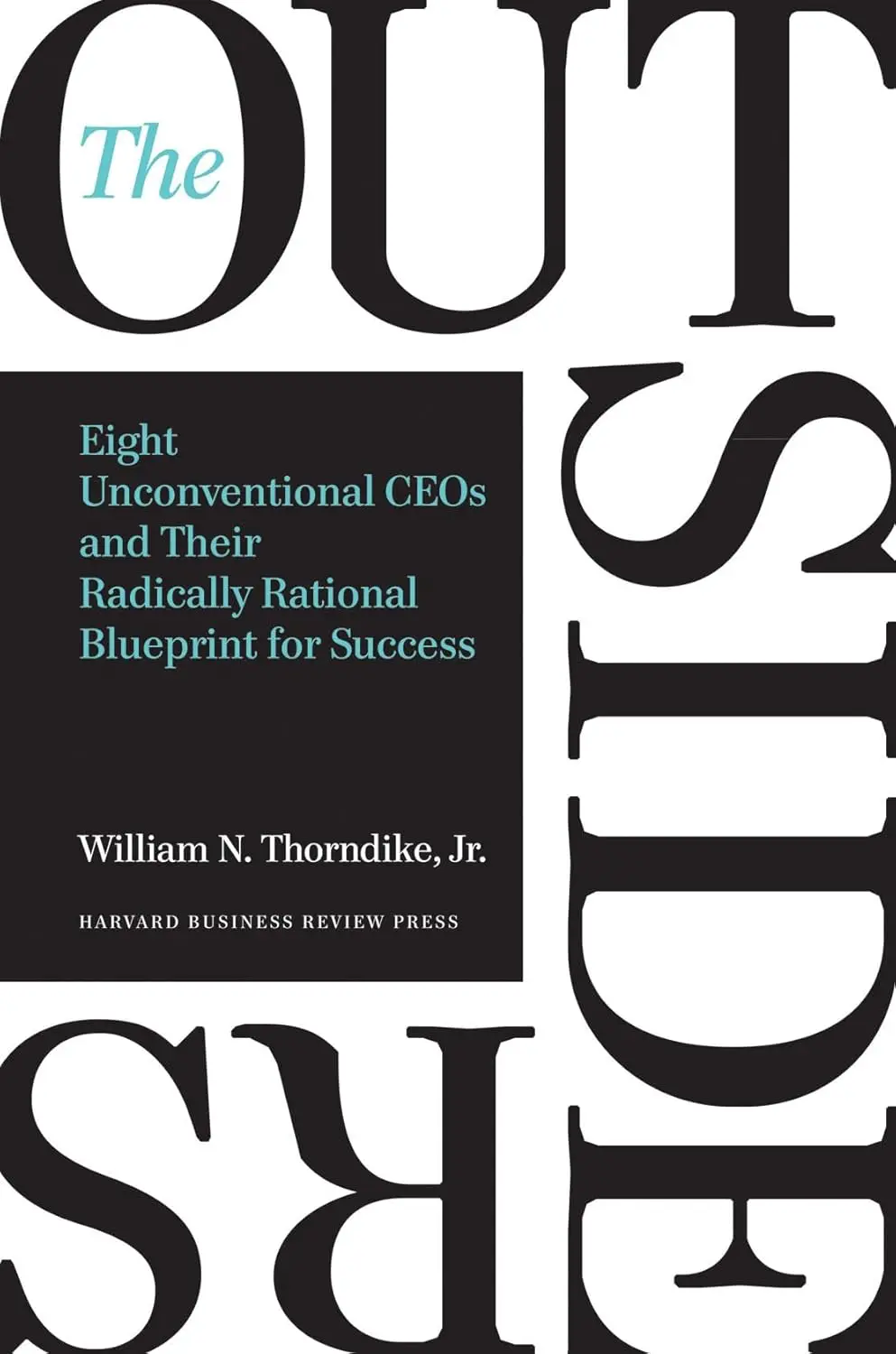
The eight CEOs in the book are not household names (with the exception of Warren Buffett). Tom Murphy at Capital Cities Broadcasting. Henry Singleton at Teledyne. John Malone at TCI. Katharine Graham at The Washington Post. Bill Stiritz at Ralston Purina. Dick Smith at General Cinema. Bill Anders at General Dynamics. And Buffett at Berkshire Hathaway.
What they had in common was a relentless focus on capital allocation: how to deploy the cash a business generates. Most CEOs focus on operations and leave capital allocation to the CFO or follow industry norms. The outsider CEOs treated capital allocation as their most important decision and approached it with the rationality of investors rather than the habits of operators.
Their approach included: repurchasing shares aggressively when the stock was undervalued, making acquisitions only when the price was right (not to grow for growth’s sake), paying minimal dividends (preferring to reinvest or buy back shares), decentralizing operations to reduce overhead, and ignoring Wall Street’s obsession with quarterly earnings.
Thorndike quantifies the results. Each CEO outperformed the S&P 500 by a factor of 20x or more over their tenure. Tom Murphy generated returns that were 16x the market average. Henry Singleton generated 180x the returns of the average conglomerate CEO. These are staggering numbers that most business readers have never encountered because these leaders were quiet, unglamorous, and media-averse.
For founders, the book shifts how you think about the CEO job. Most startup advice focuses on product, sales, and growth. Thorndike makes the case that the CEO’s highest-leverage activity is deciding what to do with money: reinvest, acquire, return to shareholders, or hold as cash. Getting this right matters more than almost any operational decision.
Warren Buffett and Charlie Munger have both praised the book. At about 250 pages, it is concise. Each CEO profile reads as a focused case study, and the pattern recognition across all eight is what gives the book its weight.
