
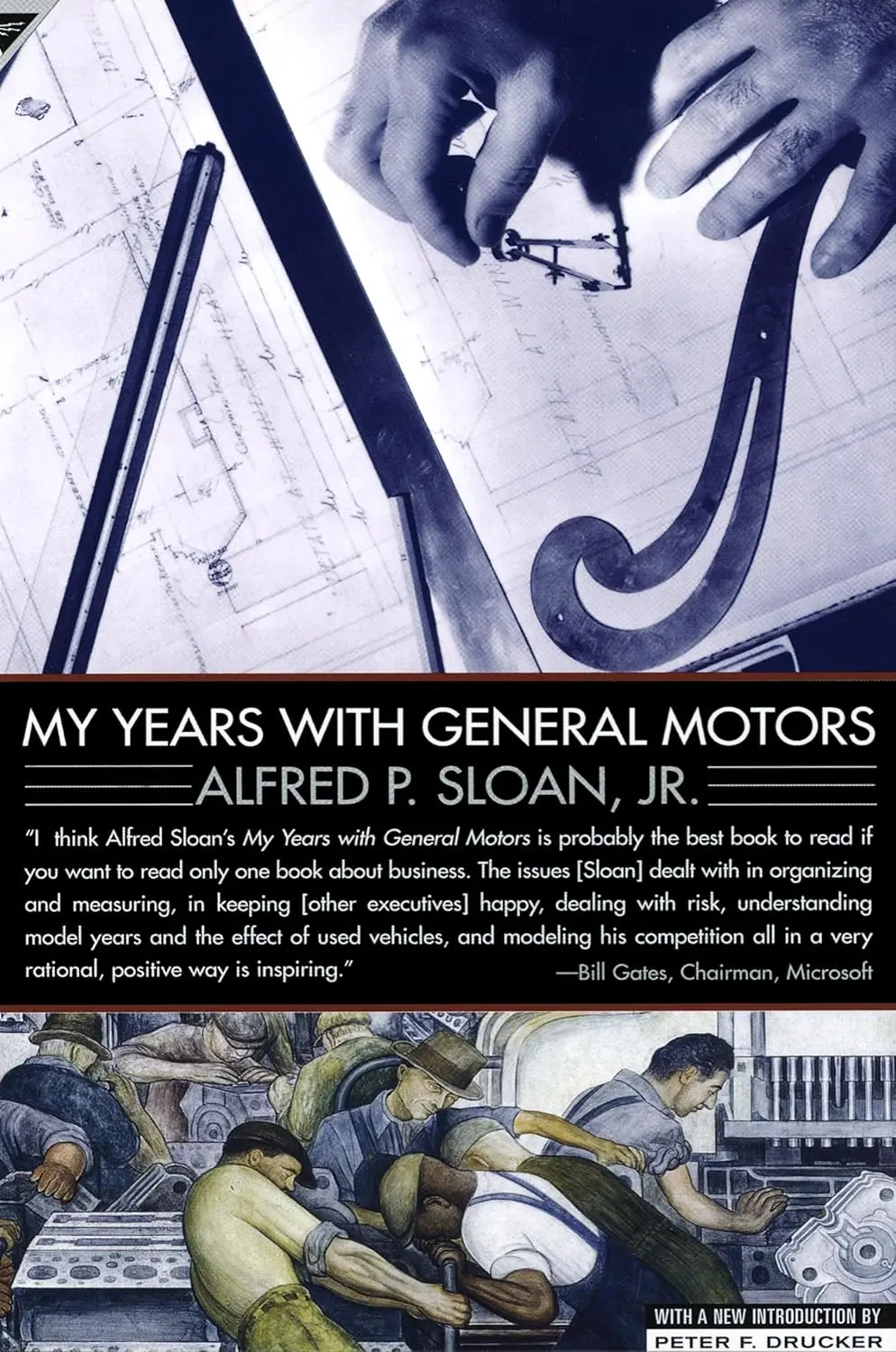
When Sloan took over GM in the early 1920s, it was a mess. Multiple car brands operated independently, competed with each other, and had no coordinated strategy. Sloan introduced what he called “decentralized operations with coordinated control,” giving each division (Chevrolet, Buick, Cadillac, etc.) autonomy over day-to-day operations while maintaining centralized oversight of financial performance, strategic planning, and capital allocation.
This organizational model became the template for how large corporations structured themselves for the next half century. The concept of the divisional structure, with division heads accountable for P&L while corporate headquarters handles strategy and capital, came directly from Sloan’s work at GM.
The book covers specific decisions in detail. How Sloan segmented the car market by price (a car for every purse and purpose). How he used annual model changes to create demand that Ford’s single-model approach could not match. How he managed the tension between division autonomy and corporate control. How he handled the relationship with the du Pont family, which was GM’s largest shareholder.
Sloan writes like an engineer: precisely, without emotion, and with extensive data. The prose is dry by modern standards. There are no personal anecdotes, no vulnerability, and very little about life outside the company. Peter Drucker, who wrote extensively about management, called it the best book on management ever written. Bill Gates also recommended it.
For founders, the book is most relevant when you are moving past the startup phase and need to think about organizational structure. How do you give teams autonomy without losing coordination? How do you make financial decisions across multiple product lines? How do you scale decision-making without becoming slow? Sloan dealt with all of these problems at the largest scale possible.
Ben Horowitz has cited it. At about 470 pages, the book is long and not easy reading. The reward is an unmatched view of how one person designed the organizational machinery that ran the 20th century’s largest company.
