
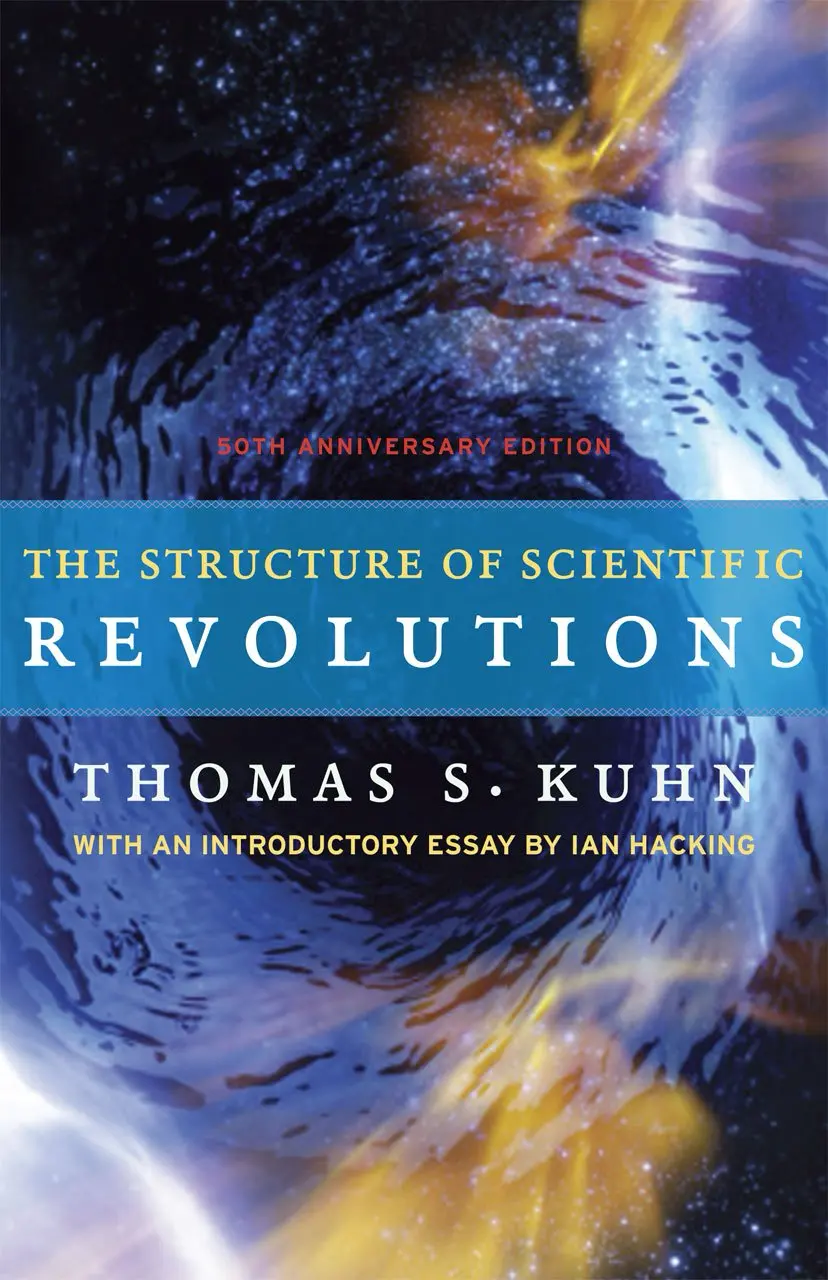
Before Kuhn, the standard view of science was that it progresses linearly: each generation builds on the last, knowledge accumulates steadily, and the truth gradually comes into focus. Kuhn argued that this is wrong. Science mostly operates within a “paradigm,” a shared framework of assumptions, methods, and questions that the scientific community takes for granted. Researchers within a paradigm spend their time solving “puzzles” defined by the framework.
But anomalies accumulate. Results that do not fit the paradigm pile up. Initially, they are ignored or explained away. Eventually, the anomalies become too numerous to dismiss, and the field enters a crisis. Out of the crisis, a new paradigm emerges that accounts for the anomalies but requires abandoning some of the old framework’s assumptions. This is a paradigm shift. The transition is not smooth. Proponents of the old paradigm resist the new one, and the shift often does not complete until the older generation of researchers retires or dies.
Kuhn’s examples include the Copernican revolution (from Earth-centered to Sun-centered astronomy), the shift from Newtonian to Einsteinian physics, and the acceptance of oxygen theory in chemistry over phlogiston theory. In each case, the new paradigm did not simply add to the old one. It replaced it, and concepts that made sense in the old framework became meaningless in the new one.
The term “paradigm shift” has since been overused in business and marketing to the point of meaninglessness. But Kuhn’s actual argument is specific and useful. It explains why established experts often resist the innovations that will replace their work, and why revolutions in understanding tend to come from outsiders or young researchers who are not committed to the existing framework.
For founders, Kuhn provides a mental model for understanding industry disruption. Incumbent companies operate within their own paradigms: assumptions about customers, markets, and technology that feel like facts rather than frameworks. Disruption happens when those assumptions stop holding.
Mark Zuckerberg and Cathie Wood have cited it. At about 210 pages, the book is short but academic. Kuhn’s prose is clear for a philosopher, but the argument requires attentive reading. It is one of the most cited books in the history of science, and the concept of the paradigm shift has leaked into every field.
