
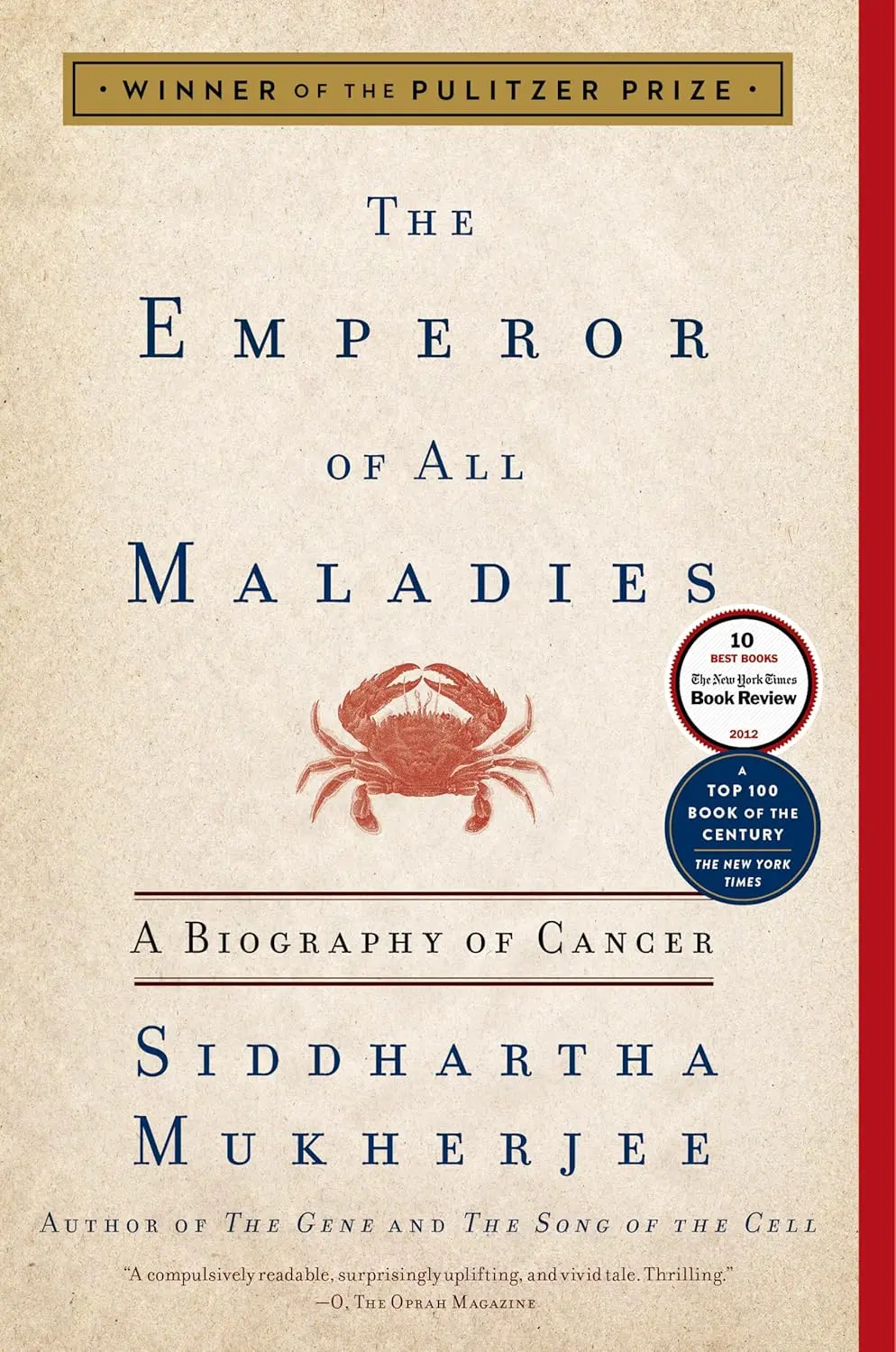
Mukherjee treats cancer as a character with a biography: birth (the first documented cases in ancient Egypt), childhood (early surgical attempts), adolescence (the rise of chemotherapy and radiation), and a complicated adulthood (targeted therapies, immunotherapy, and the genetic understanding that cancer is not one disease but hundreds).
The narrative structure makes a 4,000-year medical history readable. Mukherjee interweaves the history with his own experience as an oncology fellow treating patients at Massachusetts General Hospital. The juxtaposition of ancient treatments (cauterization, arsenic) with modern ones (imatinib, checkpoint inhibitors) gives the reader a sense of how far the field has come and how far it still has to go.
The book is honest about the failures of cancer treatment. The radical mastectomy, which mutilated women for decades based on a theory about how cancer spreads that turned out to be wrong. The war on cancer declared by Nixon in 1971, which promised a cure within a decade and did not deliver. The chemotherapy protocols that sometimes killed patients faster than the disease would have.
But it also covers genuine breakthroughs. The discovery that certain cancers are caused by specific genetic mutations, which enabled drugs like imatinib (Gleevec) that target those mutations precisely. The development of immunotherapy, which uses the body’s own immune system to fight cancer. The statistical evidence that smoking causes lung cancer, and the decades-long fight against the tobacco industry’s denial.
For business readers, the book is relevant beyond medicine. It is a study of how complex problems get solved over very long timescales: through accumulation of knowledge, shifts in paradigm, institutional resistance to new ideas, and the occasional breakthrough that changes everything. Founders working on hard technical problems in any field will recognize the dynamics.
Bill Gates has recommended it. At about 570 pages, the book is a commitment. Mukherjee’s writing is literary and absorbing. It won the Pulitzer Prize for General Nonfiction in 2011 and was adapted into a documentary by Ken Burns.
