
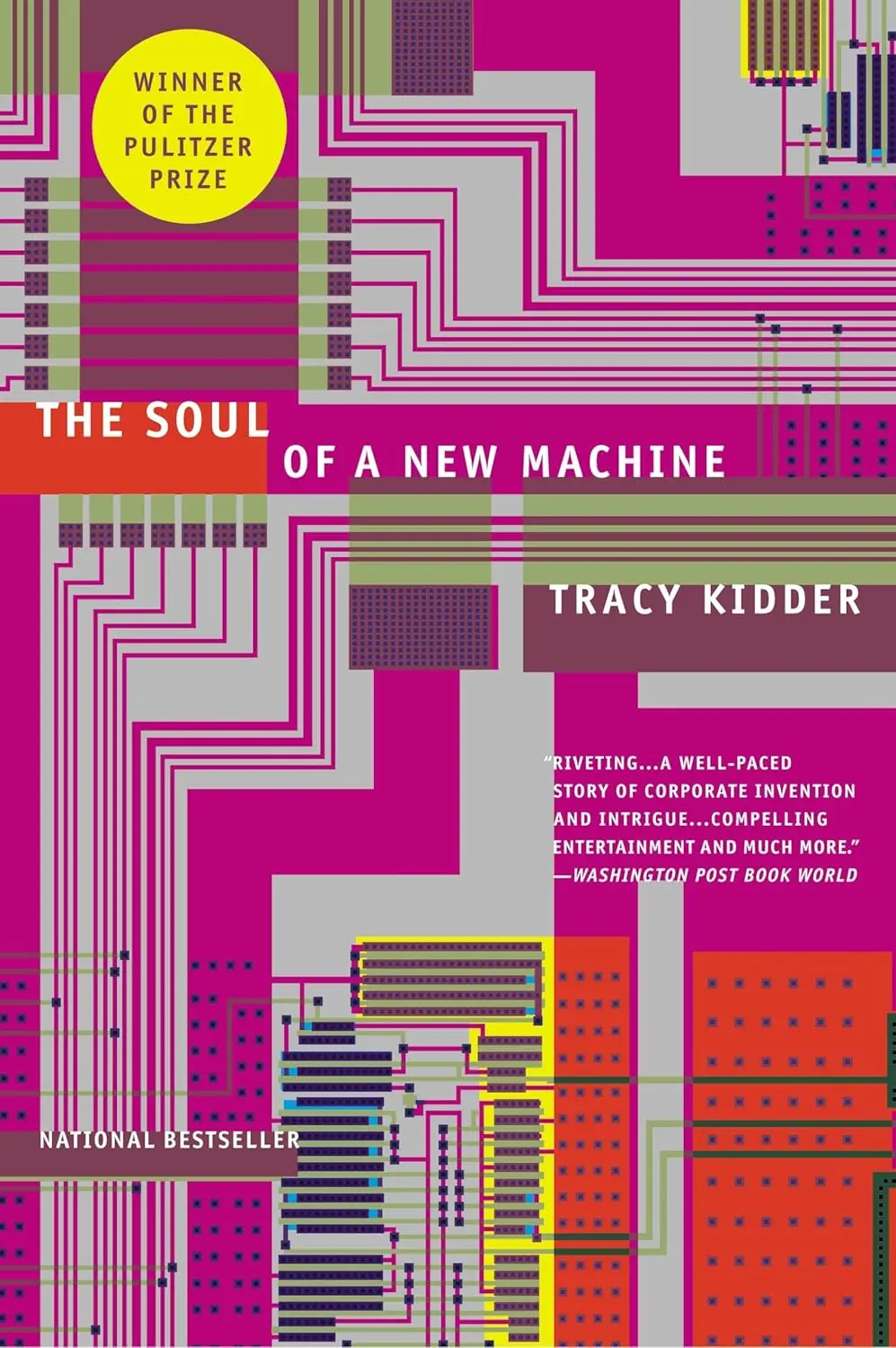
The Soul of a New Machine won the Pulitzer Prize in 1982, and it remains one of the best books ever written about building technology. Kidder, a journalist with no engineering background, embedded with Tom West’s team at Data General as they designed and built the MV/8000, a 32-bit minicomputer that the company needed to compete with Digital Equipment Corporation.
The book works because Kidder writes about engineers the way a war correspondent writes about soldiers. He captures the intensity, the camaraderie, the sleep deprivation, the moment when a fix works at 3 AM, and the moment when six weeks of work has to be thrown out because of a design flaw nobody caught. The team members, mostly young engineers in their twenties, pour themselves into the project for months without knowing whether it will succeed or whether the company will even ship it.
West, the project leader, is a fascinating character. He manages up (protecting his team from corporate politics and securing resources), manages down (motivating engineers by giving them ownership of difficult problems), and manages sideways (navigating the rivalry with another team inside Data General that is building a competing machine). His management style is indirect: he sets the direction, creates the conditions, and then lets the engineers figure out the specifics.
The book also captures something about the experience of building a product that most business books miss: the emotional investment. The engineers care about this machine in a way that goes beyond professionalism. They want it to work not because of bonuses or career advancement but because they put themselves into it.
For founders, the book is a reminder that building something is not a clean, strategic process. It is messy, exhausting, and driven by people who care more than is strictly rational. Every founder who has pulled an all-nighter to ship a feature, fought for resources in a meeting, or watched a key employee burn out will recognize the dynamics Kidder describes.
At about 290 pages, the book reads like a novel. Kidder’s prose is precise and understated. The technology is dated (minicomputers are long gone), but the human story is timeless.
