
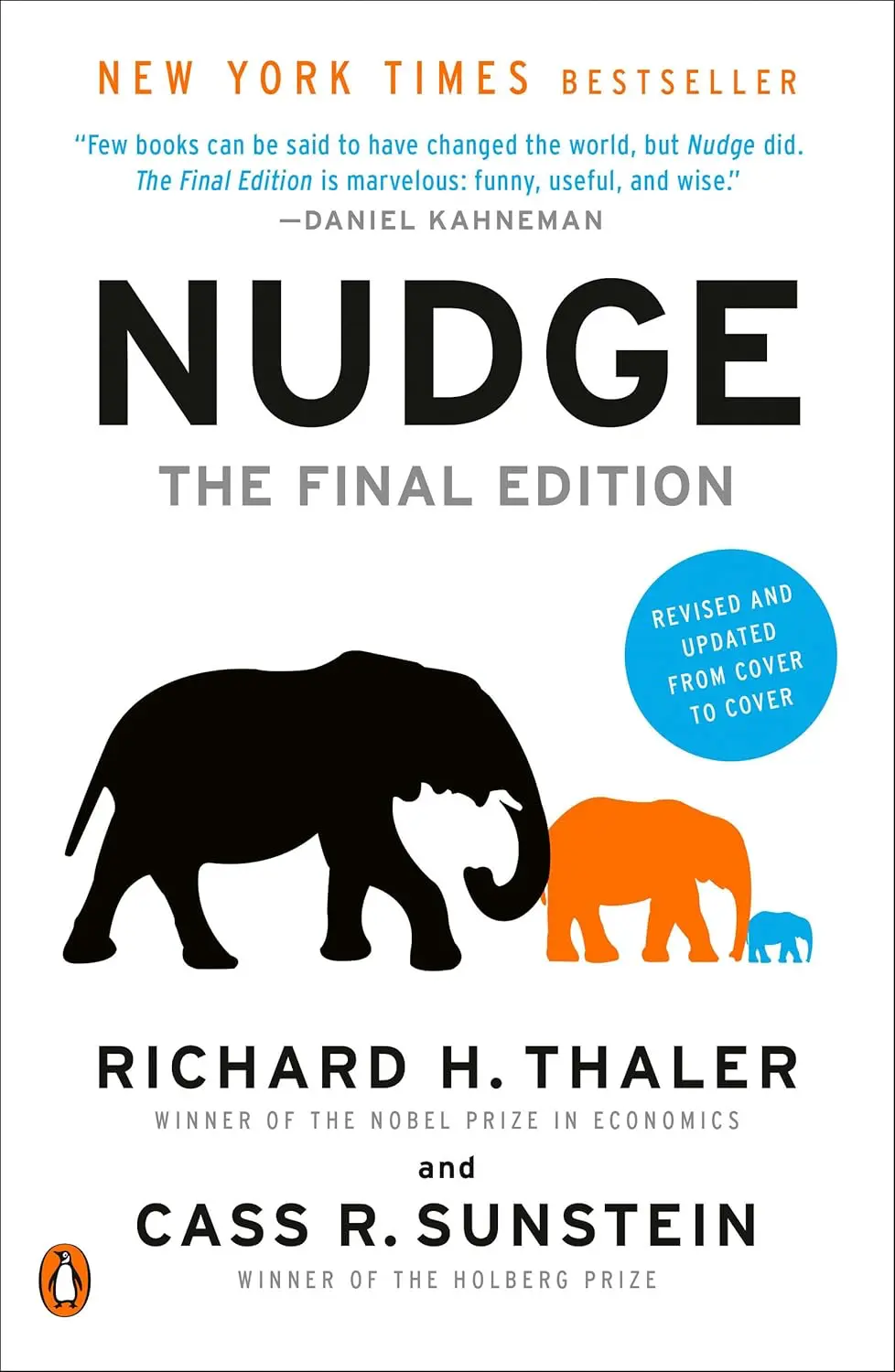
Nudge is built on a simple observation: people are influenced by how options are presented to them, not just what the options are. Putting healthy food at eye level in a cafeteria (while keeping the unhealthy options available) increases healthy choices. Making retirement savings opt-out rather than opt-in increases enrollment from around 50% to over 90%. Changing the default on organ donation from opt-in to opt-out dramatically increases donor rates.
Thaler and Sunstein call the people who design these choice environments “choice architects,” and they argue that choice architecture is never neutral. Someone has to decide what goes on the default setting, what is presented first, and how options are framed. Since neutrality is impossible, the question is not whether to influence choices but whether to do it thoughtfully.
The authors call their approach “libertarian paternalism,” which sounds like an oxymoron. The libertarian part means that people’s freedom to choose is always preserved. The paternalism part means that the defaults are set to favor outcomes that most people would want for themselves if they thought about it carefully. You can always opt out. But the default path leads to a better outcome.
The book covers applications across many domains: retirement savings (automatic enrollment with escalating contribution rates), healthcare (simplifying insurance choices that confuse consumers), environmental policy (making energy usage visible through social comparison), and organ donation (switching from opt-in to opt-out).
The Final Edition (2021) updates the original 2008 book with new examples, responses to critics, and reflections on how nudge theory has been adopted (and sometimes misapplied) by governments and companies worldwide.
For founders, choice architecture is product design by another name. Every interface, every onboarding flow, every pricing page presents choices to users. Understanding how the framing of those choices influences behavior, without resorting to manipulation, is a competitive advantage.
Barack Obama and Bill Gates have both cited the book’s influence on policy thinking. At about 370 pages (Final Edition), the book is thorough and well-organized. Thaler and Sunstein write accessibly, with plenty of examples. The ideas are practical enough to apply the day after you finish reading.
