
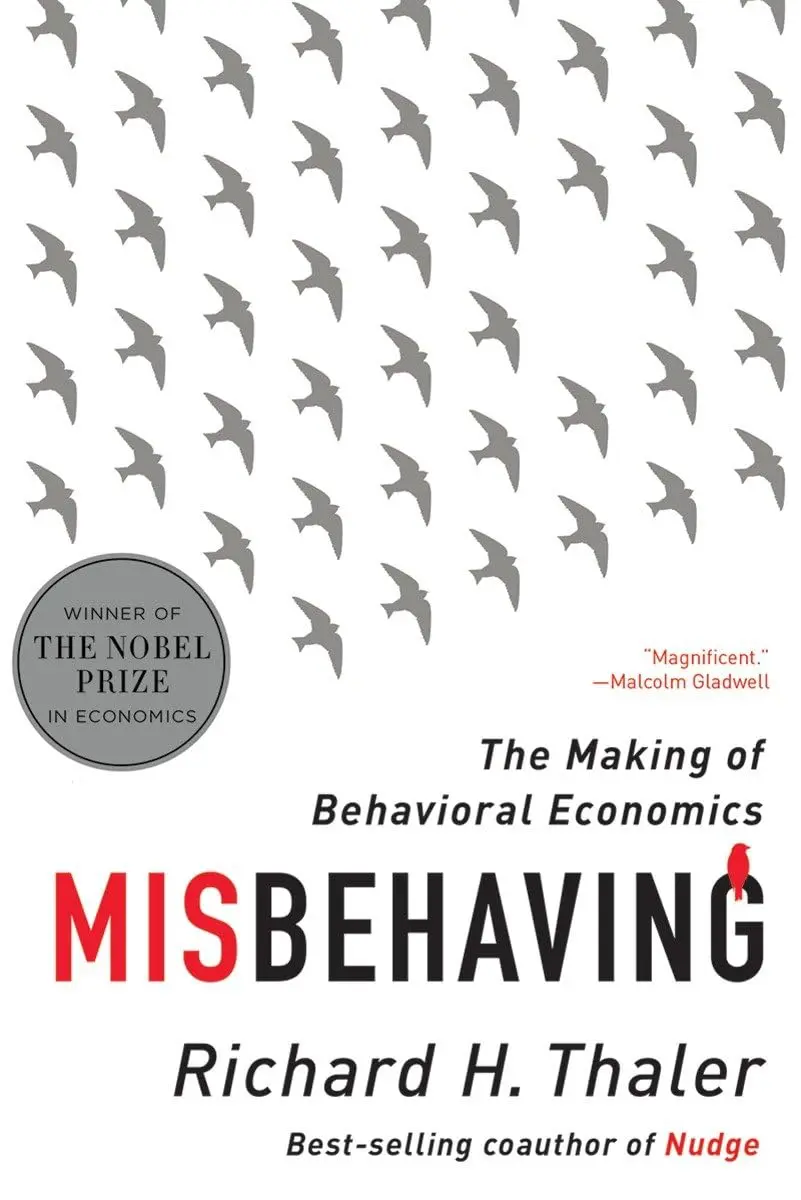
Thaler was one of the first economists to take psychology seriously. For decades, mainstream economics assumed that people are rational actors who maximize their utility. Thaler noticed that real people do not behave this way. They save too little for retirement even when they know they should save more. They are influenced by irrelevant information (anchoring). They treat money differently depending on where it comes from (mental accounting). They refuse deals that are technically profitable but feel unfair.
The book traces Thaler’s career as he collected these examples of “misbehavior” (deviations from rational economic theory) and worked with Daniel Kahneman, Amos Tversky, and other psychologists to develop explanations. The academic establishment pushed back hard. Rational-actor models were elegant and mathematically tractable. Behavioral models were messy. Thaler spent years being treated as a curiosity rather than a serious economist.
The narrative is engaging because Thaler writes with humor and does not take himself too seriously. He describes his own mistakes alongside others’ and frames the story as a collaborative effort rather than a solo achievement. The chapter on the NFL draft, where Thaler and a colleague showed that high draft picks are consistently overvalued (teams would do better trading them for multiple lower picks), is one of the most concrete demonstrations of behavioral economics in action.
The later chapters cover “nudge” theory, the idea that you can improve decisions by changing the default options people face without restricting their freedom. Automatic enrollment in retirement plans (where you have to opt out rather than opt in) increased savings rates dramatically. This concept has been adopted by governments worldwide.
For founders, behavioral economics is the theoretical foundation for much of product design, pricing strategy, and user experience. Understanding why people make the choices they do, rather than the choices they “should” make, is the difference between products that get used and products that sit on shelves.
Daniel Kahneman has praised the book. At about 350 pages, it reads like a good story rather than an economics textbook. Thaler won the Nobel Prize in Economics in 2017, which vindicated the field he helped create.
