
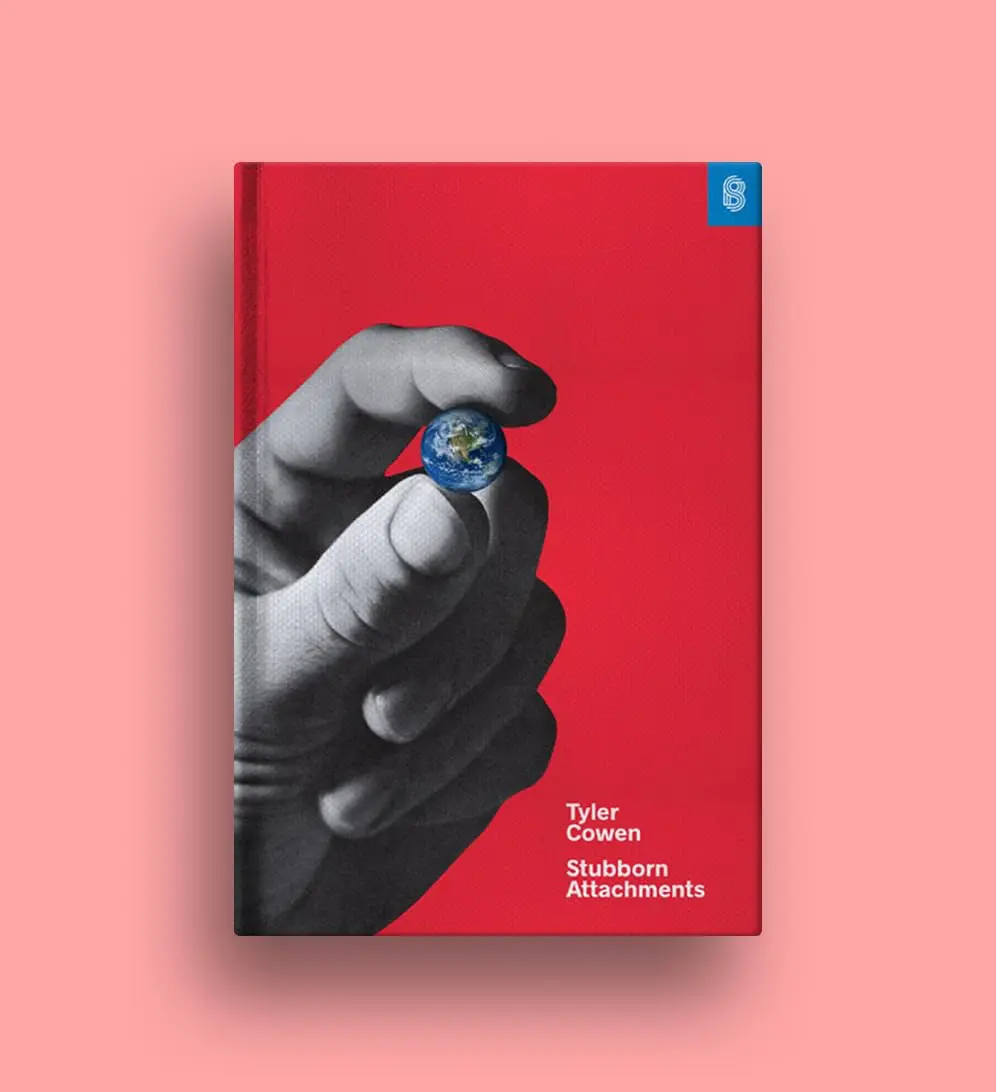
Stubborn Attachments is an unusual book. It is a work of philosophy by an economist, published by Stripe Press, and it runs about 160 pages. Cowen’s argument is that sustainable economic growth is the single most important thing a society can pursue, because almost every good thing (health, education, freedom, environmental quality, art) is easier to achieve in a wealthy society than in a poor one.
Cowen distinguishes between GDP growth (narrow) and what he calls “Wealth Plus,” a broader measure that includes leisure time, environmental quality, and nonmarket goods. His claim is not that money is the only thing that matters, but that the compound growth of Wealth Plus over decades and centuries produces improvements so large that they outweigh almost any short-term policy consideration.
The philosophical argument involves time horizons. Cowen argues that most people, and most policymakers, underweight the interests of future generations. If you take the well-being of people who will live in 100 or 200 years seriously, then policies that promote long-term growth become far more important than policies that redistribute wealth in the present. This is a controversial position, and Cowen engages with the objections honestly.
The book also covers individual ethics. Cowen argues that people should be “stubborn” in their attachment to fundamental values (human rights, individual freedom, the importance of growth) rather than flexible about everything depending on context. Some commitments should not be traded away for marginal gains.
For founders, the book’s framing is useful. If you are building something that contributes to long-term economic growth, you are doing something that matters at a civilizational level, even if the day-to-day work does not feel that way. The time-horizon argument also applies to company strategy: short-term optimization often comes at the expense of long-term value creation.
Patrick Collison has recommended it enthusiastically. At 160 pages, the book is short enough to read in a sitting. Cowen’s writing is clear but compressed. Every page contains an argument, and the density rewards re-reading.
