
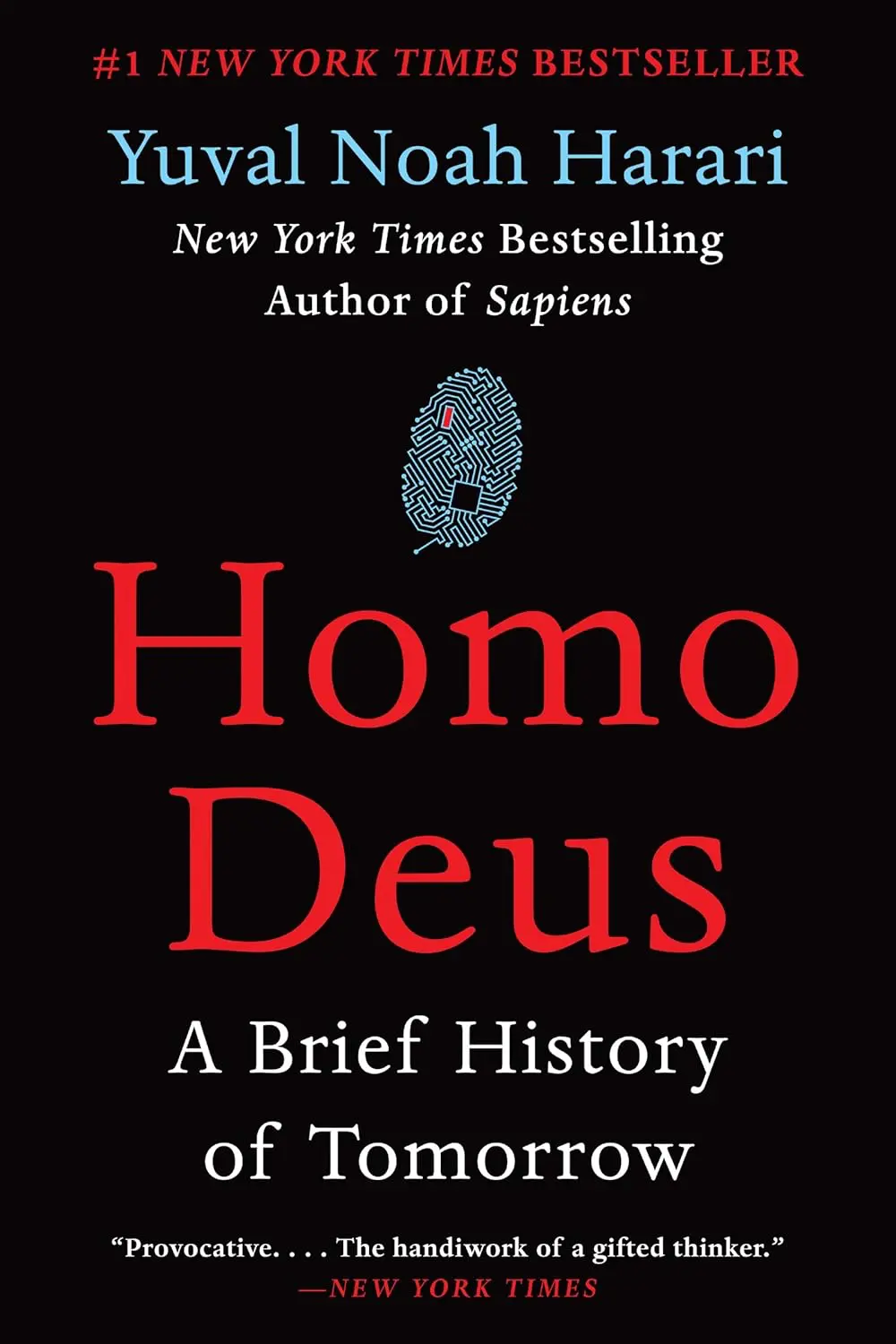
Where Sapiens covered the past, Homo Deus covers the future, or at least the possible futures that current technological trends point toward. Harari’s argument is that for most of history, humanity’s primary concerns were famine, plague, and war. In the 21st century, for the first time, more people die from eating too much than too little. More die from old age than from infectious disease. More die from suicide than from military conflict.
With the old enemies diminished, Harari asks: what comes next? He identifies three likely projects for the 21st century: achieving immortality (or at least dramatically extending lifespan), engineering happiness directly (through biochemistry rather than achievement), and upgrading humans (through genetic engineering, brain-computer interfaces, and AI).
The second half of the book gets darker. Harari considers what happens when algorithms know you better than you know yourself. If an AI can predict your choices more accurately than you can, what does free will mean? If genetic editing allows some people to enhance their intelligence while others cannot afford it, what happens to the idea of equality? If most jobs can be automated, what role do ordinary humans play?
Harari does not predict a specific future. He maps the forces that are pushing in certain directions and asks whether those directions are where we want to go. His tone is analytical rather than alarmist, but the implications are unsettling.
For founders building technology, these questions are not abstract. Every product decision, from recommendation algorithms to health tech to AI assistants, contains implicit assumptions about human agency, privacy, and the appropriate role of technology in people’s lives. Harari’s framework helps surface those assumptions.
Bill Gates, Mark Zuckerberg, and Barack Obama have recommended it. At about 450 pages, the book is speculative in a way that Sapiens was not, and some readers find the philosophical sections less grounded. But as a map of where technology might take humanity, it is one of the more thoughtful attempts available.
