
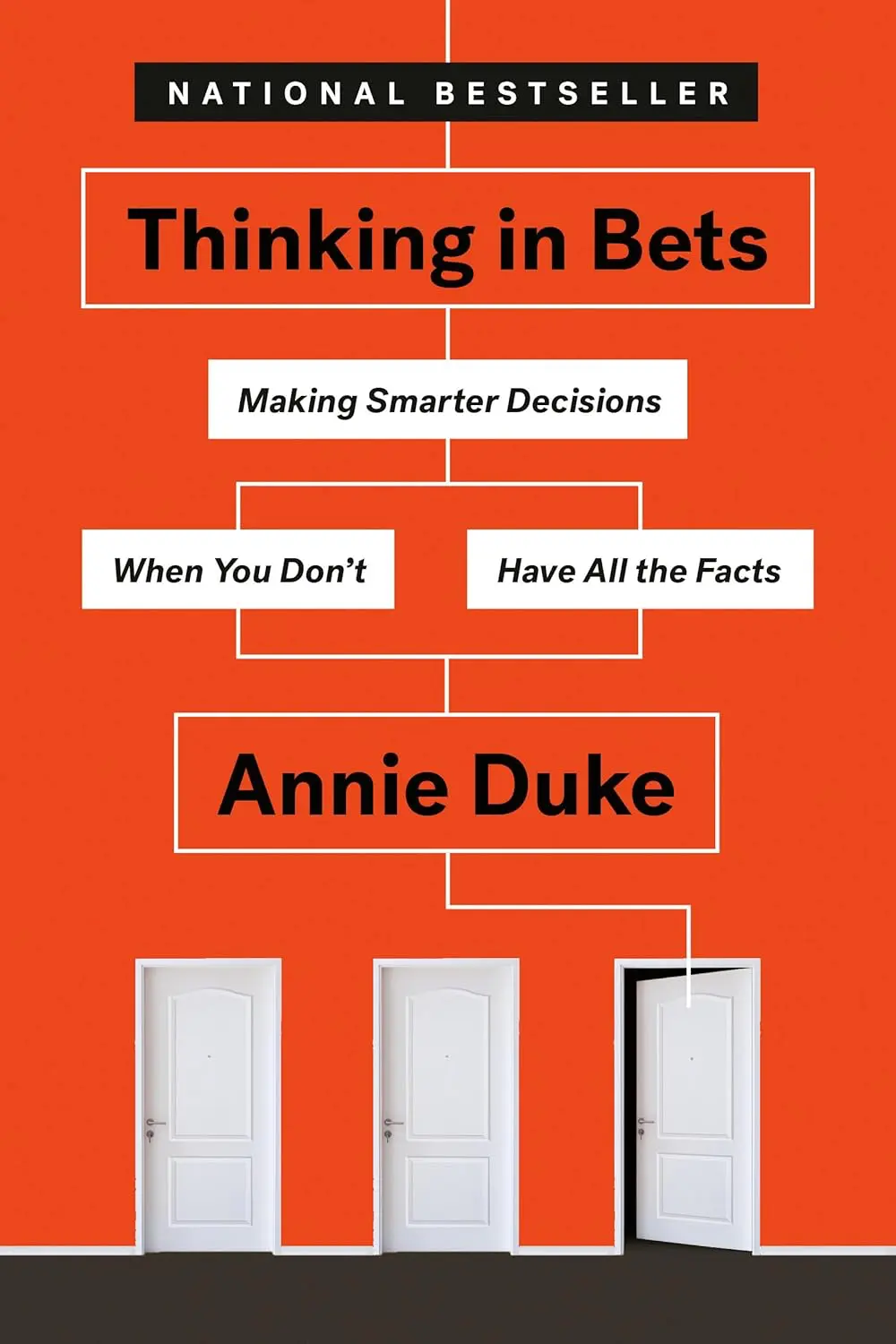
Duke played professional poker for two decades, including winning a World Series of Poker gold bracelet. Poker is a useful laboratory for decision-making because it combines skill with randomness in proportions that are easy to see. Sometimes you make the right call and lose. Sometimes you make a terrible call and win. Over thousands of hands, skill separates from luck, but on any single hand, you cannot tell which is which.
The book’s central idea is “resulting,” the human tendency to judge the quality of a decision by the quality of its outcome. If a startup succeeds, we assume the founders made good decisions. If it fails, we assume they made bad ones. But outcomes are influenced by factors outside anyone’s control, and confusing results with decision quality leads to learning the wrong lessons.
Duke proposes several practices. “Decision groups” are small groups of trusted people who agree to give each other honest feedback about reasoning rather than just sympathizing with results. “Premortems” involve imagining that a decision failed and working backward to identify what went wrong, which surfaces risks that optimism obscures. “Backcasting” means imagining a future success and working backward to identify what had to happen, which clarifies the actual plan.
The writing is accessible and filled with examples from poker, sports, business, and everyday life. Duke does not overuse poker analogies, which is good because non-poker-players would lose interest. The decision science is drawn from Kahneman, Tetlock, and other researchers, presented in a practical rather than academic frame.
For founders, every section is applicable. Hiring decisions, product bets, pricing calls, and market timing are all decisions made under uncertainty. The habit of evaluating decisions by their process rather than their outcomes, and building feedback systems that do the same, is one of the most useful skills a founder can develop.
Shane Parrish has recommended it. At about 270 pages, the book is concise. Duke writes clearly and the structure moves from concept to application without dwelling too long on either.
